
Lieferung heute & morgen

Qualitätsgarantie

Willkommens-Angebote freischalten: KOSTENLOSE Lieferung | Bis zu 80 % RABATT | Kostenlose 30-Tage-JoyPlus-Testphase
App herunterladen
A child car seat must do more than simply suit your child’s age. Height, vehicle, installation method and day-to-day use are all crucial. However, many families buy based on colour, an allegedly long service life or a single comfort feature. This can lead to common buying mistakes: the seat does not fit the rear bench, installation is more complicated than expected or the child no longer sits correctly after a short time.
As a Joybuy Product Recommendation Officer, I assess the most important product details objectively. This helps separate marketing claims from verifiable criteria.
A child car seat with a wide height range may appear suitable for long-term use on paper. In practice, however, the seating position changes considerably when the same seat is used for a baby, toddler and older child. So do not just check the age recommendation. Pay particular attention to height and weight range.
For a child car seat suitable from birth, you should also check for a suitable newborn insert, an appropriate reclined position and rear-facing use. A model for 40 to 150 cm is not automatically equally comfortable for every stage of development.
An ISOFIX child car seat can often be connected easily, but it is not suitable for every vehicle or every seating position. Some seats also require a top-tether strap or support leg. With a base station, only a specific infant carrier may be compatible.
Before buying, check your vehicle manual and the manufacturer’s compatibility list. Look for green installation indicators, make sure the vehicle belt is routed correctly and check for any restrictions caused by the shape of the rear bench.
A bottle holder, summer cover or rain cover is not universal child car seat accessory. For example, the CYBEX Bottle Holder is designed for selected CYBEX models. Incompatible accessories can affect the belt routing, headrest or side-impact protection.
The UN R129 standard takes the child’s height into account for many seats and includes requirements for side-impact protection. With an i-Size child car seat, check which height range the product is approved for and whether your vehicle supports the relevant installation position.
The i-Size designation does not replace an individual check. Read the instruction manual in full and use the seat only in the orientation described there.
A rear-facing child car seat is used facing the rear of the vehicle. This is particularly important when choosing a seat for babies and toddlers. According to the product details, an infant car seat such as the Hauck Drive N Care is designed for 40 to 87 cm and up to 13 kg, and is installed rear-facing.
Depending on the model, larger children may be secured using a impact shield, an integrated harness system or the vehicle’s three-point seat belt. For example, according to the product description, the CYBEX Pallas B i-Size uses the impact shield up to 105 cm or 21 kg; after that, the child is secured with the vehicle belt.
The headrest should be adjusted so that it supports the head correctly and the harness is routed properly. Several height positions, an adjustable backrest and removable inserts are useful features. A seat cover that can be washed at 30 °C can reduce the amount of care required in everyday family life.
Also look out for:

Why this product suits the profile: For families looking for an infant carrier for the first stage of life and wanting to choose between ISOFIX and a three-point seat belt.
The 40 to 87 cm height range defines the period of use more clearly than broad long-term promises. The product details specify UN ECE R129-03 and alternative installation with a three-point seat belt.
4.4 kg weight, seven reclined positions, newborn insert and washable cover.
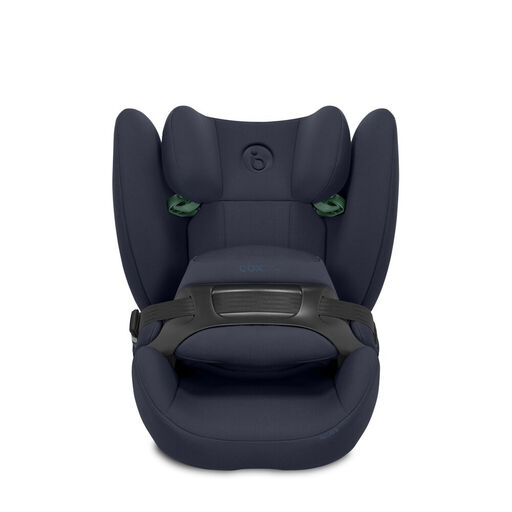
Why this product suits the profile: Suitable for parents who prefer a 2-in-1 seat for approximately 15 months to 12 years, with adjustable features.
The seat specifies clear limits of 76 to 150 cm and 9 to 50 kg. According to the manufacturer’s information, the impact shield is removed from 105 cm or 21 kg.
UN R129/04, three ISOFIX connection points, top-tether, 12-position adjustable headrest and adjustable backrest.
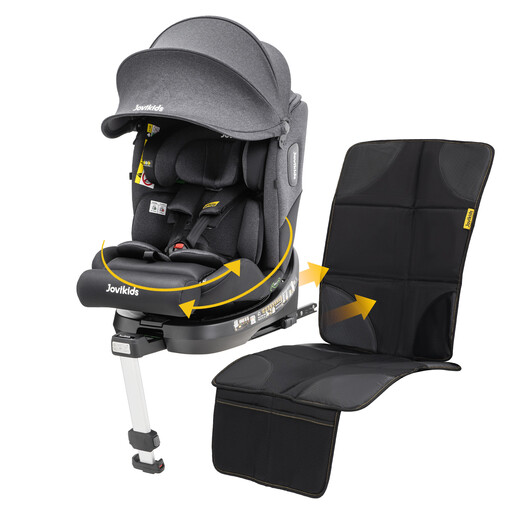
Why this product suits the profile: For families who want to make placing their child in the seat easier and are looking for a 360-degree rotating child car seat for a height range of 40 to 150 cm.
The seat specifies a clear height range and twelve headrest positions. Before buying, check the support leg, swivel function and rear-bench compatibility against the instructions.
360-degree swivel function, ISOFIX, adjustable recline, removable cover and sun canopy with UPF50+ rating.
We have put together a complete, regularly updated list of products that fully meet these strict selection criteria and the safety regulations applicable in the EU.
After installation, the seat should not wobble and the installation indicator should show the correct status. Harnesses must lie flat and must not be twisted. Thick winter clothing can alter the fit; a thin layer of clothing with a blanket over the top is better.
Check the following before every journey:
After an accident, the seat should be replaced regardless of its visible condition, as internal damage is not necessarily detectable. A second-hand child car seat is only a sensible choice if its origin, age, accident-free history and completeness can all be reliably verified.
A suitable child restraint system is required from the very first car journey. For newborns, this is usually a rear-facing infant carrier or a suitable child car seat approved from birth. The key factors are approval from 40 cm, the correct insert and proper harness routing.
The service life depends on its approval, condition and the manufacturer’s specifications. According to the product data, a model such as the CYBEX Pallas B i-Size is designed for approximately 15 months to 12 years, or 76 to 150 cm. In practice, use should end sooner if the seat is damaged, the height limit has been reached or the cover and harness can no longer be used correctly.
ISOFIX can simplify installation and create a stable connection to the vehicle. However, it is not a substitute for correct use. A seat secured with a three-point belt can also be suitable when installed according to the instructions. Approval, vehicle compatibility, the correct orientation and properly securing the child remain decisive.