
Lieferung heute & morgen

Qualitätsgarantie

Willkommens-Angebote freischalten: KOSTENLOSE Lieferung | Bis zu 80 % RABATT | Kostenlose 30-Tage-JoyPlus-Testphase
App herunterladen
A child car seat must do more than simply suit your child’s age. Their height, your vehicle, the installation position and how often the seat is moved between different cars are all important factors. Even a visually appealing child car seat may prove unsuitable in everyday use if the belt does not sit correctly, the swivel function is incompatible with the vehicle or the stated period of use does not match your child’s development.
In Germany, children generally require a suitable restraint system until they reach the age of 12 or a height of 150 cm. The information provided on the seat, in the instruction manual and regarding vehicle compatibility is decisive.
“From birth to 12 years” sounds practical, but it does not automatically mean that a seat will fit perfectly at every stage of development. With a child car seat from birth, the newborn insert, harness routing and reclined position must be suitable for your child’s actual height. Later on, depending on the model and size range, a seat may use a 5-point harness, impact shield or the vehicle’s seat belt.
An ISOFIX child car seat is often easier to install, but ISOFIX alone does not guarantee that the seat can be fitted correctly in every vehicle. The support leg, Top Tether, seat angle and available installation position must also be checked. If the seat has a support leg, it must not rest on an unsuitable floor compartment cover. Before buying, it is advisable to check your vehicle manual and the manufacturer’s compatibility list.
A 360-degree child car seat, a recline function or particularly soft padding can make everyday use easier. However, they do not replace correct belt routing or the right size. A child car seat with side-impact protection should also be installed so that its side elements do not come into contact with the door, the neighbouring seat or the vehicle trim.
The current UN R129 approval standard takes the child’s height into account and includes requirements for side-impact protection. Many models also use the designation i-Size child car seat. This indicates defined height ranges and specific installation requirements. Nevertheless, parents should check whether the specific seating position is approved for their own vehicle.
A seat with R129 approval is not automatically suitable for every type of use. The required direction of travel, minimum height, maximum height and any fastening with Top Tether or a support leg must be observed.
When buying, use your child’s height as the primary guide:
A rear-facing child car seat is used facing the rear of the vehicle. This direction of travel is particularly common for babies and toddlers. Under UN R129, children under 15 months must generally be transported rear-facing. The relevant instruction manual may provide for longer rear-facing use.
Check the following before placing your order:
Removable covers that can be washed at 30 °C are practical for families who use the seat frequently. A recline function should only be used in the positions intended for this purpose and must not cause the harness to become loose.
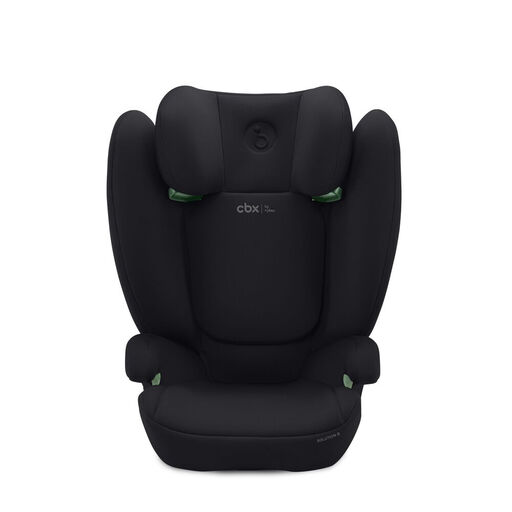
Why this product suits this profile: This forward-facing seat is designed for children measuring 100 to 150 cm, making it suitable for families looking for a straightforward solution for the next stage of use.
The clearly stated height range helps prevent the seat from being bought too early. ISOFIX is used for installation; the vehicle seat belt must be routed correctly according to the instructions.
UN R129/04, 12-position adjustable headrest, integrated L.S.P. system and washable cover.
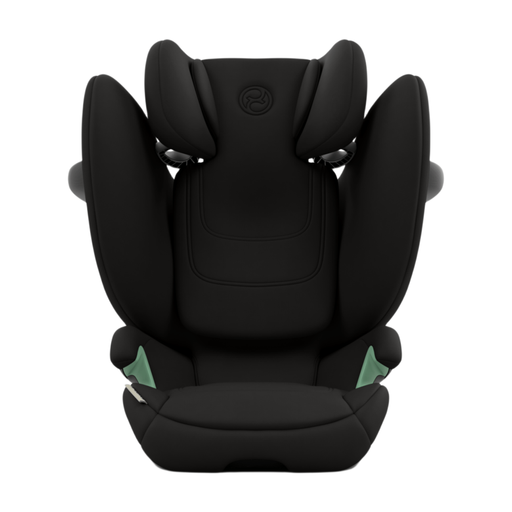
Why this product suits this profile: This seat is designed for children measuring 100 to 150 cm and for families who frequently move it between vehicles or want to save storage space.
The folding design with carry handle reduces the effort involved when moving the seat between vehicles. The side protection system can be removed where space is limited, provided the instructions allow this.
Weight of 5,8 kg, foldable construction, 12-position adjustable headrest and UN R129/04.

Why this product suits this profile: For families with a baby or toddler, this rear-facing seat covers a height range of 40 to 105 cm and features an integrated ISOFIX base.
The clearly limited use up to 105 cm prevents the mistaken expectation that this is a seat for the whole of childhood. The 360° rotation is designed for getting the child in and out, not for allowing unrestricted changes in the direction of travel.
360° swivel mechanism, five recline positions, 12-position adjustable headrest and rear-facing use up to 105 cm.
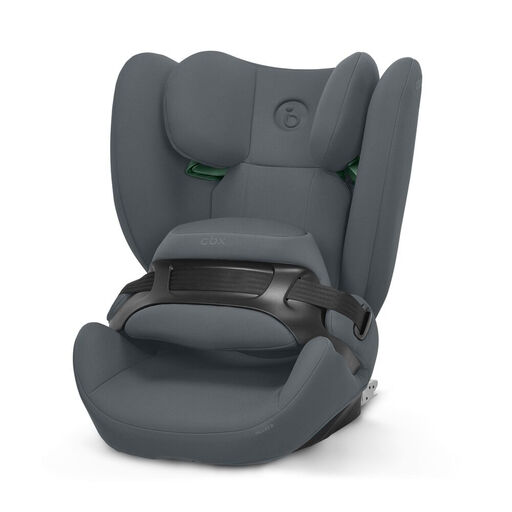
Why this product suits this profile: This 2-in-1 seat is designed for children measuring 76 to 150 cm and is aimed at families who do not want to buy a separate model for every age group.
The product information clearly describes the transition between the different stages of use: the impact shield is removed from 105 cm or 21 kg, after which the vehicle’s three-point seat belt is used.
Use from 76 to 150 cm, 12-position adjustable headrest, ISOFIX, Top Tether and adjustable backrest.
We have put together a complete, regularly updated list of products that fully meet these strict selection criteria and the safety regulations applicable in the EU.
ISOFIX can make installation easier and create a stable connection to the vehicle. It is particularly practical when the seat is used frequently. However, the correct indicator, the suitable seating position and additional fixings such as Top Tether or a support leg must still be checked.
This depends on the approved height range. A model covering 76 to 150 cm can accommodate several stages of development, while a seat covering 40 to 105 cm is typically intended for babies and toddlers. The manufacturer’s specifications are decisive, not your child’s age alone.
No. Swivel models need sufficient space between the seat, front seat and door. The ISOFIX anchor points, support leg and direction of travel must also be compatible with the vehicle. Before buying, check the installation instructions for your specific car model.