
Lieferung heute & morgen

Qualitätsgarantie

Willkommens-Angebote freischalten: KOSTENLOSE Lieferung | Bis zu 80 % RABATT | Kostenlose 30-Tage-JoyPlus-Testphase
App herunterladen
Purchasing a child safety gate is a crucial step in making your home safer once your little one starts to explore. However, the market offers an overwhelming variety of models, and not every gate delivers on its promise. Making the wrong choice not only leads to unnecessary expenses but can also compromise child safety.
As your Joybuy Product Recommendation Officer, I'm here to help you identify the common pitfalls and make an informed decision. Pay close attention to these three frequent problems:
To avoid these problems, you should check two key aspects before buying. These are the primary factors that determine the safety and functionality of your new gate.
Choosing the mounting method is the most fundamental decision. Both options have specific pros and cons that depend on your home and where the gate will be used.
Pressure-Mounted Gates: These models are tension-fitted between two solid, parallel surfaces (e.g., walls or door frames). Their main advantage is the damage-free installation, making them ideal for rental properties. However, they require a stable and flat surface. Uneven walls or baseboards can compromise their stability. Important Note: Most manufacturers advise against using pressure-mounted gates at the top of a staircase. The pressure a child exerts could dislodge the gate from its mounting.
Hardware-Mounted Gates (Screw-Fit): These gates are screwed securely into the wall. This provides maximum stability and is the recommended method for a stair gate at the top of a staircase. While installation is more involved and leaves drill holes, it guarantees a permanent, secure barrier.
Besides the installation method, the physical properties of the gate are crucial for child safety.
Based on these criteria, we have identified several products that offer excellent solutions for specific needs and living situations.
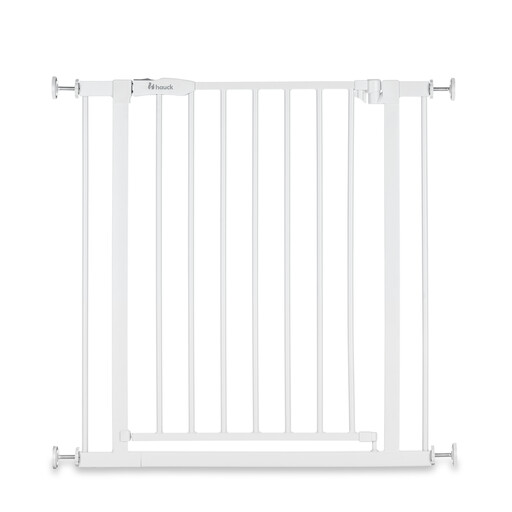
Why it's a great fit: Ideal for rental properties or for use at the grandparents' house where drilling isn't an option. The pressure-mounted design allows for quick, trace-free installation and removal in doorways or at the bottom of stairs.
This model counters the problem of unstable pressure-mounted gates with a robust tensioning system. By tightening the adjustment screws, the initial gap in the locking mechanism is eliminated, ensuring a secure hold.
Pressure-mounted, no-drill installation; can be opened from either side with one hand for easy daily use.
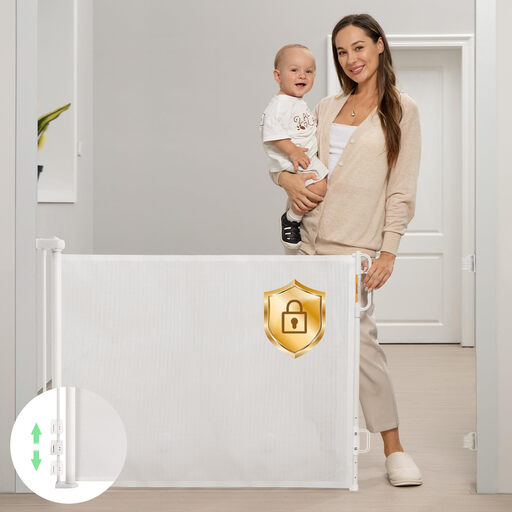
Why it's a great fit: Perfect for modern, open-plan living spaces or extra-wide doorways up to approx. 140 cm where standard gates won't fit. The retractable mesh design is space-saving and almost invisible when not in use.
It solves the problem of ill-fitting dimensions for wide openings and eliminates the tripping hazard from a bottom bar—a common drawback of conventional gates. It is hardware-mounted for maximum stability.
Space-saving, retractable design for widths up to approx. 140 cm; no trip bar on the floor.
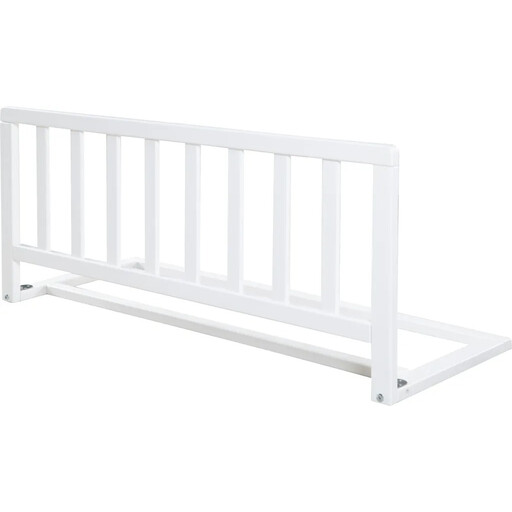
Why it's a great fit: This bed rail is specifically designed to protect toddlers from falling out of bed during the transition from a crib to a regular bed. It's a targeted solution for bedroom safety.
It prevents the attempt to use unsuitable products like door gates on a bed. The Velcro strap attachment to the bed slats is simple, secure for its intended purpose, and requires no drilling into the bed frame.
Simple, no-drill installation on the bed slats; made from sturdy solid wood.
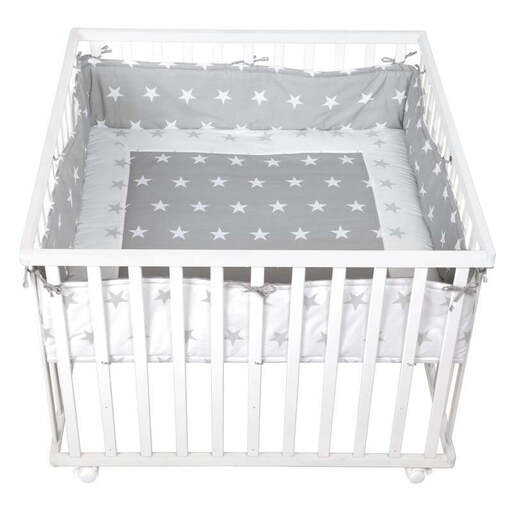
Why it's a great fit: A playpen creates a dedicated, safe play zone within a living area. It gives parents peace of mind that their child is playing in a controlled environment while they briefly attend to other tasks.
It prevents the improper use of door gates to block off large, unsecured areas. A playpen is a purpose-built, stable structure that meets specific safety standards (in this case: DIN EN 12227:2010-12).
3-position height-adjustable base that grows with your child; includes a washable protective liner for easy hygiene.
Beyond gates, there are other products for a child-safe home, such as baby corner guards for sharp table edges. We've compiled a complete, up-to-date list of products that meet strict selection criteria and safety requirements.
A child safety gate typically becomes relevant when a child starts to become mobile—meaning they are crawling or pulling themselves up. This usually happens between 6 and 9 months of age. They are recommended for use until a child is about 24 months old. After that, many children are able to climb over gates, which introduces a new hazard.
Most manufacturers and safety experts strongly advise against it. A pressure-mounted gate could be pushed out of its mounting by a child's pushing or shaking, causing both the gate and the child to fall down the stairs. For the top of a staircase, you should only use a hardware-mounted stair gate that also opens away from the stairs, not towards them.
Measure the clear width of the opening in at least two places: once near the floor (taking baseboards into account) and again higher up at the height where the gate will be mounted. When selecting the gate and any potential extensions, always use the narrowest measurement you took to ensure the gate can be securely tensioned or installed.