
Lieferung heute & morgen

Qualitätsgarantie

Willkommens-Angebote freischalten: KOSTENLOSE Lieferung | Bis zu 80 % RABATT | Kostenlose 30-Tage-JoyPlus-Testphase
App herunterladen
When children become mobile, a new phase begins for parents: child-proofing the home. A child safety gate is often one of the first purchases. However, the market can be overwhelming, and not every gate delivers on its promise. Before you make a decision, you should be aware of the most common pitfalls that lead to regrettable purchases.
A good safety gate should not only be secure but also practical for everyday use. The following criteria will help you find a model that truly fits your living situation.
To avoid the problems mentioned above, you should carefully examine three core parameters: the mounting type, safety certification, and flexibility in width.
The choice of fastening is fundamental and depends on the location.
A reliable baby safety gate must offer certified safety. The most important seal in Europe is the EN 1930:2011 standard. This standard ensures that:
Most gates are made of powder-coated metal, which makes them robust and durable. An alternative is retractable safety gates made of a sturdy mesh material, which can be retracted to save space when not in use.
Measure the opening you need to secure precisely before you buy. Standard doors in many regions are typically between 73.5 cm and 86 cm wide. Many gates are designed for these dimensions. For gates for wide openings, you will need models that are either wider to begin with or can be adapted with extensions. Check the product description to see the maximum width to which a gate can be safely extended.
Instead of presenting an overwhelming list, we have matched products to typical living and life situations.
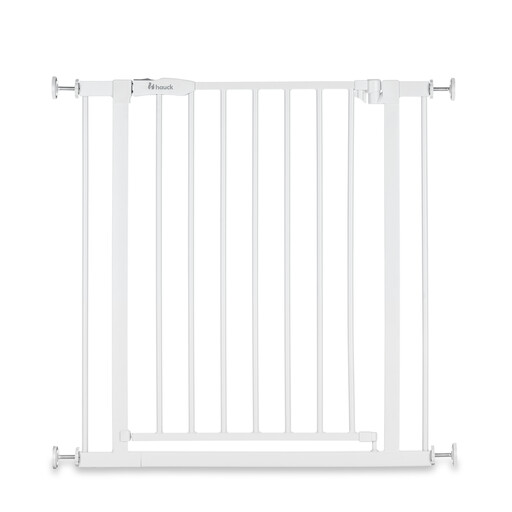
Why it's a great fit: Ideal for anyone looking for a straightforward and flexible solution for standard doorways (75-80 cm). As a purely pressure-mounted gate, it's perfect for rental properties as it leaves no drill holes and can be quickly relocated if needed.
The design is engineered to build a firm and secure hold by tightening the four tension bolts. This corrects the initial misalignment and prevents the problem of unstable pressure-mounted gates.
One-handed opening in both directions. Flexibly adaptable with separately available extensions and Y-spindles.
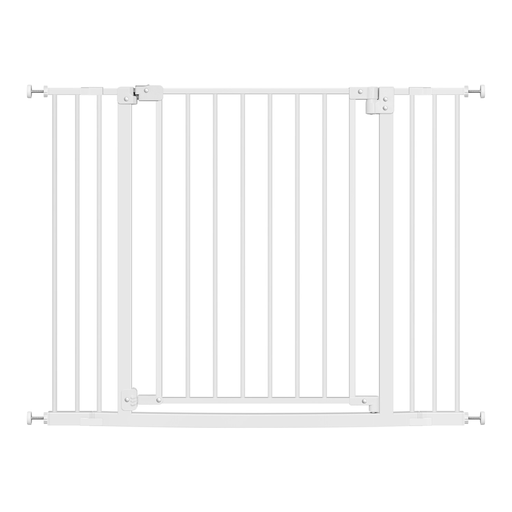
Why it's a great fit: This set is designed for wider openings up to 107 cm, as two extensions are already included. The auto-close feature significantly enhances everyday convenience by ensuring the gate closes automatically.
It solves the fit problem for wide openings right out of the box with the included extensions. The auto-close feature prevents the gate from being accidentally left open—a common user error.
Dual mounting options (pressure or hardware) for flexible adaptation to safety needs. A 90° stay-open function keeps the gate open when required.
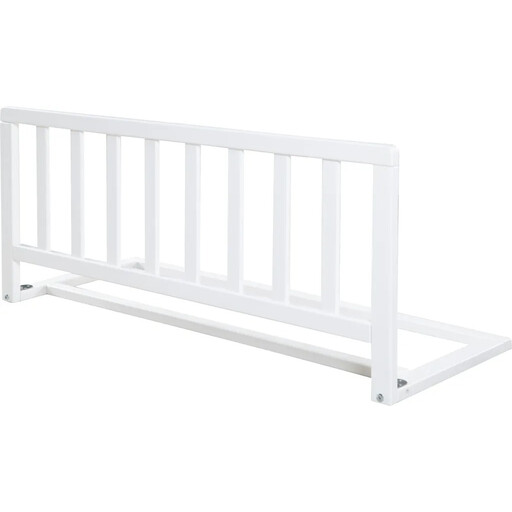
Why it's a great fit: This toddler bed rail is specifically designed for the transition from a crib to a regular bed. It provides reliable fall protection for the bed without requiring a complete bed conversion.
It solves a specific problem for which door or stair gates are unsuitable. The simple installation with Velcro straps on the bed slats requires no drilling and does not damage the bed frame.
Made from solid wood for a stable and durable construction. Suitable for mattresses up to 18 cm high and for children from approx. 18 months to 5 years.
In addition to door and stair gates, a playpen can also create a safe zone for play, especially in large, open-plan living areas.
We have compiled a complete, up-to-date list of products that fully meet these strict selection criteria and safety regulations.
1. Can a no-drill stair gate really be safe? Yes, a high-quality pressure-mounted safety gate can be very secure when installed correctly. The key is that it must be firmly tensioned between two stable, parallel surfaces. However, most manufacturers point out that for installation at the top of the stairs, a hardware-mounted installation is recommended for maximum safety to eliminate any risk of slipping.
2. What height should a child safety gate be? Most gates have a height of about 75-80 cm. This is generally sufficient to prevent toddlers (up to approx. 24 months) from climbing over them. More important than the absolute height is that once a child is able to climb over the gate, it should no longer be used, as it then creates a new hazard.
3. What does the EN 1930:2011 standard mean for safety gates? The European standard EN 1930:2011 is a safety standard specifically for child safety gates. It sets technical requirements to ensure the safety of children. This includes tests for strength, stability, gap dimensions (to prevent entrapment), and the functional safety of the locking mechanism. A gate that complies with this standard has passed fundamental safety tests.