
Lieferung heute & morgen

Qualitätsgarantie

Willkommens-Angebote freischalten: KOSTENLOSE Lieferung | Bis zu 80 % RABATT | Kostenlose 30-Tage-JoyPlus-Testphase
App herunterladen
A child car seat needs to suit your child, your vehicle and the way you intend to install it. Many products look similar at first glance, but can differ considerably in their height range, direction of use and method of fitting. If you focus only on a wide age range or a well-known brand, you could end up buying a model that isn’t suitable for your car.
A child car seat for up to 12 years sounds like good value. A model for 40–150 cm can cover several stages of your child’s development, but it needs to be adjusted correctly at each stage. This includes the headrest, belt guides and seating position, and may involve switching from the integrated harness to the vehicle seat belt.
So, don’t just check the age range. Pay particular attention to:
A child car seat with ISOFIX is often easy to fit. However, that doesn’t mean every seating position in every vehicle is suitable. Some seats also require a Top Tether, a support leg or the vehicle seat belt. Before buying, parents should check the vehicle handbook and the car seat manufacturer’s vehicle compatibility list.
Some seats use ISOFIX only for stability, while the child is still secured with the vehicle’s three-point seat belt. This is common, for example, with many child car seats for 100–150 cm.
A 360-degree rotation feature, extra padding or a sun canopy can make everyday use easier. But these features alone don’t tell you whether the seat is suitable for your child. With a rotating child car seat, you’ll need to check the rotation mechanism, support leg, installation position and clearance from the front seat.
Advertised side-impact protection should also be considered objectively: what matters is approval to the stated UN R129 or i-Size standard, correct installation and adjustment to suit your child’s height.
The UN R129 standard classifies child restraint systems primarily by height. It also sets requirements for side-impact protection and the direction of use. Many i-Size models are designed for younger children to travel rear-facing. Always check the instructions for the specific minimum height and when the seat can be switched to forward-facing use.
An i-Size child car seat isn’t automatically compatible with every ISOFIX position. So check:
The phrase ‘from birth’ can refer to different features. A child car seat from birth should be approved for use from 40 cm and come with a suitable newborn insert. A rear-facing car seat carries your child facing away from the direction of travel. This may be the recommended installation method for babies and toddlers, depending on the model, your child’s height and the instructions.
For older children, models are designed for the 100–150 cm or 125–150 cm height ranges. A seat for 100–150 cm isn’t suitable for a child under 100 cm, even if their age seems about right.
If you regularly move the seat between vehicles, its weight is an important consideration. Families with one main vehicle may prefer features such as a rotation mechanism, several recline positions or an integrated base. A compact seat may be enough for short journeys, while an adjustable backrest and washable cover can be more practical for longer trips.
Also look for:
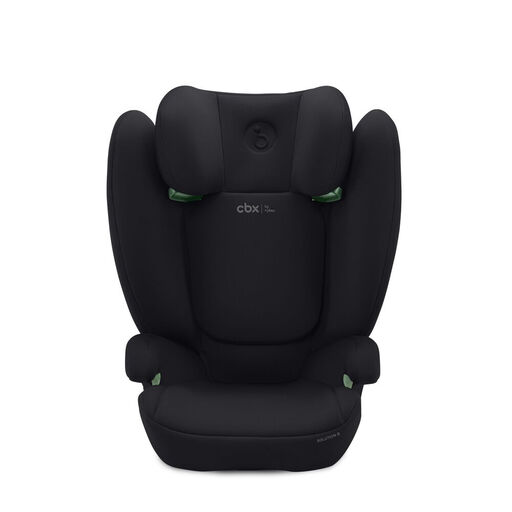
Why this product suits this profile: This seat is designed for children from 100 to 150 cm and offers a straightforward set of features for families looking for a seat for their child’s next growth stage.
The clearly stated height range helps prevent the seat from being mistakenly bought for a smaller child. ISOFIX secures the seat in the vehicle; the stated conditions of use remain the key consideration.
UN R129/04, 12-position adjustable headrest, ISOFIX and integrated L.S.P. side-impact protection, according to the product details.

Why this product suits this profile: For families with a baby or toddler looking for a permanently installed seat with a rotation feature and use from 40 cm.
The 40–105 cm height range is clearly defined. The integrated ISOFIX base with support leg makes it particularly important to check compatibility with your vehicle.
360-degree rotation mechanism, 12 headrest positions, newborn insert for 40–60 cm and UN R129/03, according to the product description.
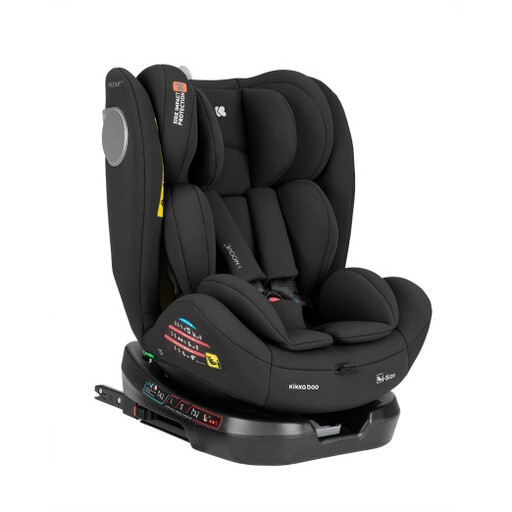
Why this product suits this profile: Suitable for families who prefer a grow-with-your-child seat with 360-degree rotation for use through several stages of development.
The height ranges are listed separately: rear-facing from 40–105 cm and forward-facing from 76–150 cm. This makes it easier to plan when to switch based on your child’s height.
UN R129/04, 24-position adjustable headrest, ISOFIX plus Top Tether, several recline positions and integrated SPS, according to the product details.
We’ve put together a complete, regularly updated list of products that meet these strict selection criteria and fully comply with the safety regulations in force in the EU.
It depends on the approval of the particular model. Many i-Size seats are designed for younger children to travel rear-facing. Always follow the instructions on height, direction of travel and minimum age in the user manual. You must take both legal requirements and the manufacturer’s instructions into account.
Depending on the model, a seat may be used for several years, for example from 40–150 cm or 76–150 cm. After an accident involving significant impact, it should be replaced regardless of whether it looks damaged. Damaged harnesses, buckles or ISOFIX arms, or any missing parts, are also reasons not to continue using it.
ISOFIX is practical as long as the vehicle and seat are approved for it. For seats for 100–150 cm, the child is often secured with the three-point seat belt as well as, or instead of, ISOFIX. Before buying, check that the seat is compatible with your vehicle, find out which anchorage points are required and read the fitting instructions for the specific model.