
Lieferung heute & morgen

Qualitätsgarantie

Willkommens-Angebote freischalten: KOSTENLOSE Lieferung | Bis zu 80 % RABATT | Kostenlose 30-Tage-JoyPlus-Testphase
App herunterladen
A children’s electric motorbike can make a fun outdoor toy, birthday present or leisure vehicle. But there are clear differences between a basic 6V children’s motorbike, a 12V model with stabilisers and a more powerful electric dirt bike for children. Design and extra features aren’t the only things to consider. Age suitability, speed, seat height, weight limit and the conditions where it will be used are all important.
A 12V children’s motorbike isn’t automatically more suitable for every child than a 6V model. Voltage describes one part of the electrical system, but it doesn’t determine the actual speed, motor power or range on its own. The gearing, vehicle weight, surface and battery capacity also play a part.
For younger children, a low top speed and extra stabilisers can be useful. A powerful electric motorbike for children with several riding modes is more suited to older children who are tall enough and have good coordination.
A children’s electric dirt bike with chunky tyres might look suitable for grass and woodland paths. Even so, parents should check that the seat height, wheel size and vehicle weight are right for their child. A motorbike that’s too large can be difficult to control, while a model that’s too small may become uncomfortable during longer rides.
An electric children’s vehicle isn’t automatically approved for public paths, either. It should be used on suitable private land. Roads, cycle paths and public spaces aren’t intended for many toy vehicles.
A children’s motorbike with lights and music can make playtime more fun. But braking options, speed settings, stabilisers, an emergency stop function and clear instructions are more important when choosing a model. If it has Bluetooth, a USB port or sound features, consider whether they’re really needed and whether using them could distract your child from riding.
The manufacturer’s age recommendation is a guide, not a substitute for checking the size. Compare:
Always consider the children’s electric vehicle for ages 3+ label alongside the warnings, your child’s height and the weight limit.
For beginners, a low top speed and the option to build up gradually are useful. The RFN model with 12-inch wheels, for example, lists three settings: 8, 12 and 25 km/h. According to the product details, the larger 14-inch model has settings of 15, 22 and 30 km/h.
These speeds are not comparable to those of a slow-moving toy motorbike. At higher speeds, a suitable helmet, long clothing, closed-toe shoes and a clear, easy-to-supervise area are essential. A parental speed limit or mode switch is useful, if the specific model has this feature.
Range depends on the rider’s weight, the surface, temperature, slopes and riding style. Figures such as “1–2 hours” or “18 km” are guide values from the product details, not a guarantee for every use.
Check:
A 6V children’s motorbike with a short run time may be enough for occasional rides. For regular trips on private land, a model with a larger battery capacity may be more suitable, provided its size and speed are right for your child.
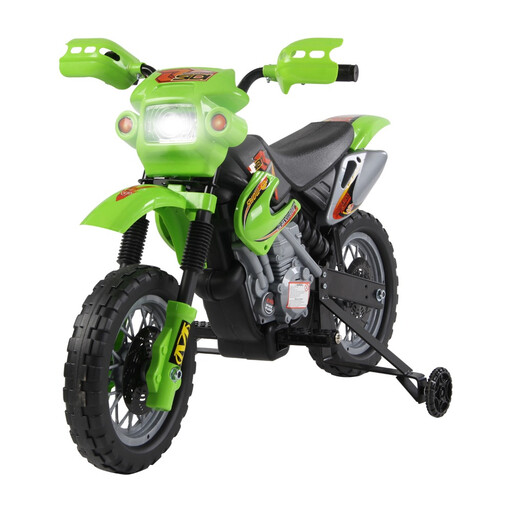
Why this product suits this type of rider: This 6V model is listed for children aged 3 to 6 and has a weight limit of 25 kg. Stabilisers, a headlight and music make it a good option for beginners riding outdoors on private land.
The stated age range, weight limit and stabilisers help distinguish it from oversized dirt bikes.
6V system, stabilisers, and light and music features according to the product name.
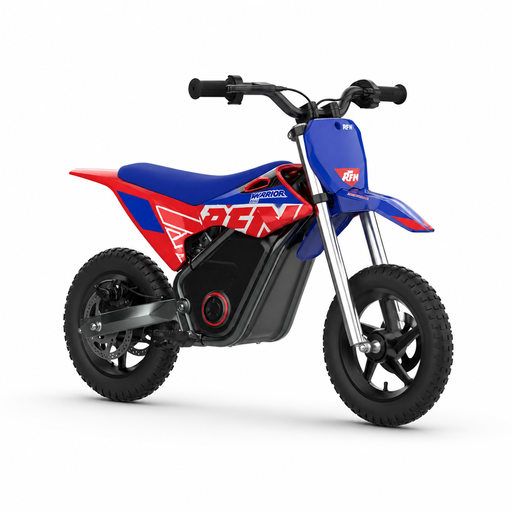
Why this product suits this type of rider: The product details list three speed settings, a 36V-5Ah lithium battery, disc brakes and suspension, and recommend it for children aged 4 to 8.
The listed riding modes allow you to build up gradually. Before buying, check your child’s height carefully and take particular care with the high top speed.
36V-5Ah battery, front and rear brakes, and front and rear suspension according to the product details.
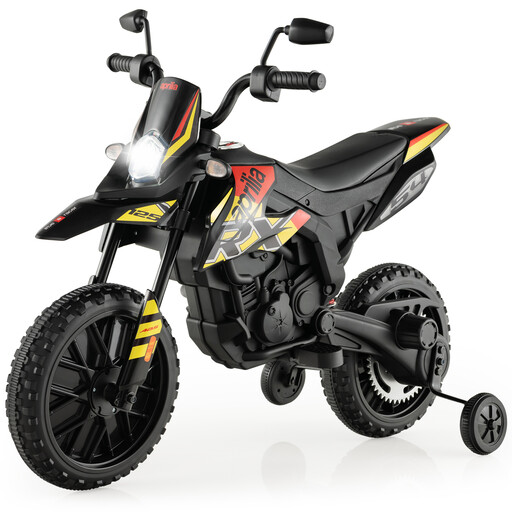
Why this product suits this type of rider: This model is described as suitable for children aged 3 to 8, has a weight limit of up to 30 kg according to the product details, and features two drive motors, stabilisers, lights and music.
Its stated top speed of 5.5–6 km/h and triangular design with stabilisers set it apart from faster off-road models.
12V battery, weight limit of up to 30 kg and, according to the supplier, 1–2 hours of riding time per charge.
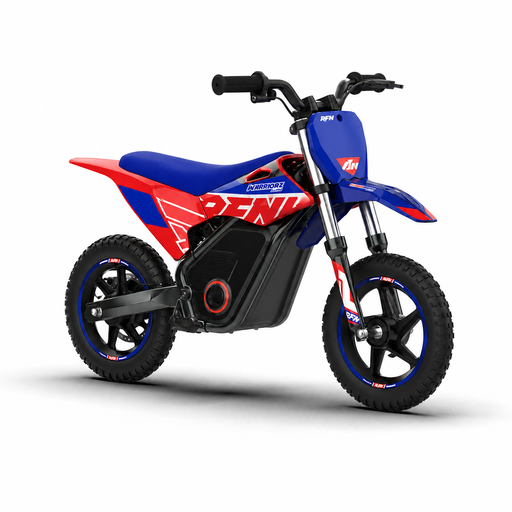
Why this product suits this type of rider: The product details list three riding modes, a 36V-5.2Ah lithium battery, an 18 km range and a recommended age range of 3 to 6 years.
The lowest riding mode, at 8 km/h, provides a clearly stated beginner setting. The higher modes should only be used on suitable terrain and under supervision.
36V-5.2Ah battery, rear disc brake, and front and rear suspension according to the supplier’s details.
We’ve put together a comprehensive, regularly updated list of products that meet these strict selection criteria and fully comply with the safety regulations in force in the EU.
It depends on the battery capacity, rider’s weight, riding mode, surface and temperature. Manufacturer estimates such as 1–2 hours or 18 km are a guide. For realistic planning, recharge after each ride, and only buy a replacement battery if it’s approved for the specific model.
You can’t decide based on the age recommendation alone. Also check the seat height, your child’s height, weight limit and speed, and whether you can use stabilisers or a low-speed mode. A larger dirt bike with 12- or 14-inch wheels may not be suitable for a three-year-old, even if a general age range is given.
The electricity used to charge it usually costs far less than the purchase price. Replacement batteries, chargers, tyres and wear parts can have a greater impact on running costs. Before buying, check whether spare parts are available, read the charging instructions and find out what battery warranty the supplier offers.