
Lieferung heute & morgen

Qualitätsgarantie

Willkommens-Angebote freischalten: KOSTENLOSE Lieferung | Bis zu 80 % RABATT | Kostenlose 30-Tage-JoyPlus-Testphase
App herunterladen
A children’s jigsaw puzzle should suit your child’s age, fine motor skills and patience. In practice, though, attractive packaging doesn’t always mean you’re making the right choice. Large pictures, familiar characters and labels such as ‘educational toy’ don’t tell you on their own whether a puzzle will work well for family life.
A 15-piece jigsaw puzzle may be suitable for a three-year-old, while a picture with lots of similar colours can be difficult even with fewer pieces. Conversely, a 100-piece jigsaw puzzle may appeal to many children aged 6 and over, but could be too challenging for beginners.
Several factors are worth considering:
Doing jigsaw puzzles can help children practise matching shapes and colours, hand–eye coordination and concentration in a playful way. However, there’s no guarantee of a particular effect. It’s better to look at the specific features of a puzzle rather than relying solely on general marketing claims.
Thin cardboard, hard-to-see cut lines or a lack of storage can take away from the fun. Safety guidance is also important for younger children: if a product contains small parts, follow the stated age limit. Many traditional jigsaw puzzles aren’t suitable for children under 3 because of the risk of swallowing small pieces.
For a children’s jigsaw puzzle from age 2, large, sturdy pieces and simple pictures are especially important. According to the product details, the Ravensburger My First Puzzle featuring cute pets is suitable for children aged 2 and over, and includes four puzzles that increase in difficulty. This lets you choose the right challenge from within one set.
A children’s jigsaw puzzle from age 3 often has 15 pieces and comes with a frame or base. For children aged 4 and over, 24 to 48 pieces are often a good option. From age 6, sets with 60, 100 or more pieces may be suitable, as long as your child already has some experience with puzzles.
A children’s frame puzzle has a visible boundary that can make it easier to work out where the pieces go. Outlines printed on the base show where each piece belongs. This design is especially handy for beginners, as they don’t need to build a separate border first.
For larger sets, puzzle posters with the cut lines marked can be helpful. They can make it easier to get started without changing the picture itself. Before you buy, check the finished size, as a puzzle with lots of pieces won’t necessarily have large individual pieces.
Choose a picture that reflects your child’s interests. A dinosaur jigsaw puzzle, an animal jigsaw puzzle for children, vehicles, Disney characters or adventure scenes may encourage them to come back to the puzzle again and again. Any picture that matches a child’s individual interests can be suitable for girls and boys; there’s no need to choose based on gender.
Storage matters, too: metal cases or sturdy boxes help keep multiple puzzles separate. This is particularly useful for sets with different numbers of pieces.
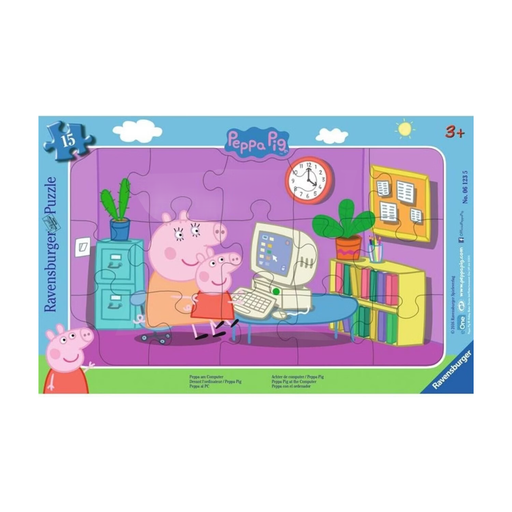
Why this product suits this profile: This 15-piece frame puzzle is designed for children aged 3 and over, offering a clear introduction to puzzles with a familiar Peppa Pig picture.
The outlines in the frame make it easier to work out where the pieces go. The recommended age and number of pieces are clearly stated.
15 pieces, an integrated frame and extra-thick material, according to the product details.
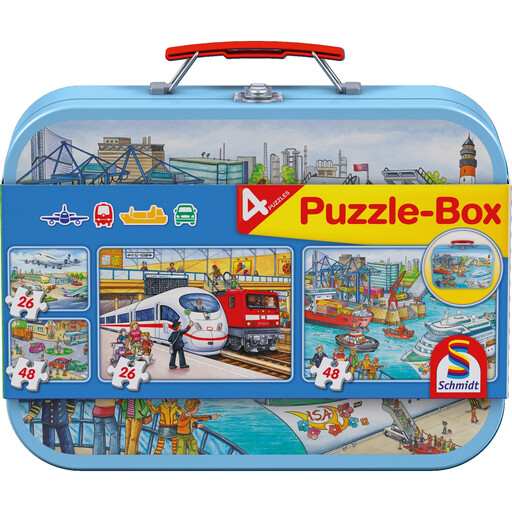
Why this product suits this profile: Designed for children aged 4 and over, this set includes four vehicle pictures: two 26-piece and two 48-piece puzzles.
The different piece counts avoid an unnecessarily big jump in difficulty. Puzzle posters provide a helpful guide.
Four pictures, a metal case, precision-cut pieces and a matt linen-textured finish, according to the product description.
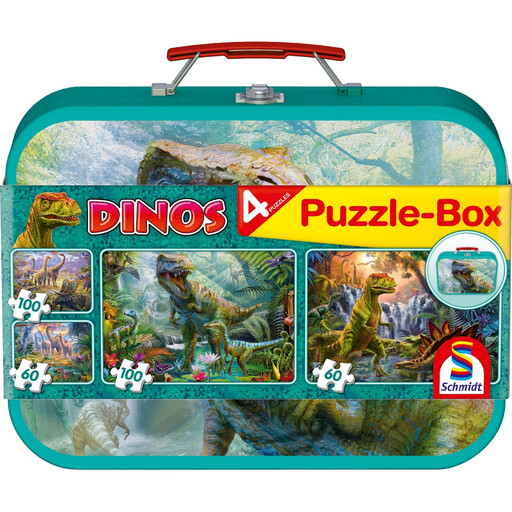
Why this product suits this profile: For children aged 6 and over, this set offers four dinosaur scenes, with two 60-piece and two 100-piece puzzles.
The mix of 60- and 100-piece puzzles lets you choose a challenge to suit your child’s mood and experience. A poster makes it easier to get started.
Four pictures, metal storage and puzzles of up to 100 pieces; ideal for dinosaur fans aged 6 and over.
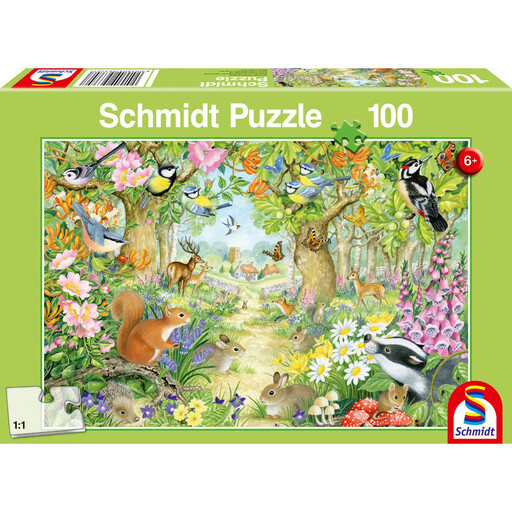
Why this product suits this profile: Featuring forest animals, this puzzle is suitable for children aged 6 and over who prefer a single 100-piece puzzle.
The clearly stated piece count and included poster make the difficulty level easy to understand.
100 pieces, a nature and animal picture, a matt linen-textured finish and precision-cut pieces, according to the product details.
We’ve put together a complete, regularly updated list of products that meet these strict selection criteria and the safety regulations in force in the EU.
Choose a flat, well-lit surface for puzzling. For younger children, adult supervision is recommended, particularly if the puzzle contains small pieces. After play, count the pieces and store them somewhere dry and clean, keeping each picture separate.
With a frame puzzle, the completed picture can stay on its base. Multi-puzzle sets with a metal case or box need less extra storage space and are also handy to take to grandparents’ homes or on family trips.
For a children’s jigsaw puzzle from age 2, look for large, easy-to-grip pieces, sturdy cardboard and simple pictures. A clearly stated age recommendation matters more than having as many pieces as possible. According to the product details, the Ravensburger My First Puzzle with pet pictures is suitable from age 2. Always follow the safety guidance, too.
For a children’s jigsaw puzzle from age 4, 24 to 48 pieces can be a good starting point. Frames, picture guides and high-contrast images make it easier to match the pieces. Children with some puzzle experience may also manage several 48-piece pictures or a set with different levels of difficulty.
How long it lasts depends mainly on the thickness of the material, how it’s stored and how it’s handled. Extra-thick cardboard, precise cut edges and dry storage can help extend its life. If the puzzle is played with regularly, remove missing or bent pieces promptly so they don’t get mixed up with other sets.