
Lieferung heute & morgen

Qualitätsgarantie

Willkommens-Angebote freischalten: KOSTENLOSE Lieferung | Bis zu 80 % RABATT | Kostenlose 30-Tage-JoyPlus-Testphase
App herunterladen
A children’s life jacket for ages 3–6 and 19–30 kg must be suitable for the child’s body weight, height and intended use. For swimming lessons, pool visits or family holidays, many parents look for an adjustable swimming aid for children that stays securely in place and is easy to put on. It is important to remember that a swimming vest supports children while learning to swim, but it does not replace adult supervision or an approved safety flotation device.
The indication “for ages 3 to 6” is only a starting point. Children of the same age can vary considerably in weight and build. When choosing a children’s life jacket for ages 3–6 and 19–30 kg, the actual weight range should therefore be the deciding factor.
A vest that is too large may slip or fail to provide sufficient support around the upper body. A model that is too small can restrict movement and feel uncomfortable. Before buying, parents should check the child’s current weight and compare the manufacturer’s information with the product dimensions.
A swimming vest with buoyancy inserts can be practical for different stages of learning. However, it should be clear how the buoyancy elements are arranged and whether they can be adjusted gradually. Removable elements should only be changed in accordance with the instructions for use.
Removing inserts unevenly can affect the swimming aid’s balance. For swimming lessons, it is therefore sensible to choose a model whose adjustment process is clearly explained and to check the vest fully each time it is used.
A zip makes a swimming vest easier to put on and take off, but it does not automatically keep it securely in position. During active movement in the water, a model without additional support may ride up. A properly fitted crotch strap keeps the vest positioned on the body and should fit comfortably without being loose.
The strap must not cut into the skin or be twisted. Before entering the water, check that the fastening is fully closed and that the vest fits snugly around the upper body.
For the target group, a stated range of 19 to 30 kg is relevant. You should also look out for the following:
The fit should always be checked with the clothing the child will be wearing in the water. Thick outer clothing can alter the fit.
A swimming aid for learning to swim should not make the child completely immobile. For swimming lessons, freedom of movement around the shoulders and arms, as well as clear buoyancy adjustment, are important. Buoyancy inserts must only be changed according to the instructions.
Also pay attention to the product labelling. Different European standards may apply depending on the type of product. A swimming aid is not automatically a life jacket. Information about the standard, buoyancy class and intended use should be clearly provided in the product description or on the product itself. If this information is missing, it is advisable to contact the retailer.
Polyester, foam inserts and plastic fastenings are commonly used in swimming vests. In practice, the quality of the construction matters more than a promotional material name:
A swimming vest should not be stored permanently damp or in direct sunlight. Damaged buoyancy inserts, torn seams or a faulty fastening are all reasons to stop using the vest.
The following cards categorise the supplied products according to their actual intended use. Only the model identified as a swimming vest is relevant to the target group covered by this guide. The other two products are included for comparison and are not swimming aids.
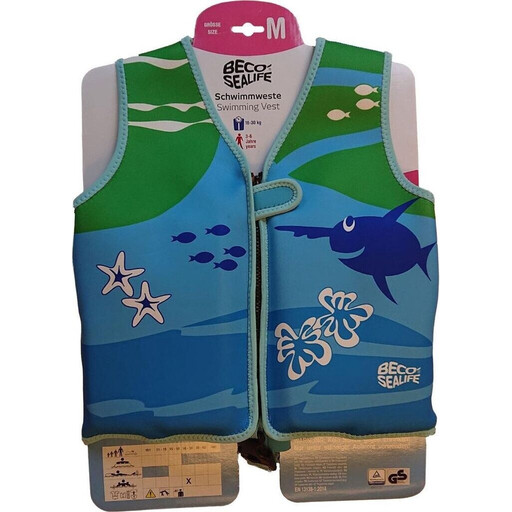
Why this product suits the profile: The stated age and weight ranges match the target group described. The model is intended for swimming lessons, pool visits and family outings.
The stated range of 19–30 kg prevents a selection based on age alone. Buoyancy inserts, a crotch strap and an extended zip address common fit problems.
Adjustable buoyancy inserts, a crotch strap, an extended front zip and the blue-and-green Sealife design.
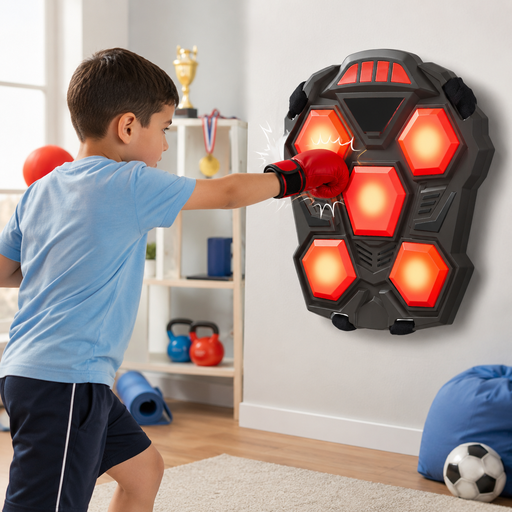
Why this product suits the profile: This item is not suitable for this purpose: according to the description, it is an electronic boxing toy, not a swimming vest or swimming aid.
The clear product category prevents an incorrect order based on the word “vest”. This item must not be used in water.
Electronic light and sound features for active play; not suitable for use as a swimming aid.
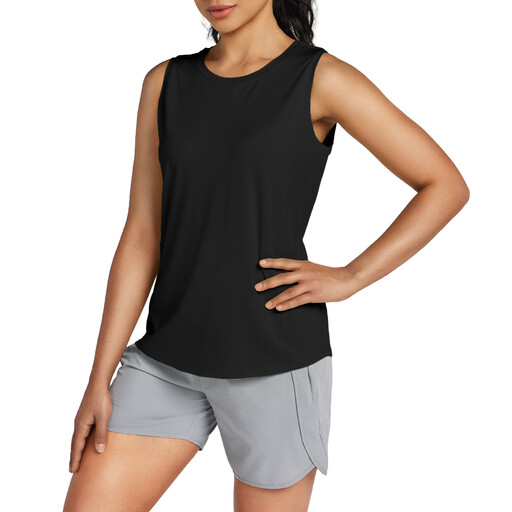
Why this product suits the profile: This item is not suitable for frequent use in water. The description refers to a sports shirt for running, yoga and fitness, with no buoyancy elements or safety features.
The material and size details make it clear that a tank top is not a substitute for a swimming aid for learning to swim. It provides neither buoyancy nor a crotch strap.
Quick-drying sports top for adults; not intended as a children’s life jacket or swimming aid.
Before each use, check the children’s swimming vest for tears, loose seams, damaged buoyancy inserts and a zip that works properly. Put the vest on the child before they enter the water and fasten all the safety features provided.
The following rules are also important:
We have compiled a complete, regularly updated list of products that fully meet these strict selection criteria and the safety regulations applicable in the EU.
The vest should fit snugly around the upper body without restricting movement or breathing. The crotch strap is guided between the child’s legs and adjusted so that the vest does not ride up during movement. After putting it on, parents should check the fastening and strap once again.
This depends on the child’s body weight, the fit, how frequently it is used and the condition of the material. The vest should be replaced as soon as the child exceeds the stated weight range, the vest shows visible damage or the fastening no longer works reliably. Without specific information from the manufacturer, it is not possible to give a reliable fixed service life.
A swimming vest can support swimming lessons as a swimming aid for children, provided it is suitable for the child’s weight and accepted by the swimming instructor. However, it is not a safety device and does not replace supervision. Check the requirements of the swimming pool or swim school before the course begins.