
Lieferung heute & morgen

Qualitätsgarantie

Willkommens-Angebote freischalten: KOSTENLOSE Lieferung | Bis zu 80 % RABATT | Kostenlose 30-Tage-JoyPlus-Testphase
App herunterladen
A children’s night light should help you find your way around at night without making the sleeping area unnecessarily bright. So, looks aren’t the only thing that matters to parents. Power supply, controls, brightness, heat output and where you plan to use it are all important.
Many products are advertised as having a “soft glow” or a particularly wide range of features. These claims are only useful when you can compare them with clear technical details. The Joybuy Product Recommendation Officer’s selection below explains the key things to look for and highlights suitable models for different everyday situations.
A children’s night light doesn’t need to illuminate the whole room. If there’s no dimming function, or the only setting is very bright, it may not be practical for a nursery, sleeping area or night-time checks. Details such as lumens, brightness settings and dimming range are more helpful than general claims like “soft light”.
For a rechargeable night light, look for details of the battery capacity, charging method and usage instructions. A USB port makes charging easier, but doesn’t tell you how long the light will run for. If the product comes with a charging pad, check whether it can also be used away from the pad.
A night light with a motion sensor is particularly useful in hallways, on stairs or in the bathroom. In a child’s bedroom, however, an overly sensitive sensor could switch on with every movement. Check the detection angle, range and auto-off time. The GRIFEMA model, for example, specifies a range of up to 3 metres, a 120-degree detection angle and automatic shut-off after 60 seconds without movement.
A warm white night light in the region of 2,700 to 3,000 Kelvin looks less cool in a home setting than neutral or cool white light. However, this alone doesn’t tell you how bright the light will be. Multiple brightness settings or stepless dimming can be useful around bedtime.
An LED night light generally uses little electricity. Even so, check the stated power consumption. Product specifications of 0.3 W, 0.5 W or 0.9 W give you a clearer idea than a claim that the light is “energy-efficient”.
Casings made from ABS, PC, metal or silicone should be assessed according to the specific product details. Rounded shapes can reduce the risk of sharp edges, but they don’t guarantee safety. Keep electronic night lights out of water and away from naked flames and excessive heat.
Check the age guidance. The Jolywell egg night light is not recommended for children under three because it contains electronic components. A soft casing doesn’t mean a night light is suitable as a toy or for chewing.
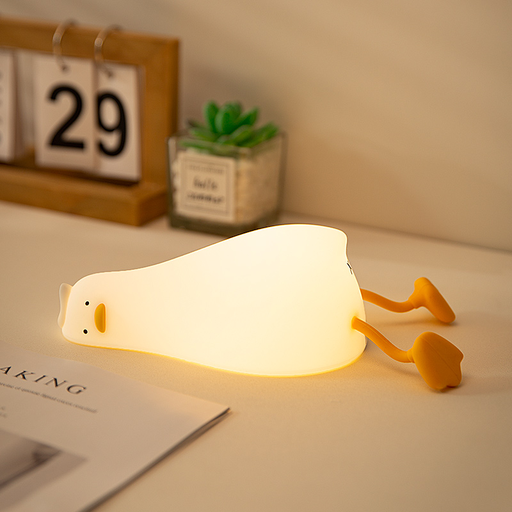
Why it suits this profile: This compact silicone light charges via USB and can be placed beside the bed or in the nursery, without needing to be near a socket.
The stated rechargeable battery capacity of 1200 mAh gives you a clearer idea of the power supply than a vague battery-life claim.
Soft silicone casing, USB charging and a lightweight, portable design, according to the product description.

Why it suits this profile: Five brightness settings and warm white light let you tailor it to a child’s bedroom, hallway or stairs.
The product details include the detection range, auto-off time and brightness settings. This makes it easier to assess the motion sensor before you buy.
0.5 W power consumption, five settings from 20 to 100 per cent, and automatic shut-off after 60 seconds without movement.

Why it suits this profile: A good choice for families looking for a portable light with touch controls, colour-changing modes and a timer for different situations.
The dimming function and one-hour timer mean you don’t have to rely on a single brightness setting or leave the light on continuously.
Eight colour-changing modes, dimming, touch controls and rechargeable operation, according to the product details.
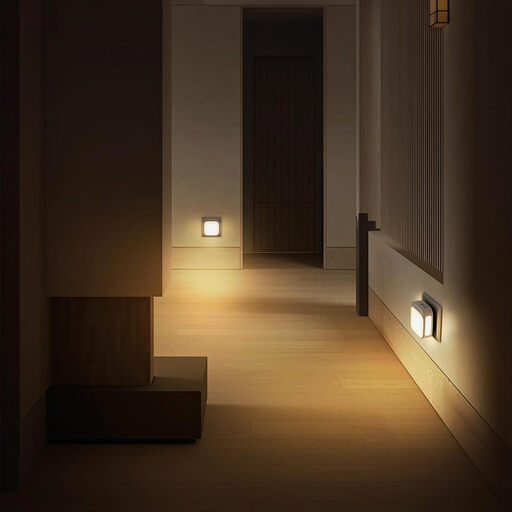
Why it suits this profile: These two plug-in night lights are suitable for a hallway, stairs or the route to the bathroom if you’d rather not use a rechargeable model.
The built-in light sensor switches the light on when it gets dark and off in daylight, so you don’t have to switch it on and off manually.
0.3 W power consumption, warm white light at 2,800 to 3,000 Kelvin, and stepless dimming from 10 to 100 per cent.
We’ve put together a complete, regularly updated list of products that meet these strict selection criteria and fully comply with the safety regulations in force in the EU.
That depends on its power consumption and how long it’s switched on for. A 0.3 W model uses less electrical power during continuous operation than a 1 W device. A rechargeable night light doesn’t draw power from a socket while it’s in use, but its battery needs charging regularly.
It can be, provided the detection angle, range and auto-off time suit the room. Automatic activation is often useful in a hallway or on stairs. In a sleeping area, check whether movement or pets could trigger the sensor accidentally.
You can only assess the expected lifespan of a specific model by checking the manufacturer’s information. For rechargeable versions, the condition of the battery also matters. Clean the device as instructed, keep ventilation and charging areas clear, and protect it from water, heat and knocks.