
Lieferung heute & morgen

Qualitätsgarantie

Willkommens-Angebote freischalten: KOSTENLOSE Lieferung | Bis zu 80 % RABATT | Kostenlose 30-Tage-JoyPlus-Testphase
App herunterladen
Whether it’s a child’s bedroom, living room or garden, indoor and outdoor play equipment for children should suit your child’s age, the space available and how it will actually be used. A poor purchase is often not down to missing features, but to unclear weight limits, unsuitable surfaces or demanding maintenance.
This guide explains which details to check before you buy and which models suit different family needs.
A bouncy castle with a slide or a large climbing frame needs considerably more space than its product dimensions alone might suggest. You also need to allow for safety clearances, access to the blower and a suitable landing area. For an inflatable measuring 364 × 315 × 239 cm, for example, you’ll need to keep the surrounding area clear as well as the space it occupies.
Compact equipment is often more practical indoors. A children’s slide or Montessori climbing triangle may fit in a child’s bedroom, depending on its size, while large water play equipment is generally designed for outdoor use.
The recommended age does not replace checking the maximum weight limit. A playpen, for example, may be suitable for use up to 15 kg, while a climbing tower may have a weight limit of 70 kg. With bouncy castles, you should also check how many children can play at once and whether a maximum weight per child is specified.
It’s also important to consider whether your child can already climb or climb out of the product. A playpen does not automatically remain suitable until your child reaches the stated age limit.
Water toys for children and water play tracks need a level surface, clean water and a way to empty and dry them. Any standing water should be removed after use. If a children’s bouncy castle has a pool, the blower must also remain connected during use if the instructions say so.
Before buying, compare the dimensions when assembled with the space available. For bouncy castles and climbing equipment:
Equipment designed for outdoor use is not automatically suitable for leaving outside permanently. Be sure to check the material details, care instructions and storage guidance.
For playpens, the standard EN 12227:2010 or DIN EN 12227:2010-12 is a relevant product detail. It sets out requirements for playpens, but does not replace checking the product before every use. Make sure the base adjustment, wheel brakes and side panels are properly locked into place.
For climbing equipment, look for a wide base, rounded edges, sturdy joints and a suitable safety mat. Freestanding equipment should not be placed on hard or uneven ground. Depending on its design, an indoor climbing tower may also need to be secured to a wall.
Check wooden playpens regularly for cracks, loose screws and damaged surfaces. Fabric inserts should be removable and washable according to the manufacturer’s instructions. For a folding playpen, also check that the folding mechanism locks fully and that the folded dimensions fit your intended storage space.
After use, empty and dry the water channels, pools and accessories on water toys for children. Inflatable equipment must be completely dry before storage to help reduce wear and prevent odours.

Why this product suits this profile: This compact wooden playpen offers a 75 × 100 cm play area and folds down to 70 × 10 × 5 cm for storage. It’s a practical choice for families with limited space at home.
The folding design takes up less storage space. Two base height settings and wheels make it easier to use day to day.
Folding design, wheels and a stated maximum weight limit of 15 kg.

Why this product suits this profile: This playpen is designed for use from birth to around 24 months, or up to 15 kg. It has three base height settings and four wheels with brakes.
The EN 12227:2010-12 standard, adjustable base and lockable wheels help you use it correctly.
A 100 × 100 cm play area, three height settings and a washable fabric insert.
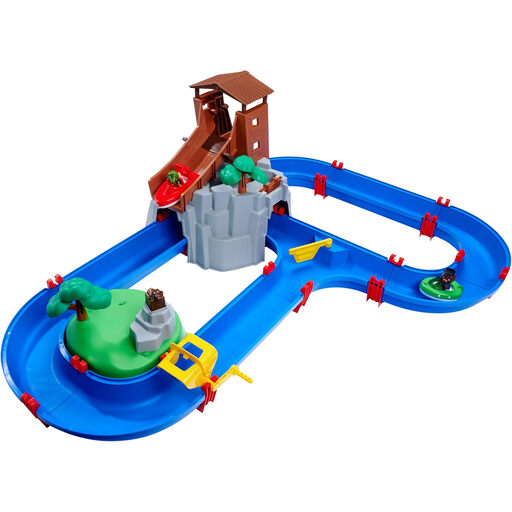
Why this product suits this profile: Measuring 138 × 88 × 47 cm, this water play track is designed for children aged 3 to around 7. It features a water channel, reservoir, boats and figures for supervised outdoor play.
Its intended outdoor use, weight of 4.6 kg and warning about small parts make space, age and supervision requirements clear.
A hand crank to control the water flow, with boats and play figures included.
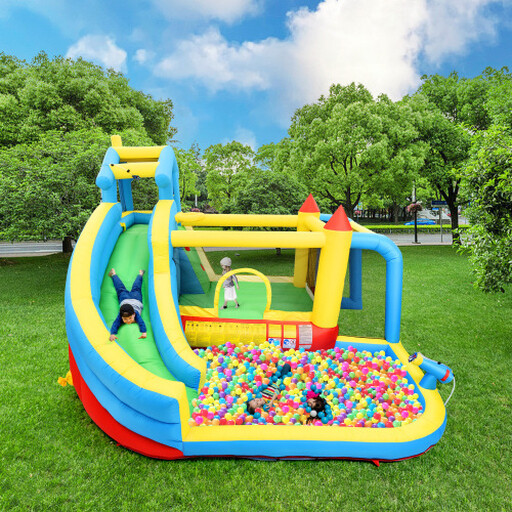
Why this product suits this profile: Designed for children aged 3 to 10, this inflatable play centre combines a bouncing area, slide, climbing area, basketball hoop and pool for outdoor use.
Its assembled dimensions of 364 × 315 × 239 cm, maximum total weight limit of 135 kg and limit of up to three children are clearly stated.
Use it dry or connect it to a water supply. A blower is included, along with several play areas.
For older children aged around 24 months and over, an indoor climbing tower with a ladder, climbing ropes, rings and a removable wooden swing may be worth considering. The roba Indoor Wooden Play Tower has a stated maximum weight limit of 70 kg. It should be placed on a soft mat and used under direct supervision.
If you’re looking for versatile outdoor equipment, you could also consider a multi-activity bouncy castle with a pool, slide and trampoline. Check the total weight limit, the maximum number of children allowed, the blower’s power and the guidance on wind and drying.
We’ve put together a complete, regularly updated list of products that meet these strict selection criteria and fully comply with the safety regulations in force in the EU.
As well as the stated external dimensions, you’ll need to leave a clear safety zone around the equipment. For a bouncy castle with a slide, also allow for the blower, anchor points and access to the slide. Always follow the manufacturer’s specific set-up and safety instructions.
This depends on your child’s age, weight and stage of development. The models mentioned are stated to be suitable up to around 24 months or 15 kg. Stop using the playpen if your child can climb out or if any part of it is damaged.
Running costs depend mainly on the blower’s power and how long you use it. Many models need the blower to stay on throughout play. To get a realistic estimate, multiply the blower’s power in kilowatts by the running time and your electricity tariff.