
Lieferung heute & morgen

Qualitätsgarantie

Willkommens-Angebote freischalten: KOSTENLOSE Lieferung | Bis zu 80 % RABATT | Kostenlose 30-Tage-JoyPlus-Testphase
App herunterladen
A play mat for children should invite play, be easy to clean and suit the space you have at home. In practice, unclear material information, incorrect assumptions about size or an unsuitable floor can quickly lead to a disappointing purchase. This guide explains which features to look for before buying a children’s play rug, jigsaw mat or crawling mat.
A mat may have a textured surface or coated underside and still slide on smooth tiles. The floor covering, dust and moisture all make a difference. Before buying, check whether the manufacturer specifies a non-slip underside and whether the mat is intended for indoor use only.
A 100 × 190 cm play mat covers a rectangular area, while square EVA foam tiles can be arranged in different configurations. When choosing jigsaw mats for children, you’ll also need to account for the edging pieces and the actual length of each side. Convert product measurements given in inches to centimetres: a 12 × 12 inch tile measures approximately 30.5 × 30.5 cm.
Textile mats can absorb dust and liquids differently from closed-cell foam mats. For products intended for young children, warnings, minimum age and supervision are also important. A mat is no substitute for supervision, and you should check it regularly for cracks, loose edges or damaged connectors.
An EVA foam mat is made from ethylene-vinyl acetate and is often sold as an interlocking tile set. It can provide a softer, slightly springy surface for floor-based activities. Treat “non-toxic” as a manufacturer’s claim, and check the material, care and safety information on the packaging too.
Polyester play rugs feel different and can usually be rolled up. For families, it’s important to know whether the surface can be cleaned with a damp cloth. An easy-care play mat shouldn’t need any specialist cleaning products.
Measure the intended area, including any furniture edges. For interlocking mats, the number of tiles matters more than the product name alone. A pack of six tiles and a pack of 18 tiles will suit different room sizes.
Thickness affects comfort, storage and how the mat meets other floor surfaces. A thicker mat may feel more comfortable during exercises, but it could create an awkward edge under doors or furniture.
A floor mat for a child’s bedroom isn’t automatically suitable for yoga or fitness. For adults, the surface, dimensions and how well the mat returns to shape under pressure all matter. A non-slip play mat should be placed on a flat, clean surface. Avoid damaged products, naked flames and sharp-edged objects.
For children’s products, check the stated minimum age, warnings and, where applicable, markings such as CE or information about relevant toy safety requirements. A marking alone shouldn’t be taken as a guarantee of quality; the specific product information is what matters.
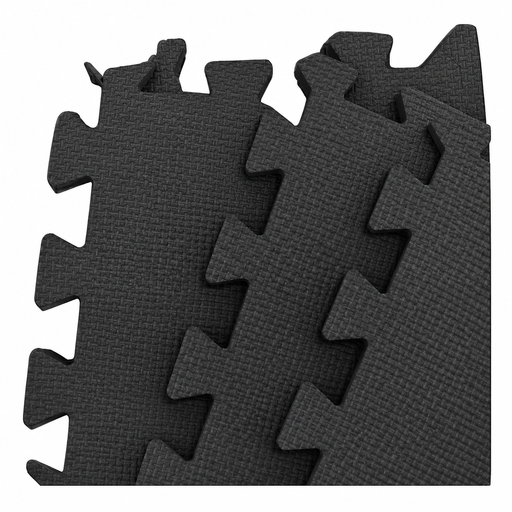
Why this product suits this profile: This set of six square tiles is ideal for smaller play areas, reading corners or a limited workout space. The interlocking pieces can be assembled without tools.
The manageable pack size reduces the risk of buying considerably more coverage than you need. Before buying, allow for an area of around 30.5 × 30.5 cm per tile.
According to the product information: EVA foam, six tiles, ten edging strips and an easy-to-separate interlocking design.

Why this product suits this profile: This textile play rug provides a rectangular play area and has two printed sides: one with road designs and the other with animal and farm scenes. It’s a good fit for children’s bedrooms where you’ll want to roll the mat up after playtime.
The product size is clearly stated as 100 × 190 cm. The mat isn’t presented as an all-purpose impact-absorbing solution, so a level surface and supervision are still essential.
According to the product information: reversible design, polyester main material, damp-cleaning care and roll-up storage. It’s listed as suitable from two years of age; follow the warnings on the packaging.
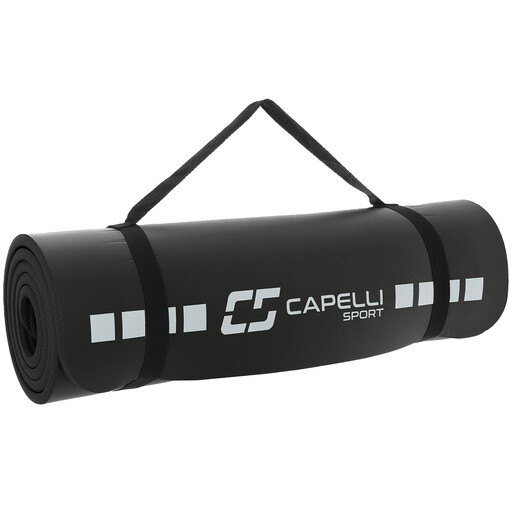
Why this product suits this profile: According to the product description, this mat is designed for yoga, Pilates, stretching and fitness. It’s therefore better suited to adults or versatile indoor spaces than to use as a traditional crawling mat.
Its stated purpose helps prevent it being mistaken for a child-friendly play mat. For children, check the age rating and usage instructions separately.
According to the product information: 12 mm thick, 61 × 183 cm, NBR foam, textured surface and an elastic carry strap.
We’ve put together a complete, regularly updated list of products that meet these strict selection criteria and fully comply with the safety regulations in force in the EU.
Place every play mat for children on a clean, flat and dry surface. Interlocking tiles should fit flush at every join. Let textile models dry completely after cleaning before rolling them up. Foam mats can often be cleaned with a damp cloth and mild detergent; always follow the manufacturer’s instructions.
Lifespan depends on use, storage and material. Prolonged exposure to direct sunlight, sharp toy edges and leaving weight in one place for extended periods can affect the mat’s surface and shape. Check it regularly and replace it if you find cracks, peeling or permanently misshapen connections.
Start by measuring the clear floor space and allow room to move around the edges. A small interlocking set may be enough for a single play corner. For group play or a nursery area, a larger connected surface or a rectangular play rug may be more practical.
Many EVA jigsaw mats can be wiped clean with a damp cloth. Dust and liquids can collect between the joins, though, so it’s a good idea to separate the pieces occasionally, clean them and let them dry completely.
It depends on the material, thickness, surface and product specifications. A designated fitness mat such as the Capelli Sport model is intended for floor exercises. A children’s play mat with road designs may not offer the length, grip or stability needed for yoga and fitness.