
Lieferung heute & morgen

Qualitätsgarantie

Willkommens-Angebote freischalten: KOSTENLOSE Lieferung | Bis zu 80 % RABATT | Kostenlose 30-Tage-JoyPlus-Testphase
App herunterladen
A children’s puzzle should suit the child’s age, dexterity and interests. In practice, unclear age recommendations, overly difficult pictures or loose pieces can quickly lead to frustration. Parents, grandparents and other family members should therefore look beyond familiar characters or colourful packaging and check a few objective features before buying.
A 24-piece puzzle may be suitable for a four-year-old, while another picture with the same number of pieces may be considerably more challenging. Lots of similar colours, small picture details or no frame can all increase the level of difficulty. For puzzle beginners, clear pictures, high-contrast colours and an easy-to-follow guide image are usually more practical.
“From 3 years” or “from 4 years” is a useful guide, but it does not replace an individual assessment. A children’s puzzle from 3 years should ideally consist of sturdy, easy-to-grip pieces. A children’s puzzle from 4 years can contain more pieces and finer image details, but should still offer a manageable challenge.
The age recommendation must also be taken seriously: small puzzle pieces may pose a choking hazard. The Ravensburger models described here include warnings about small parts and the potential risk of choking. Children under three should not use these products.
A Disney puzzle for children, a Paw Patrol puzzle or a construction-site picture can make choosing easier if the child already knows the characters or themes. However, the picture itself says nothing about how easy the puzzle is to handle, the size of the pieces or the baseboard. A children’s frame puzzle provides extra guidance thanks to its border and is often a good choice for beginners.
For younger children, sturdy frame puzzles with just a few pieces are often a sensible choice. The Ravensburger “Work on the Construction Site” model has 12 pieces, is intended for children aged three and over according to the product details, and includes a frame with cut-outs for removing the pieces. It can therefore serve as a first puzzle, provided the child plays under supervision.
For children aged four and over, 24-piece puzzles, 37-piece puzzles or 40-piece puzzles may be suitable, depending on their experience. A 40-piece picture is not automatically unsuitable if the frame provides a guide and the child is already familiar with puzzles.
A frame prevents the individual pieces from slipping around while the puzzle is being assembled. With many frame puzzles, the picture is also printed on the baseboard or indicated by outlines. This makes it easier to match colours and shapes.
Check whether the baseboard is actually included in the delivery. The Ravensburger Paw Patrol Frame Puzzle 06155 is listed as including 37 pieces, a frame or baseboard, and a completed puzzle size of 24.5 × 32.5 cm. The 24-piece “A Day at the Dock” model also includes a search game featuring ten picture elements.
The Ravensburger children’s puzzles featured here are primarily made from paper or cardboard. The following details are particularly relevant when buying:
An educational children’s puzzle can support the playful matching of shapes, colours and parts of pictures. However, statements about concentration, perception or fine motor skills should be understood as potential opportunities for playful learning, not as guaranteed developmental benefits.
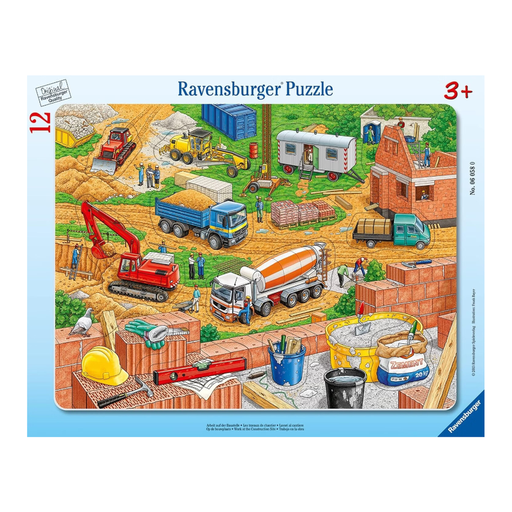
Why this product suits this profile: According to the product details, this 12-piece frame puzzle is suitable for children aged three and over and features an easy-to-understand construction-site picture.
The small number of pieces and guided frame reduce the risk of a first puzzle being too complicated.
12 sturdy cardboard pieces, a frame with cut-outs and no batteries required.
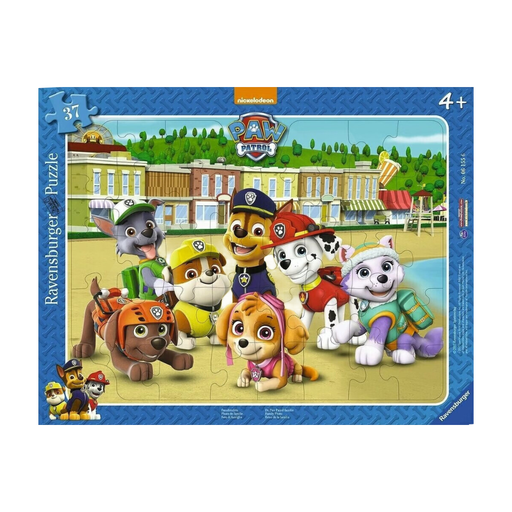
Why this product suits this profile: This Paw Patrol puzzle combines familiar characters with a stated completed puzzle size of 24.5 × 32.5 cm and an age recommendation of 4 years and over.
The product details specify the number of pieces, dimensions, material and safety information, so the choice is not based on the picture alone.
37 pieces, a baseboard to help with assembly, paper or cardboard construction, and dry cleaning.
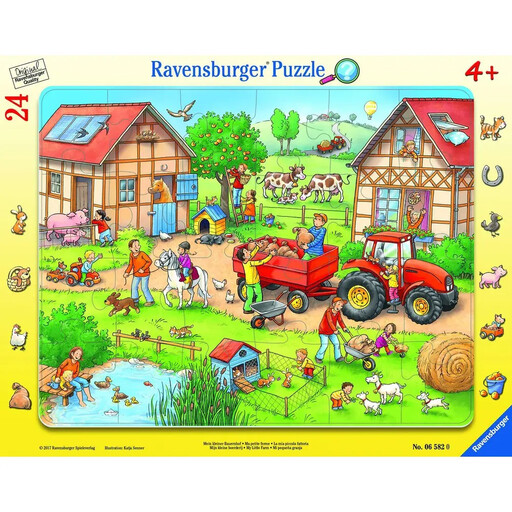
Why this product suits this profile: The farmyard picture is suitable for children aged four and over who enjoy completing puzzles repeatedly and would also like to search for picture elements.
The baseboard provides guidance, while the additional search game offers a second way to play.
24 pieces, a frame with picture guides, a search game and dry care according to the product description.
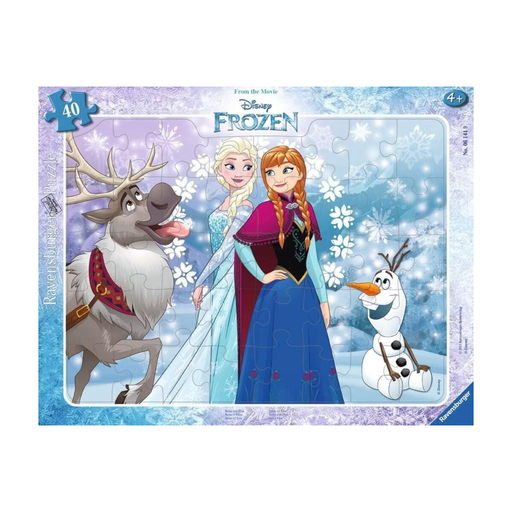
Why this product suits this profile: The Anna and Elsa picture, 40 pieces and a frame appeal to children aged four and over who already have some puzzle experience.
The frame and marked positions help combine a popular picture with a structured assembly aid.
40 cardboard pieces, a baseboard with outlines and stated suitability for children aged four and over.
We have put together a complete, regularly updated list of products that fully meet these strict selection criteria and the safety regulations applicable in the EU.
For a children’s puzzle from age 3, a small number of sturdy pieces and a clear frame structure are useful guidelines. According to the product details, the Ravensburger construction-site puzzle with 12 pieces is intended for children aged three and over. In view of the safety information, you should still always check the specific packaging and supervise the child while playing.
This depends on the child’s experience, the picture and how long they can concentrate. For puzzle beginners, 12 pieces may be appropriate. Depending on their development, children aged four and over may also be able to complete a 24-piece puzzle, a 37-piece puzzle or a 40-piece puzzle. A frame, large areas of colour and a familiar picture make getting started easier than the number of pieces alone.
Cardboard puzzles should be stored in a dry place and cleaned with a dry cloth. Keep all the pieces in the original packaging after playing. If a piece is missing or the surface has sharp edges, check the puzzle before using it again and remove it from use if necessary.