
Lieferung heute & morgen

Qualitätsgarantie

Willkommens-Angebote freischalten: KOSTENLOSE Lieferung | Bis zu 80 % RABATT | Kostenlose 30-Tage-JoyPlus-Testphase
App herunterladen
A children’s puzzle should suit the child’s age, fine motor skills and everyday routine. In practice, however, frustration is not caused only by too many pieces or an unappealing picture. Seemingly minor details, such as missing frames, pieces that are difficult to grip or unclear safety information, can also mean that a puzzle is barely used after a short time.
This buying guide helps parents, grandparents, relatives and educational settings choose the right puzzle for children based on age, material, number of pieces and intended use.
A 24-piece puzzle may be suitable for a four-year-old, while a 100-piece puzzle can quickly become too challenging for a younger child. It is not just the number on the packaging that matters, but also the picture, piece size, colour contrasts and the child’s previous puzzle experience.
A child who already does puzzles regularly may be able to complete a 100-piece puzzle at the age of six. For beginners, a frame puzzle with fewer pieces is often more suitable.
A wooden puzzle from 1 year usually has large, easy-to-grip pieces or knobs. Small individual parts, on the other hand, can be hazardous for children under three. The manufacturer’s age recommendation is therefore an important guide and should not be ignored simply because the picture is popular.
You should also look out for warnings such as ‘Not suitable for children under three years’ and regularly check the playing pieces for cracks, loose knobs or sharp edges.
A puzzle can playfully encourage learning about shapes, colours, logical matching and perseverance. However, this does not automatically mean it will have a learning or therapeutic effect. A high-quality educational toy is primarily characterised by thoughtful design, an appropriate level of challenge and good opportunities for independent play.
For children from the age of one, large wooden knobs and a small number of clearly recognisable shapes are sensible. A children’s learning puzzle may feature colours, animals or simple objects. From the age of three, frame puzzles with around 12 to 24 pieces are suitable options. For a children’s puzzle from 4 years, 24 to 40 pieces, a sturdy base and an easy-to-follow picture are often practical.
From the age of six, more challenging pictures, several puzzles in one box or 100-piece puzzles may be appealing. Children up to around eight may also enjoy logic games with activity booklets, provided they like solving puzzles independently.
Wooden puzzles should have sturdy, well-finished pieces without any visible splinters. Large knobs must be firmly attached. Cardboard puzzles should be sufficiently thick so that the pieces do not quickly fray after being fitted together repeatedly.
For products intended for younger children, the combination of age recommendation, warnings and material information is more important than a promotional quality label. Damaged pieces should not be used any further.
A frame puzzle gives children visual guidance. Printed outlines make it easier to match the pieces and reduce the risk of the picture falling apart when it is moved. For use on the go, compact metal tins or enclosed travel games are practical because the pieces are easier to keep together.
Before buying, also check whether the puzzle includes a storage solution and whether the completed puzzle will fit on the intended table or on the shelf.
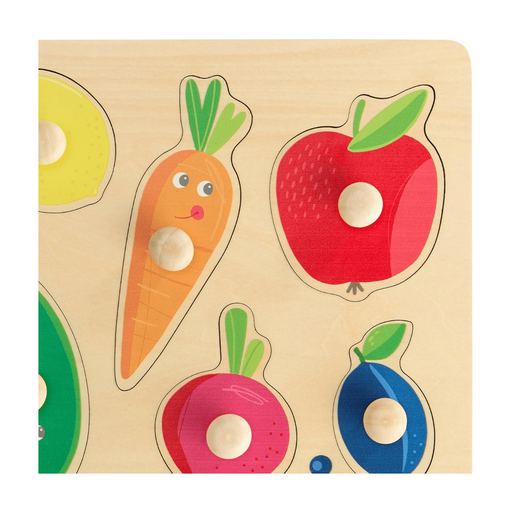
Why this product suits the profile: This wooden puzzle is designed for children from 12 months and features large knobs together with simple fruit and colour shapes.
The age recommendation, large grasping knobs and clear shapes make its intended use easy to understand.
Solid wood, a 30 × 21 cm puzzle board and no batteries required.
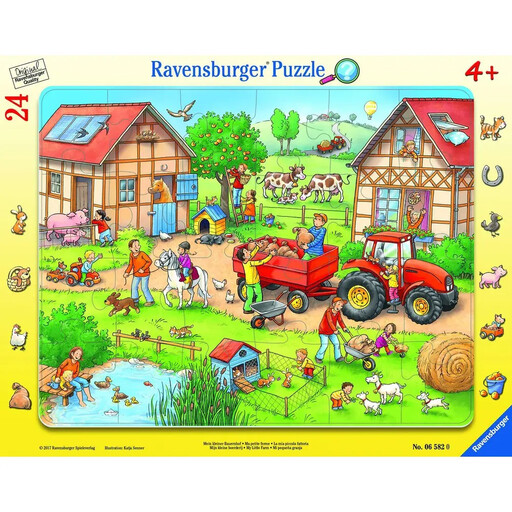
Why this product suits the profile: This 24-piece frame puzzle for children from four years combines a guided base with a seek-and-find game featuring a farmyard theme.
The base provides guidance, so the number of pieces is not the only factor determining the difficulty.
Sturdy cardboard pieces, a 32.5 × 25 cm format and an additional seek-and-find task within the frame.
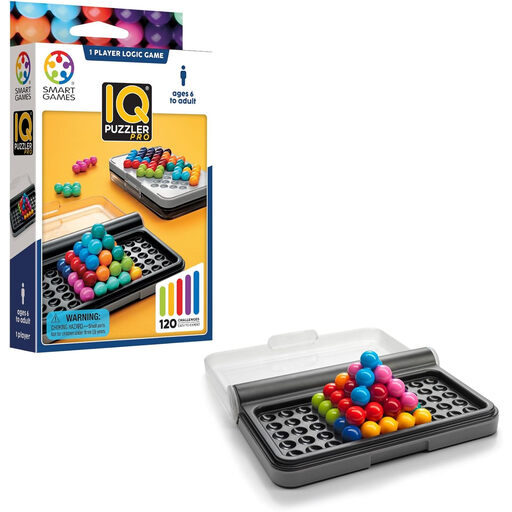
Why this product suits the profile: This compact brain game for children from six years is designed for one player and works well as a puzzle for taking on the go.
Instead of offering a one-off piece-matching task, the game provides 120 challenges in three game modes.
Compact format, 13 plastic pieces, solo play and challenges in 2D and 3D.
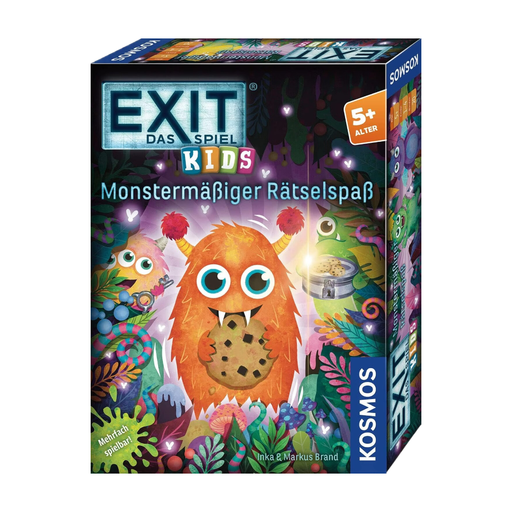
Why this product suits the profile: This cooperative puzzle game is designed for children from five years and can be played by one to four people.
The rules are designed for younger children; adults can provide support for children aged five to seven.
Cooperative play, 1–4 players, themed puzzles and optional app support.
We have put together a complete, regularly updated list of products that fully meet these strict selection criteria and the safety regulations applicable in the EU.
For children from 12 months, large wooden puzzles with firmly attached grasping knobs and a small number of clear shapes are suitable. According to the product information, the Haba Grasping Puzzle Fruit & Colours is designed for children from 12 months. An adult should supervise play and check the pieces regularly.
As a general guide, 24 to 40 pieces are often suitable, particularly if the puzzle has a frame or a printed base. A children’s puzzle from 4 years may also be more challenging for children with previous experience. The picture, piece size and experience are at least as important as the number of pieces itself.
Yes, provided the pieces are packed compactly and are not easily lost. Magnetic or enclosed travel games such as the SmartGames IQ-Puzzler PRO take up very little space. For longer car journeys or waiting times, you should nevertheless check whether the child can use the game materials independently and whether a flat surface is available.