
Lieferung heute & morgen

Qualitätsgarantie

Willkommens-Angebote freischalten: KOSTENLOSE Lieferung | Bis zu 80 % RABATT | Kostenlose 30-Tage-JoyPlus-Testphase
App herunterladen
Children’s toys should be fun, encourage independent play and suit the child’s stage of development. In practice, however, unclear age recommendations, missing accessories or underestimated safety risks can quickly lead to a disappointing purchase. This is especially true when buying toys as gifts for children, so it is worth checking the technical specifications and intended use rather than focusing solely on eye-catching product images.
“From 3 years” does not automatically mean that a toy is suitable for every three-year-old. Some products already require good hand-eye coordination, patience or the ability to handle small components. With a construction toy containing many individual pieces, the recommended age range may therefore be more important than the number of pieces included.
When buying remote-controlled toys, check whether batteries or a charging cable are included. The play environment is also important: a vehicle designed for smooth indoor floors will not necessarily be suitable for carpets, sand or uneven terrain. With craft sets, make sure it is clear whether the necessary materials, tools and instructions are included.
Beads, letters, stickers and miniature vehicles can pose a choking hazard to younger children. An age label does not replace adult supervision. Toys with damaged parts, sharp edges or loose connections should no longer be used.
The recommended age is a useful first filter. Toys from 3 years include, for example, larger vehicles, simple construction systems and moving playsets. From the age of 6, more complex construction tasks, creative craft sets and remote-controlled models may be suitable. For shared activities, family games with a clearly stated number of players and a short playing time are practical.
Look out for the following information:
With plastic toys, smooth edges, sturdy moving connections and clear manufacturer information are important points to check. The CE marking indicates that the manufacturer must declare compliance with the applicable EU requirements. However, it is not an independent quality seal. Toys with mechanical functions should be checked regularly for cracks or loose parts, particularly around joints, wheels and flaps.
For educational toys and craft products, the following also matter:
Outdoor toys should be suitable for the environment in which they are intended to be used. A throwing game requires sufficient open space and a safe distance from roads, windows and fragile objects. Electronic toys should not be used on wet floors. Sand, dust and moisture can affect moving or electrical components. After use, dry, clean storage is recommended.
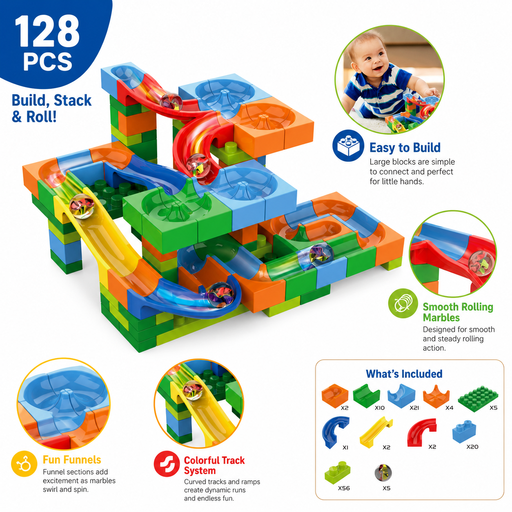
Why this product suits this profile: This construction toy combines building and rolling and can be enjoyed during family activities. The set is supplied as one pack containing 128 pieces.
The number of pieces and the play concept are clearly described. Before buying, you should still check the recommended age and make sure children can handle the small parts safely.
128 components, a rolling function and use without any stated battery requirement.
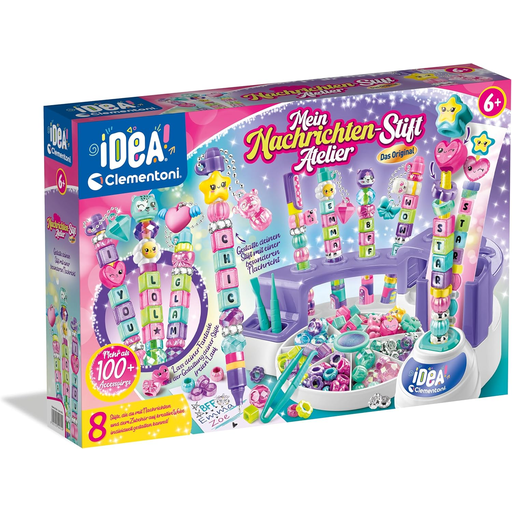
Why this product suits this profile: This creative craft set for children aged 6 and over includes a workstation, tools, letters, beads, stickers and figures for decorating your own pens.
According to the product description, the required basic materials and holder are included. As the set contains small parts, younger children require supervision.
Workstation, pen holder and decorative elements in one set; no batteries required.
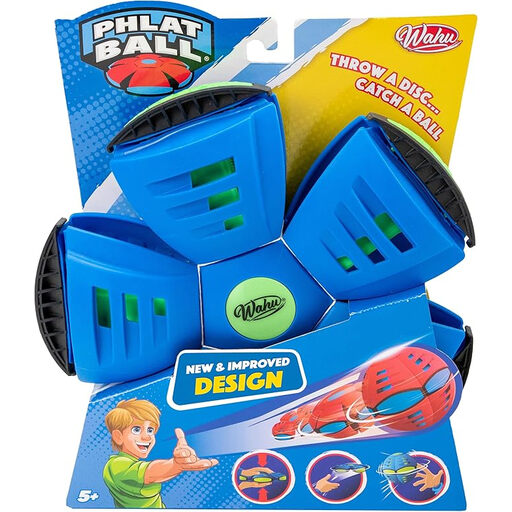
Why this product suits this profile: This outdoor toy can be used as both a frisbee and a ball, and is designed for use in the garden, park, at the beach or while travelling.
The intended uses and portability are clearly stated. According to the safety information, the product is not suitable for children under 36 months.
Two play functions, compact dimensions of 24 × 6,5 × 27,51 cm and no batteries required.
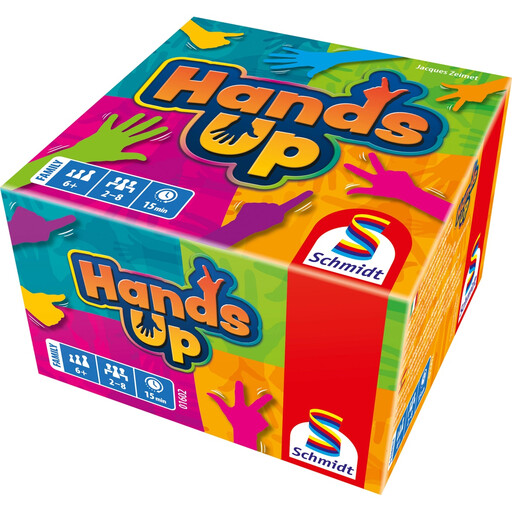
Why this product suits this profile: This family game is designed for at least two players aged 6 and over and requires no batteries. The cards can be enjoyed together around the table.
The number of players, recommended age and power requirements are clearly stated. This makes it easy to check in advance whether the game is suitable for your family.
Compact packaging dimensions of 10 × 10 × 6,8 cm and use without batteries.
We have put together a complete, regularly updated list of products that fully meet these strict selection criteria and the safety regulations applicable in the EU.
Depending on your child’s interests and everyday situation, different categories may be worth considering:
From the age of 3, larger, easy-to-use toys such as sturdy vehicles, simple construction systems and age-appropriate rolling and movement games may be suitable. Small parts, long cords and electronic functions that are difficult to control should be checked particularly carefully.
The lifespan depends on the materials, mechanics, frequency of use and care. Vehicles with moving flaps or wheels should be checked regularly. Craft sets may contain consumable materials, while card games and construction sets can remain usable for longer when all their components are stored safely.
Check whether batteries are included, which type is required and whether a rechargeable battery needs to be charged. The product should be switched off after play. If it is going to be stored for an extended period, it is advisable to remove any removable batteries to prevent damage caused by leakage.