
Lieferung heute & morgen

Qualitätsgarantie

Willkommens-Angebote freischalten: KOSTENLOSE Lieferung | Bis zu 80 % RABATT | Kostenlose 30-Tage-JoyPlus-Testphase
App herunterladen
A children’s scooter should suit the child’s age, height and intended use. However, eye-catching light-up wheels, high weight limits or terms such as “Pro” do not automatically mean that a model is suitable. The key factors are clear product details: number of wheels, handlebar height, braking system, maximum load and intended conditions of use.
This buying guide explains what families in the UK should look out for and which models suit different user profiles.
“Scooter for children aged 3 and over” is only a general guide. Children develop at different rates, and height has a significant impact on control. The handlebar should be adjustable so that the child can stand upright with both hands placed securely on it. If the handlebar is too low or too high, turning becomes unnecessarily difficult.
With a height-adjustable scooter, you should therefore check not only the age recommendation but also the adjustment range in centimetres. Information such as “3 to 10 years” should not be interpreted as a guaranteed period of use.
An LED scooter or scooter with light-up wheels may be more noticeable at dusk and can be appealing to children. However, lighting is no substitute for a helmet or suitable protective equipment. On some models, the wheels generate light through movement, while integrated LED elements require batteries.
You should therefore check whether batteries are included, which components are illuminated and whether younger children can reach any small parts. For example, the “Beleev V2-Pure” specifies battery-powered deck lighting requiring two AA batteries, which are not included.
A maximum load of 100 kg or 220 lb does not automatically mean that a model is suitable for every child. With a stunt scooter for children, you must also consider the handlebar height, the scooter’s own weight, its construction and its intended use. A classic children’s kick scooter is not necessarily suitable for jumps, while a stunt model generally does not have a folding design.
The weight limit must not be exceeded. When choosing a scooter, you should also consider whether it will be used on level paths, in a courtyard, at a skate park or only on private land.
A 3-wheel children’s scooter with two front wheels is often more stable when stationary than a two-wheeled scooter. Models with a lean-to-steer system are controlled by shifting the rider’s weight. This may feel more intuitive for younger children, although it does require some practice.
A two-wheeled children’s scooter is more manoeuvrable and can often be used for longer. The child must, however, be able to maintain their balance independently. Four wheels or a seat can provide additional stability on certain beginner models, but they also change the riding experience and the weight.
A height-adjustable scooter should offer several fixed positions and lock securely once adjusted. A wide, non-slip deck makes it easier to stand securely, particularly during first attempts. The rear foot brake should be easy to reach and must not be compromised by loose components or heavily worn wheels.
With a children’s scooter with a brake, regular checks are part of responsible use. Before every ride, check that the handlebar is secure, the wheels turn freely and the brake engages reliably against the rear wheel.
A folding children’s scooter is practical for the car boot, storage cupboard or public transport. The mechanism should lock fully into place and should not release accidentally when the scooter is being carried. A folding model may have more moving parts as a result, so these need to be checked regularly.
Aluminium frames can help reduce weight. Steel or combination frames may offer a different balance of weight and stability depending on their construction. Individual material specifications should therefore always be assessed alongside the scooter’s own weight, wheel size and weight limit.
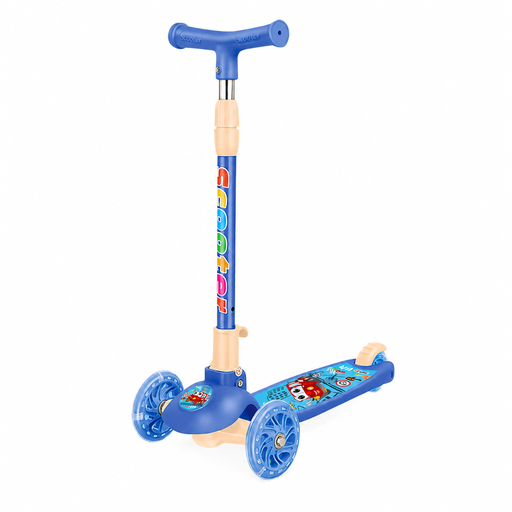
Why this product suits this profile: This model combines three wheels with a folding, height-adjustable design. It is therefore suitable for families looking for an easy-to-store first scooter. The colour or design is selected at random, according to the product information.
The relevant features are clearly specified: three wheels, a folding function and adjustable height. The random design selection should be taken into account before purchase.
Three wheels, a folding design and a height-adjustable handlebar are listed as product features.
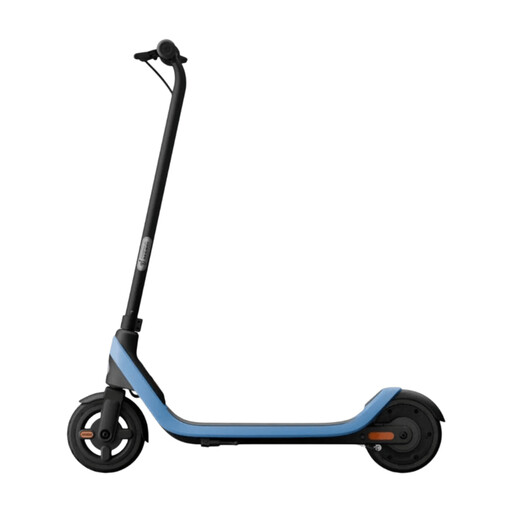
Why this product suits this profile: According to the product specifications, this electric scooter is designed for children aged 6 to 10 and measuring 115 to 145 cm. Three riding modes, height-related usage guidelines, a drum brake and a folding frame make it easier to assess whether it is suitable.
The age range, recommended height, maximum speed of 16 km/h, range of up to 14 km and maximum load of 50 kg are all clearly specified. According to the product information, this model is not approved for public roads.
Three riding modes, 7-inch solid tyres, a drum brake, IPX4 splash resistance and a folding function are specified.
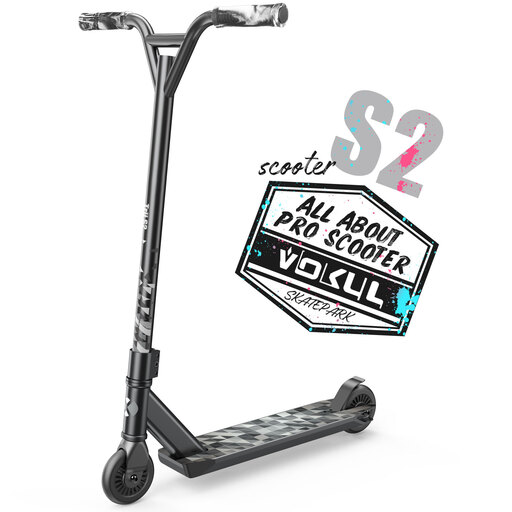
Why this product suits this profile: According to the description, this children’s stunt scooter is aimed at young people aged 7 to 14 and designed for tricks at a skate park or on suitable private land.
The fixed handlebar construction and rigid chassis match the stated intended use. This model should not be treated as a folding everyday scooter.
The listed features include a 6061 aluminium frame, reinforced deck, 4130 chromoly handlebar, triple clamp and rear wheel brake.
Before every ride, check the handlebar clamp, wheels, deck and brake. Screws can work loose due to vibrations. For the models mentioned, a damp cloth is sufficient for cleaning; pressure washers can damage bearings and moving parts.
Children should wear a suitable helmet and, depending on the riding environment, knee and elbow pads as well. Avoid riding near traffic, stairs or uneven surfaces. With electric scooters, parents must also check local regulations. According to the product information, the Segway models mentioned are not approved for public roads and may only be used in accordance with the applicable rules or on suitable private land.
We have put together a complete, regularly updated list of products that fully meet these strict selection criteria and the safety regulations applicable in the EU.
This depends on the specific model, the child’s height and their motor skills. Many 3-wheel children’s scooters are specified as suitable from around the age of 3. A suitable handlebar height, secure footing and adult supervision remain essential.
There is no fixed lifespan that applies in every case. It depends on the load, surface, care and storage conditions. Regularly checking the wheels, brakes, screws and folding mechanism helps identify wear at an early stage.
In addition to the purchase price, the main costs are electricity for charging and any replacement wear parts. You should also pay attention to the charging time, range, maximum load and permitted use. The battery and charger should only be used according to the manufacturer’s instructions and stored in a dry place.