
Lieferung heute & morgen

Qualitätsgarantie

Willkommens-Angebote freischalten: KOSTENLOSE Lieferung | Bis zu 80 % RABATT | Kostenlose 30-Tage-JoyPlus-Testphase
App herunterladen
A children’s scooter with LED wheels combines getting around with eye-catching lights. But for parents, it’s not just about lights and colour. The scooter needs to be the right size, have a reliable brake and suit your child’s age and height. The guide below will help you make sense of product claims and avoid common buying mistakes.
On many models, the wheels light up as they move, so they don’t need batteries. Extra lighting on the deck, on the other hand, may be battery-powered. For example, the Beleev V2-Pure PurpleScooter is listed as having battery-free LED wheels, while its deck lighting requires two AA batteries, which are not included.
Before you buy, check:
“From 3 years” or “for children up to 10 years” are only guidelines. What matters is the handlebar height, maximum weight capacity and your child’s height. Handlebars that are too high can make the scooter harder to control, while handlebars that are too low can lead to poor posture.
A height-adjustable children’s scooter is a good choice if you want your child to use it for several years. Even so, check the specifications against your child’s actual height and weight.
A three-wheeled children’s scooter is generally more stable when stationary than a two-wheeled model. Lean-to-steer scooters are steered by shifting your weight. This can feel intuitive for younger children, but they’ll need a little time to get used to it.
A suitably wide, non-slip deck, wheels that turn smoothly and a reliable rear brake are still important. A brake alone won’t prevent falls if your child rides on wet or uneven ground.
A scooter for children aged 3 and over should be specifically recommended for that age group. The Beleev model is listed with three handlebar height settings, from 24.0 to 32.1 inches, and a maximum weight capacity of 110 lb. That’s around 49.9 kg. The product warning also mentions small parts and the need for protective gear.
Specifications can vary between models. So don’t rely on the product title alone: check the technical details on the relevant product page.
A low, wide deck makes it easier to step on and can help with balance. A textured surface reduces the risk of slipping, but it’s no substitute for suitable footwear or keeping to a sensible speed.
On a children’s scooter with a brake, your child should be able to reach the brake easily with their foot. The Beleev V2-Pure PurpleScooter is listed with a rear brake featuring integrated stainless steel components. Before each ride, check that the brake, handlebar connection and wheels are secure.
A folding children’s scooter is handy for the boot, storage cupboard or trip to the playground. Check whether the folding mechanism really can be operated without tools, and whether it locks securely when folded.
For older children and teenagers, a two-wheeled kick scooter is often more suitable than a three-wheeled starter model. Freestyle scooters, meanwhile, are designed specifically for tricks. They aren’t automatically suitable for younger children and should only be used on suitable, dry surfaces.

Why it suits this rider: According to the product title, this three-wheeled LED scooter is designed for children aged 3 to 10 and combines adjustable height with a lean-to-steer system.
Details of the three wheels, height-adjustable handlebars and wide deck make it easier to compare with basic models that can’t be adjusted.
LED wheels, three wheels, adjustable handlebar height and a lean-to-steer design, as stated in the product title.

Why it suits this rider: This model combines LED wheels and deck lighting with three handlebar height settings, a wide deck and a rear brake.
The product description distinguishes between battery-free wheel lights and deck lighting, and clearly states which AA batteries are needed.
Folding design, listed weight of 6.1 lb, three handlebar height settings and a maximum weight capacity of 110 lb.
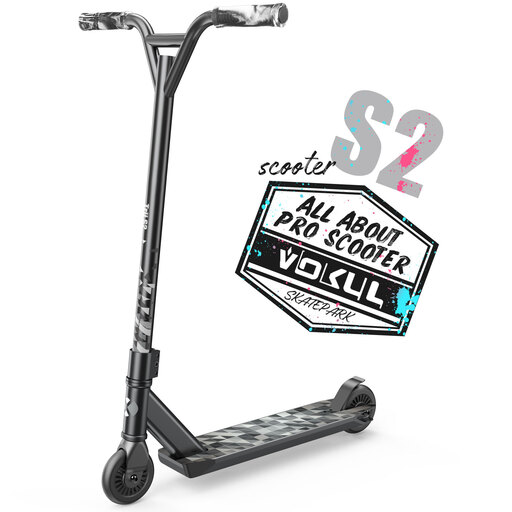
Why it suits this rider: According to the product details, this two-wheeled freestyle scooter is aimed at teenagers aged 7 to 14 and is designed for practising simple tricks on suitable surfaces.
It isn’t presented as a scooter for toddlers, but clearly as an introduction to freestyle riding, with a fixed handlebar and two wheels.
Aluminium frame, reinforced deck, 4130 chromoly handlebars, 100 mm polyurethane wheels and a rear brake, according to the product details.
We’ve put together a complete, regularly updated list of products that meet these strict selection criteria and the safety regulations in force in the EU.
Before the first ride, check all the screws, handlebar, wheels and brake. Children should wear a helmet and, depending on how they ride, knee and elbow pads. Many children’s scooters aren’t designed for use on public roads or paths, so check the product warning and local rules.
After riding on dusty ground, a quick wipe with a slightly damp cloth is usually enough. Water, damp conditions and road salt can put strain on bearings, metal parts and electrical components. Storing the scooter in a dry place helps it last longer.
It depends on the model. According to product details, many three-wheeled lean-to-steer scooters are designed for children aged 3 and over. However, handlebar height, weight limit, your child’s coordination and adult supervision are all important considerations.
On many models, the wheels light up as they move and don’t need batteries. Extra LED lighting on the deck may be battery-powered. So check the product description for details of the wheel and deck lighting separately.
There’s no reliable way to give a set lifespan. It depends on the load, riding surface, storage and care. Regularly checking the wheels, screws, handlebar and brake can help you spot wear early.