
Lieferung heute & morgen

Qualitätsgarantie

Willkommens-Angebote freischalten: KOSTENLOSE Lieferung | Bis zu 80 % RABATT | Kostenlose 30-Tage-JoyPlus-Testphase
App herunterladen
A children’s shelving unit with a toy box should help keep things tidy, but you shouldn’t choose one based on colour and shape alone. For parents of toddlers and pre-schoolers, the most important considerations are a suitable height, secure anti-tip fixing and storage that children can actually reach in everyday life.
Many options look similar at first glance. However, three common buying mistakes can lead to unnecessary costs later:
A low shelving unit for children makes it easier for them to reach picture books and frequently used toys independently. A height of around 70 cm may be within easy reach for many toddlers and pre-schoolers. Even so, the shelving unit shouldn’t be used as a seat, ladder or climbing aid.
A combination of open shelves and a separate box is a practical option for storing books and toys:
Once assembled, a children’s bedroom shelving unit should be checked to make sure it stands firmly. It’s particularly important to secure it to the wall using the supplied anti-tip device, if one is included. Even a low shelving unit can tip over if a child pulls on it or climbs on it.
Before use, parents should:
For a children’s shelving unit with wheels, check whether the wheels are fitted only to the toy box or whether the whole piece of furniture can move. A box on wheels can make tidying easier, but it shouldn’t stick out into walkways unsupervised.
An MDF children’s shelving unit is made from medium-density fibreboard. When buying, check the stated material, the quality of the finish and the maximum weight capacity. The model featured here is listed as being made from class E1 MDF. According to the product details, its maximum total weight capacity is 25 kg. This doesn’t mean that every individual shelf can support the same weight.
Rounded or softened edges can help reduce the risk of injury during everyday use. However, they’re no substitute for supervision and secure assembly. A soft, slightly damp cloth is usually all you need for cleaning. Prolonged exposure to moisture can damage or warp MDF boards.
The products below vary considerably in height, design and intended use. Not every shelving unit is designed specifically for children. When considering taller or wall-mounted models in particular, parents should take the child’s age, the fixing method and the height they can reach into account.
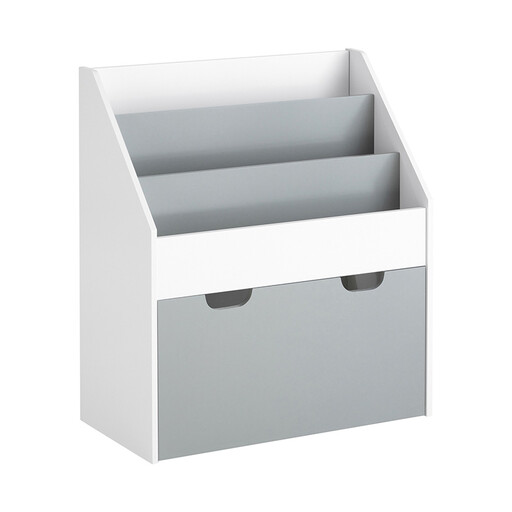
Why it suits this profile: Three open shelves combined with a removable toy box provide separate storage for books and toys, all in a compact footprint.
At around 70 cm tall, it’s designed to be easier to reach. The product details also mention rounded edges and an anti-tip device for wall fixing. Be sure to follow the assembly instructions and weight limits.
Measures around 63 × 70 × 30 cm, made from class E1 MDF, with a removable box featuring optional detachable wheels and a stated maximum total weight capacity of 25 kg.
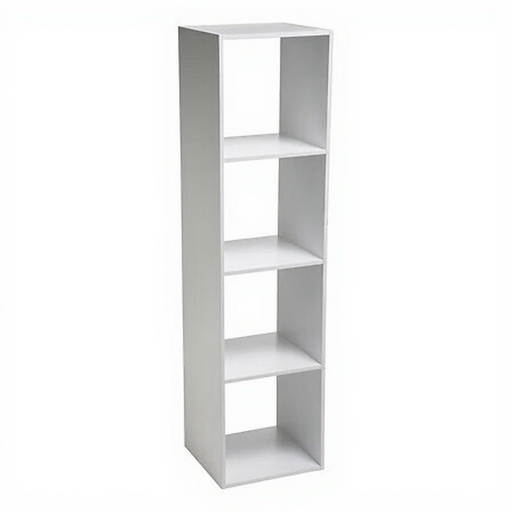
Why it suits this profile: This freestanding unit has four shelves and is a good option for families needing extra storage outside the immediate toddler area.
The four separate shelves help keep things organised. At 134 cm tall, it’s particularly important to secure the unit safely to the wall; it’s not ideal for storage that toddlers can reach freely.
Four shelves and a slim footprint measuring 34.5 cm wide. The product description also suggests using it in a living room or home office.
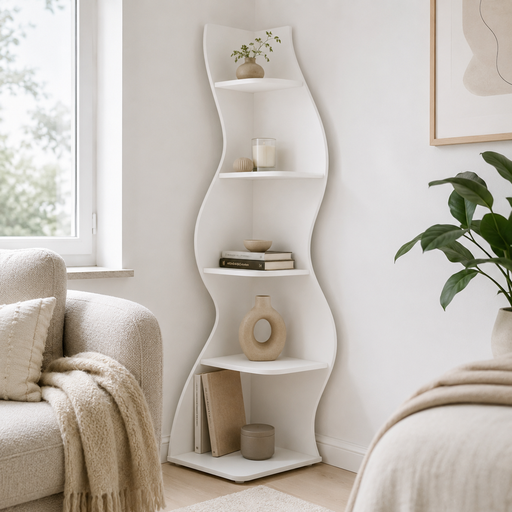
Why it suits this profile: This corner unit makes use of a space that often goes unused. It can hold books or decorative items away from the play area.
Its corner design saves floor space. As it’s not a low toy shelving unit with a box, it shouldn’t be relied on as the only storage for toddlers and must be secured appropriately.
Five tiers, a white finish and adjustable shelf heights according to the product description. A space-saving addition to a child’s bedroom or living area.
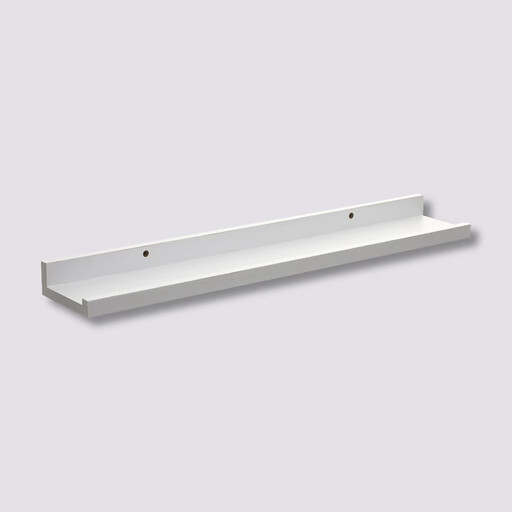
Why it suits this profile: This slim wall shelf is ideal for a few books or small items when there’s very little wall space available.
Its shallow depth means it won’t take up floor space like a larger piece of furniture. However, with a stated maximum weight capacity of 3 kg, it isn’t designed to hold a large collection of toys.
Compact dimensions, MDF construction and a stated weight capacity of 3 kg. The shelf must be mounted correctly, using fixings suited to the type of wall.
We’ve put together a complete, regularly updated list of products that meet these strict selection criteria and fully comply with the safety regulations in force in the EU.
A shelving unit for toddlers should only be made accessible once it has been fully assembled. Keep small screws, washers and other assembly parts out of reach of children and pets while putting it together. Once it’s in place, it’s a good idea to carry out a quick check of its stability and weight capacity.
If the unit has a removable box, make sure it’s pushed fully back into its designated space. This keeps walkways clear. Depending on the model, the wheels may be detachable; check the relevant instructions before removing them. Checking the screws regularly, perhaps every three to six months, can also be useful.
A low shelving unit is usually more practical if children can reach the lower shelves themselves. A height of around 70 cm may be suitable. However, the right choice depends on your child’s height, the room layout and secure wall fixing. The unit shouldn’t be used for climbing or sitting.
Wheels on a removable toy box can make it easier to move, but they don’t automatically make it safer. Parents should check that it moves smoothly, look out for possible pinch points and keep walkways clear. The shelving unit itself should be secured against tipping in accordance with the instructions.
How long it lasts depends on its material, the weight placed on it, assembly and care. A simple children’s shelving unit may still be useful later for books, craft supplies or smaller items. The key is to stay within the maximum weight capacity and stop using the furniture if it shows visible signs of damage or instability.