
Lieferung heute & morgen

Qualitätsgarantie

Willkommens-Angebote freischalten: KOSTENLOSE Lieferung | Bis zu 80 % RABATT | Kostenlose 30-Tage-JoyPlus-Testphase
App herunterladen
Children’s sports toys should get children moving, encourage shared play and be suitable for their age. For parents, grandparents and families, it is not just the first impression from the product photo that matters. Safety information, materials, space requirements and whether the toy can genuinely be used regularly in everyday life are all important considerations.
A toy may be marketed on its packaging for a broad age range, while individual components are only suitable for older children. Small parts, fast-moving flying objects or electronic functions require particular attention. Always check the specific age recommendation, warnings and whether supervision is required.
For example, according to the product information, a hand-controlled flying ball with sensors is intended for children aged 6 and over. A soft football, on the other hand, may be suitable from the age of 3. The age recommendation is not merely a marketing statement: it affects how safely and appropriately the toy can be used.
Outdoor toys for children are not automatically designed for rain, water, asphalt or confined spaces. A space hopper needs a clear, safe area. A throwing game requires distance from windows, vehicles and other people. Electronic activity toys should not be used in strong winds, near power lines or while charging.
Pay attention to the recommended surface and care instructions. Water-resistant does not mean permanently waterproof. After playing outdoors, garden toys and balls should be cleaned and stored somewhere dry.
Some sets do not include batteries, an air pump, a ball or other accessories. This can increase the actual cost and effort involved in the purchase. For example, two AA batteries are not included with the golf set. A space hopper requires a standard air pump. A USB-rechargeable toy eliminates the need to buy batteries regularly, although the battery remains a component that must be charged and stored correctly.
The size should match the child’s strength and reach. A soft ball measuring around 20 cm in diameter and weighing 165 g is easier for younger children to roll, throw and kick than a heavy training ball. With a space hopper, you should consider not only the child’s age but also body weight and maximum load capacity. The model mentioned is designed to support up to 50 kg and must not be used by anyone weighing more than this.
Also pay attention to small parts. Sets containing rings, balls or target objects should be completely collected after play. Clear age labelling is particularly important when choosing a gift for children aged 3 and over.
For children’s sports toys, rounded edges, sturdy connections and easy-grip surfaces are useful points to check. Soft foam or plastic balls may be suitable for indoor use, but should be kept away from sharp objects. For plastic products, information about the material and safety specifications is more helpful than general terms such as “indestructible”.
According to the product description, the 2-in-1 bowling and ring toss set is made from impact-resistant PP plastic. It is stated to be manufactured in accordance with EN71 and ASTM F963. Standards like these can provide useful guidance, but they do not replace checking the warnings and ensuring the toy is used appropriately.
For an indoor-outdoor toy, measure the space available before buying. Bowling, ring toss and golf can be set up on a level surface. Throwing and catching games require more room. A compact, foldable Phlat Ball, by contrast, can be carried more easily in a rucksack, to the park or on holiday.
Products that do not require complicated assembly are particularly practical. For electronic models, consider the charging port, the battery life stated by the supplier and the charging instructions. After use, all parts should be stored somewhere dry and protected from direct sunlight.
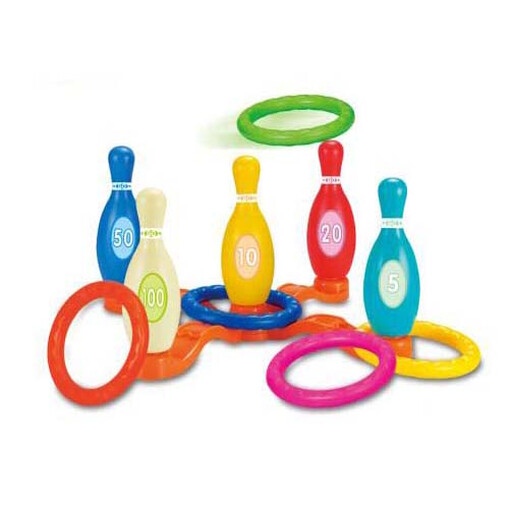
Why this product suits this profile: The manual set combines ten pins and five rings, requiring neither batteries nor complicated assembly. It is suitable for level surfaces in a child’s bedroom, garden or park.
No power supply is required. The product description specifies PP plastic, an age recommendation from 3 years and clear guidance on using the game on a level surface.
Two games in one set, manual play and a total weight of approximately 530 g.
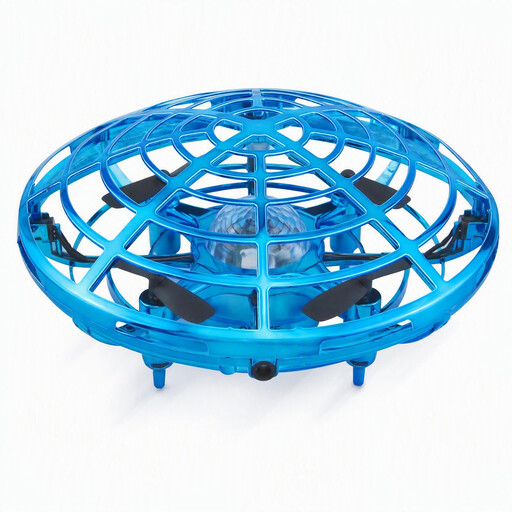
Why this product suits this profile: The flying ball is intended for children aged 6 and over and, according to the product information, features a fully enclosed protective cover, LED lighting, five sensors and an integrated lithium battery.
The product description specifies clear usage restrictions: do not use in strong winds, near power lines or while charging.
Compact dimensions of 11,5 × 11,5 × 5 cm, gesture control without a remote control and USB charging.
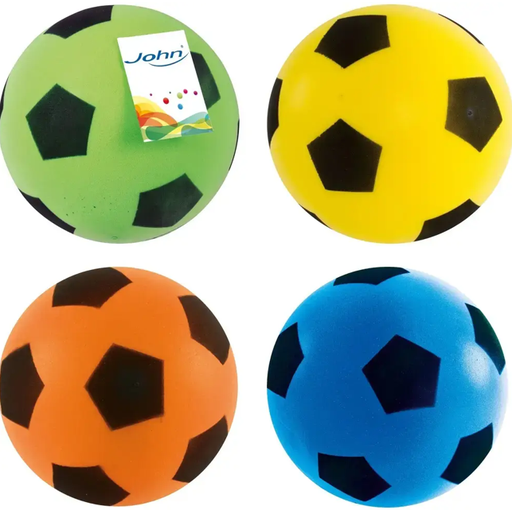
Why this product suits this profile: The lightweight soft ball, measuring 20 cm in diameter, is specified for children aged 3 to 8 and can be used indoors and outdoors in suitable, open areas.
The product details specify the material, weight and diameter. They also explicitly warn against sharp objects that could damage the ball.
Lightweight at 165 g, a soft foam and plastic construction, and easy play by rolling, kicking or passing.
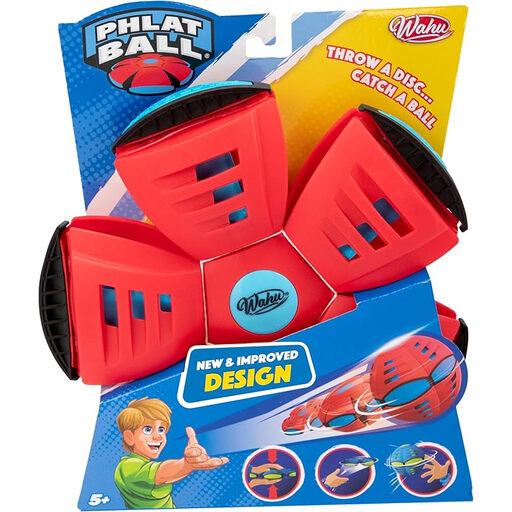
Why this product suits this profile: The combination of flying disc and ball is designed for gardens, parks, beaches and days out. When folded, the toy can be transported without taking up much space.
The product information specifies the recommended age from 5 years, the dimensions and manual operation without batteries.
2-in-1 design, no batteries required and dimensions of approximately 24 × 6,5 × 27,51 cm.
We have put together a complete, regularly updated list of products that fully meet these strict selection criteria and the safety regulations applicable in the EU.
Age-appropriately labelled soft balls, simple bowling or ring toss sets and selected garden games may be suitable. The warnings, the size of the individual parts and direct adult supervision are all crucial. Electronic flying toys or products with small components may have a higher recommended age.
The lifespan depends on the material, surface, storage conditions and intensity of use. Check balls, protective covers, handles and connections regularly. Products should no longer be used if they have cracks, sharp edges, damaged stitching or unusual noises. Dry cleaning after outdoor use can extend their practical service life.
Some products are completely manual. Others require batteries, an air pump or a USB charger. Before buying, check which accessories are included. When using electronic models, you should also follow the instructions on charging, storage and use while charging.