
Lieferung heute & morgen

Qualitätsgarantie

Willkommens-Angebote freischalten: KOSTENLOSE Lieferung | Bis zu 80 % RABATT | Kostenlose 30-Tage-JoyPlus-Testphase
App herunterladen
A children’s step stool can help toddlers become more independent when washing their hands, brushing their teeth or helping out in the kitchen. But not every model is right for every setting. If a product makes bold claims about safety, it’s worth taking a closer look at its construction, dimensions and stated weight limit.
A maximum load of, say, 80 or 150 kg tells you only the load capacity stated by the supplier. It doesn’t automatically mean that the stool will remain stable if a child moves around. For children, the base, foot design, step width and side handles are just as important.
A narrow stool may not be suitable, despite its high stated weight limit, if a child leans a long way to one side. Models with a wide base or extended feet offer a larger supporting surface by design.
An adjustable learning tower can be used over a longer period, but it usually takes up more space and needs to be adjusted carefully. For a basin at a fixed height, a simple children’s stool with a suitably sized step may be all you need.
The key is the actual height of the basin or worktop. A children’s step stool that’s too low won’t be much help in the kitchen, while one that’s too high can make things unnecessarily difficult to reach.
“Wood”, “bamboo” or “eco-friendly finish” aren’t quality guarantees on their own. Also check:
With a wooden step stool or a bamboo step stool, it should also be clear whether the material needs protection from moisture. In the bathroom, it’s a good idea to dry the stool regularly, even if it has a coated finish.
Wide steps and a sturdy base are practical features for everyday use. A stable step stool should stand on a level, non-slip surface. Carpet edges, wet tiles and uneven floors can all affect stability.
Side handles make it easier for children to hold on as they climb up. However, a step stool with handles shouldn’t encourage them to lean too far out to the side. Children should be supervised while using a stool, especially in the kitchen near hobs, knives or hot liquids.
In the bathroom, the distance to the basin is what matters. A children’s bathroom stool should be high enough for your child to reach the basin without leaning too far forwards. In a child’s bedroom, a lower, compact model may be enough for shelves or low storage.
A learning tower is taller and usually has a surrounding frame. The term Montessori learning tower mainly describes how it’s used: it lets a child join in with everyday activities at worktop height. The name alone, however, isn’t an independent safety assessment.
Smooth, coated surfaces can usually be cleaned with a slightly damp cloth. Avoid abrasive cleaners and prolonged contact with water on wood and bamboo. If you have a folding step stool, check the joints and locking mechanisms regularly to make sure they’re secure.
Do not exceed the maximum weight limit. Before use, check the screws, joints, steps and any potential cracks. Always follow the information provided by the relevant manufacturer.
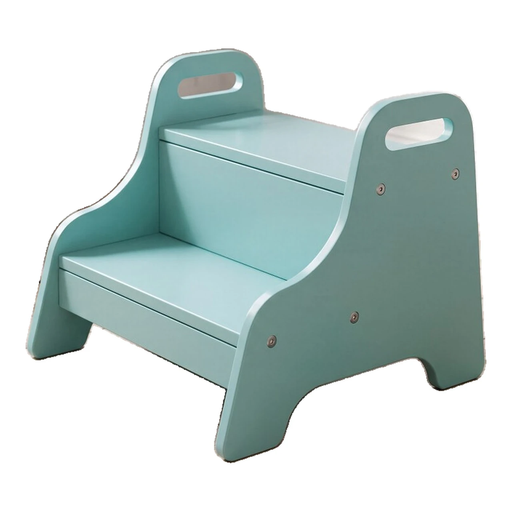
Why this product suits this profile: Designed for use at basins, kitchen worktops and in children’s bedrooms, this model has a wide step with integrated side handles.
The design combines a wide step with a reinforced dowel joint and side handles. The product description also says it’s easy to assemble.
Coated engineered wood surface, wide step and easy cleaning with a damp cloth, according to the product information.
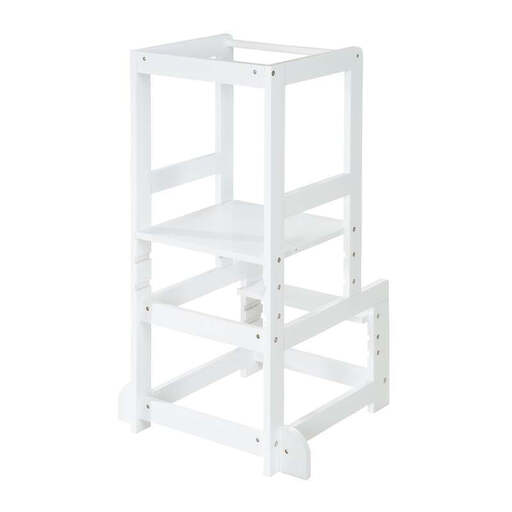
Why this product suits this profile: Designed for use at kitchen worktops and basins, this learning tower has an adjustable standing platform and footrest.
The specifications list three steps, a maximum height of 90 cm and a weight limit of 80 kg. The height can be adjusted to suit your child’s size and where the tower will be used.
Measures 47 × 47 × 47 cm, has adjustable elements and requires no assembly, according to the product description.
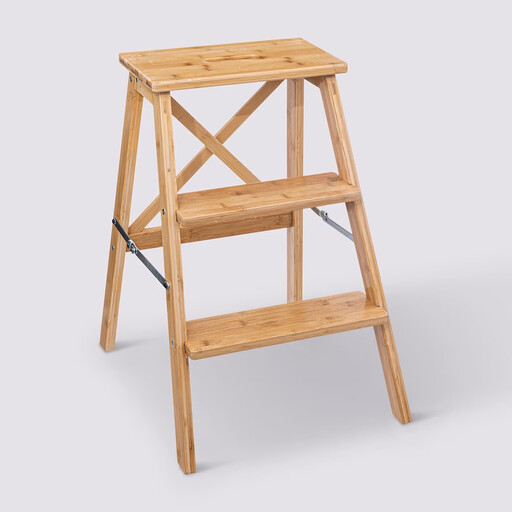
Why this product suits this profile: With three steps and a height of 63 cm, it’s suitable for adults and older children under supervision when extra reach is needed.
The folding design makes it easier to store. Check the folding mechanism, feet and locks before each use.
Bamboo construction, three steps, foldable design and a stated maximum load of 150 kg.
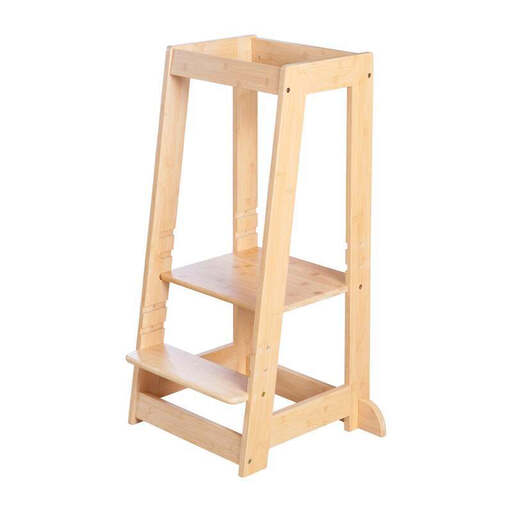
Why this product suits this profile: This adjustable design is intended for children who will be joining in at worktops or basins over a longer period.
The extended feet on the sides provide a wider base. The product information also lists several height settings for the standing platform and footrest.
FSC-certified bamboo, according to the supplier, three basic height settings and a stated weight limit of 80 kg.
We’ve put together a complete, regularly updated list of products that meet these strict selection criteria and the safety regulations in force in the EU.
It depends on the design, height and manufacturer’s guidance. The key question is whether your child can stand safely and follow instructions. An age recommendation is no substitute for supervision. In the kitchen, children should never be left unsupervised near sources of heat, sharp objects or hot liquids.
Wipe the surface with a slightly damp cloth, then dry it. Avoid soaking it, using harsh cleaners or leaving it in persistent moisture. Regularly check the joints, screws and feet for damage or looseness.
A learning tower usually has a larger, enclosed structure and adjustable elements. A simple children’s stool is more compact and may be enough for a particular basin. The right choice depends on your child’s height, where you’ll use it, how much space you have and how long you’d like to use it.