
Lieferung heute & morgen

Qualitätsgarantie

Willkommens-Angebote freischalten: KOSTENLOSE Lieferung | Bis zu 80 % RABATT | Kostenlose 30-Tage-JoyPlus-Testphase
App herunterladen
A children’s step stool can give children greater independence – when washing their hands, brushing their teeth or helping in the kitchen. At the same time, safety is paramount: a stool that is too lightweight may slip, an unsuitable height can make climbing up difficult, and missing load-capacity information makes comparing products unnecessarily challenging.
Before buying, it is therefore worth taking a close look at the construction, dimensions and intended use. The following advice can help you avoid common mistakes when buying a step stool for children, children’s stool or Montessori learning tower.
A maximum load capacity of, for example, 80 or 150 kg initially only tells you something about the strength of the construction. It does not replace information about stability, the base area or permitted use. A product may have a high load limit and still not be suitable as climbing or play equipment.
You should therefore check whether the manufacturer expressly states that the stool is intended for children and which uses are excluded. For example, the Bamboo 1-Step Stool is described as not being a toy, and children should not climb or play on it.
The adjustment method of a height-adjustable children’s stool can vary from one model to another. Some products offer several fixed heights, while others have an adjustable platform or height-adjustable step.
A rotating children’s stool with three seat heights, for example, should not be confused with a learning tower. Check whether the respective height is suitable for the washbasin, worktop or table.
A small children’s step stool saves space, but may offer less room for both feet. A compact design is often sufficient for the bathroom. In the kitchen, where children may stand for longer and move from side to side, a learning tower with a wide base may be more suitable.
A folding step stool should also be fully locked in place after being set up. The folding function makes storage easier, but must not compromise stability.
First, measure the distance from the floor to the desired standing or seating surface. For a bathroom step stool, it is important that the child can comfortably reach the washbasin without leaning too far forwards. A children’s step stool measuring 25 to 33 cm in height may be suitable for low storage areas or washbasins, but it must be appropriate for the child’s height.
In the kitchen, learning towers with a higher platform are often an option. They provide access to the worktop, but require more floor space and should not be placed close to hobs, hot pans or sharp objects.
A wide step, non-slip feet and a sufficiently large base help provide a stable stance. Rounded or carefully finished edges reduce the risk of everyday injuries. With wooden and MDF models, joints, screws and surfaces should be checked regularly.
A safe step stool also requires correct use: the child should not jump, lean too far over the sides or use the stool on anything other than a level, dry surface.
MDF and other wood-based materials provide a smooth, easy-to-wipe surface. Water-based paints may be an appealing feature when choosing a product; however, specific properties should always be confirmed in the manufacturer’s information. Bamboo is lightweight, and certain models are made from FSC-certified material. Nevertheless, moisture can affect wood and bamboo. Such stools should therefore not be left wet for long periods and should only be cleaned with a slightly damp cloth.
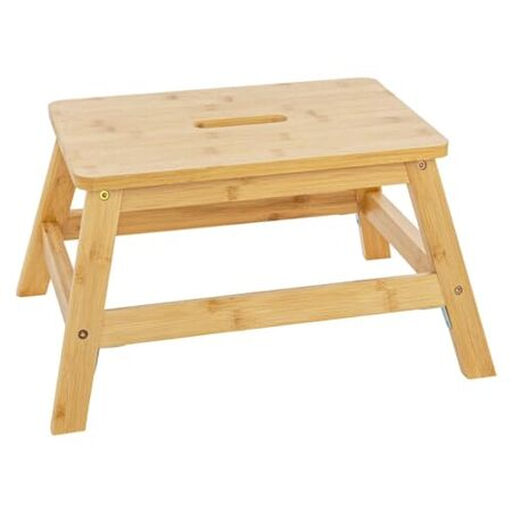
Why this product suits this profile: At 25 cm high, this compact one-step stool is designed for low storage areas, quick everyday assistance or use as a footrest. It requires no assembly and can be cleaned with a damp cloth.
The product information states a fixed height and clear limitations: the stool is not intended as a toy. This helps prevent its load capacity from being mistaken for general approval for children.
FSC-certified bamboo, 38.5 × 26 × 25 cm, and up to 150 kg according to the product information. Not foldable and intended for dry, level floors.
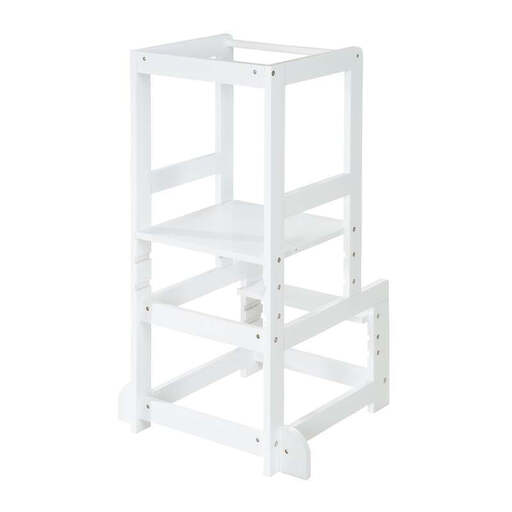
Why this product suits this profile: The learning tower is designed for regular activities at the kitchen worktop or sink. According to the product information, the standing surface and step can be adjusted.
The three steps and height adjustment are more specific than the general description “grows with your child”. A level surface and supervision are still required before every use.
Height of up to 90 cm, three steps, a 47 × 47 cm base and a maximum load capacity of 80 kg according to the product information.
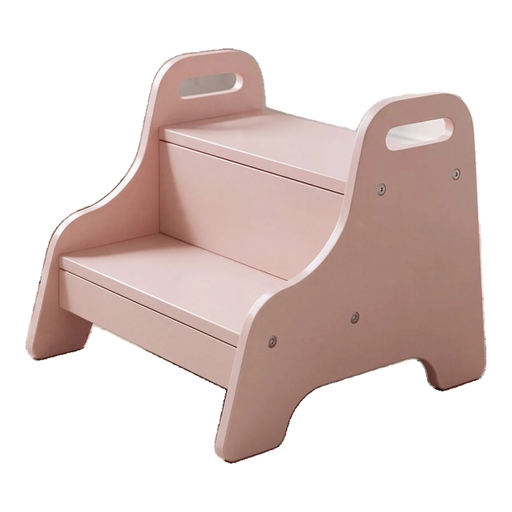
Why this product suits this profile: This wide children’s step stool with integrated handles is described as suitable for the bathroom, kitchen and children’s bedroom. It is ideal for families who want to use a sturdy everyday aid in several places.
Side handles and a wide step help address the risk of slipping sideways. The simple screw assembly must be carried out fully and correctly.
High-density wood-based panels, water-based paint, a wide step and dowel joints according to the product description.
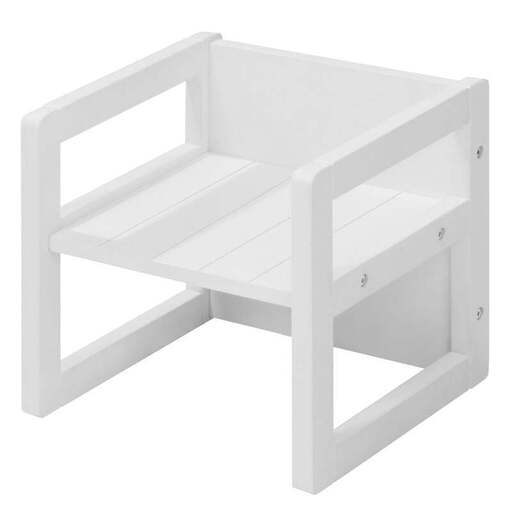
Why this product suits this profile: This rotating children’s stool offers three seat heights and can be used in the children’s bedroom, play area or kitchen. It is better suited as a seating aid than as a tall learning tower.
The fixed heights of 14, 18 and 29 cm are clearly stated. If the load-capacity information is contradictory, the lower safety figure of 60 kg should be followed as a precaution.
MDF construction, external dimensions of 30 × 30 × 30 cm and three seating positions. According to the product information, the surface can be wiped clean with a damp cloth.
We have put together a complete, regularly updated list of products that fully meet these strict selection criteria and the safety regulations applicable in the EU.
Regardless of the model, parents should check a few points before every use:
This depends on the design and the manufacturer’s information. Some children’s stools are described as suitable from around 9 months or from the age of 2. Age is not the only consideration: balance, height and the ability to climb up and down safely are also important. The stool should be used under supervision.
A compact children’s step stool is often sufficient for briefly reaching a washbasin. A learning tower provides more side protection and a higher platform, but requires more space. In the bathroom, particular attention should be paid to moisture, slippery tiles and the size of the base.
Its lifespan depends on the material, load, moisture and care. Wood-based materials and bamboo should be kept dry and checked regularly for cracks, loose parts or damaged surfaces. If visible damage is present, the stool should no longer be used.