
Lieferung heute & morgen

Qualitätsgarantie

Willkommens-Angebote freischalten: KOSTENLOSE Lieferung | Bis zu 80 % RABATT | Kostenlose 30-Tage-JoyPlus-Testphase
App herunterladen
Children’s toys from age 3 should be fun while also being age-appropriate, durable and easy to understand. However, choosing the right products is not always straightforward for parents, grandparents and nurseries. Many products promote terms such as “educational toy”, “STEM” or “Montessori” without clearly explaining the details that really matter.
That is why it is worth looking at the specific product features before buying. The key factors are not as many functions as possible, but a suitable age recommendation, easy-to-handle pieces and a play concept that matches the child’s stage of development.
The “from age 3” label is not simply a marketing statement. It often indicates the presence of small parts that may pose a choking risk to younger children. Even if a child already appears skilled, the manufacturer’s age recommendation should be followed.
For children’s puzzles from age 3, 12 to 24 pieces are often a suitable starting point. The actual difficulty also depends on the picture, piece size and whether the puzzle has a frame. A puzzle that is too challenging can quickly end up unused, while a suitable picture may be enjoyed again and again.
Magnetic building blocks can enable creative constructions, but they come with an important warning: loose or swallowed magnets can cause serious injuries. Before buying, parents should check that the magnets are securely enclosed and that the pieces can be regularly inspected for cracks or damage.
According to the product information, the magnets in several magnetic building block sets are enclosed within the plastic casing. This does not replace checking the pieces before every use. Damaged parts should be removed from play immediately.
Lighting functions, ball runs and extensive accessories can be appealing, but they also increase the effort required for sorting and storage. For children of nursery age, a clear play concept is often more useful than a set with numerous components that can only be used with support.
When choosing educationally valuable toys, it is therefore worth asking: Can the child start playing independently? Are the rules easy to understand? Can the game be played alone or together with others?
The manufacturer’s age recommendation should match the child’s stage of development. With puzzles, the number and size of the pieces are important. A 12-piece framed puzzle may provide a clearer introduction from age 3 than a free-form puzzle with lots of small pieces.
With construction toys, you should also check whether small parts are included. Products containing magnets require particular care and should only be used under supervision, especially by younger children.
Wooden toys for toddlers should have smooth, splinter-free surfaces and neatly finished edges. For plastic toys, rounded edges and an enclosed casing are important features. Information about the material, origin and responsible economic operator in the EU makes it easier to carry out these checks.
Cleaning is also important for everyday use. Many building blocks can be wiped clean with a soft, damp cloth. Depending on the product, full immersion in water or the use of harsh cleaning products may not be recommended.
More pieces can allow for more construction options, but they also require more storage space. A bag, box or case can help keep the set complete. Puzzles with several pictures in one pack are practical because children can switch between different themes.
Fine motor skills toys, sorting games and simple construction sets are particularly suitable for activities such as grasping, matching, inserting and placing. The developmental benefit comes from the specific play activity, not simply from the product name.
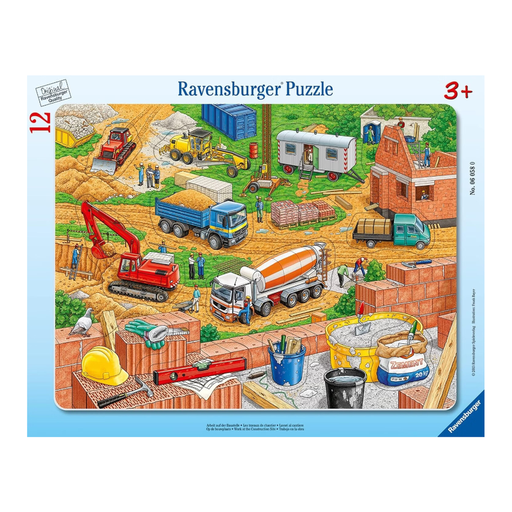
Why this product suits this profile: This 12-piece framed puzzle is designed for children from age 3 and offers an accessible introduction to puzzling. The construction site picture may particularly appeal to children who are interested in vehicles and machinery.
The small number of pieces and the frame make it easier to get started. There are no batteries or additional technology.
12 sturdy puzzle pieces, a frame with finger openings and an age recommendation from 3 years.
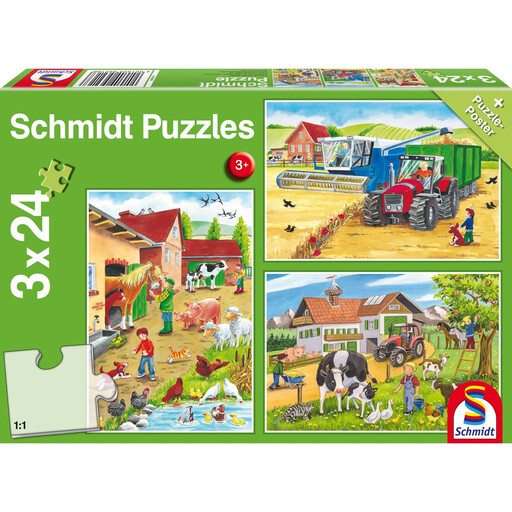
Why this product suits this profile: The set contains three 24-piece puzzles featuring farm scenes. It is suitable for families who prefer several pictures and a clearly defined piece size.
The product information specifies precision-cut pieces, a matt surface and a linen texture. This makes the relevant features clear and easy to assess.
Three pictures, 24 pieces each, no batteries and a stated finished size of 27,5 × 19 cm.
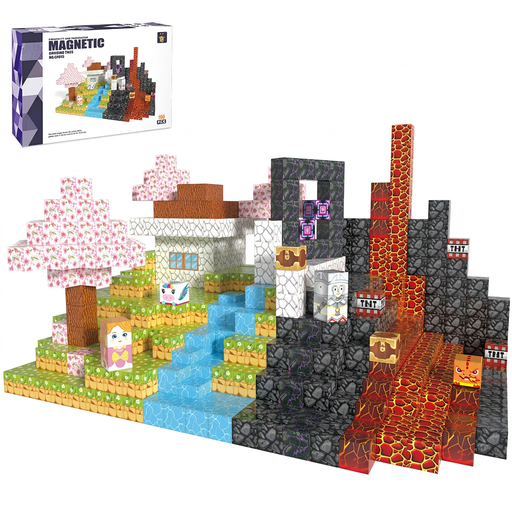
Why this product suits this profile: The 100-piece set is designed for children from age 3 who enjoy building and combining different geometric shapes. According to the product information, a storage bag is included.
The manufacturer’s information states that the magnets are enclosed and that the pieces have rounded edges. It also recommends regular checks for damage. The magnet warning must still be observed.
100 pieces, ABS plastic, 2,5-cm tile size and compatibility with other sets of this size according to the product description.
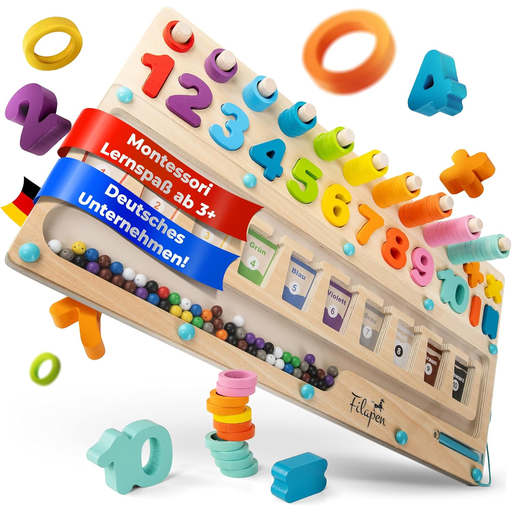
Why this product suits this profile: This wooden toy combines a magnetic maze with colour matching and numbers from 1 to 10. It is suitable for parents, grandparents or institutions looking to offer several simple learning activities on one board.
The play concept is easy to understand and, according to the product information, does not require batteries. Direct adult supervision is expressly recommended because the toy contains small parts.
Solid wood, magnetic maze, colour matching and a number peg game in one product; country of origin stated as Germany.
We have put together a complete, regularly updated list of products that fully meet these strict selection criteria and the safety regulations applicable in the EU.
When toys contain small parts or magnets, an adult should supervise the first use. Before every play session, check the pieces for cracks, loose components, sharp edges or splinters. Damaged toys should not be passed on or used again.
For nurseries and educational settings, it is also advisable to establish a fixed storage routine. After playing, count all the pieces or put them together in the designated box. This makes it easier to spot missing components quickly.
For beginners, easy-to-understand products with a small number of easy-to-grip pieces are ideal. These include framed puzzles with 12 to 24 pieces, simple sorting games and clearly structured peg or placement games. The picture should match the child’s interests.
Magnetic building blocks may be intended for children from age 3 according to the relevant manufacturer’s information. However, they must not be put in the mouth and require regular inspection. If magnets become loose, or if there are cracks or damaged casings, the set must be removed from play immediately. If a magnet is swallowed or inhaled, seek medical assistance without delay.
How long a toy remains useful depends on its play concept and the child’s stage of development. Products with several difficulty levels, different pictures or open-ended construction options can be used for longer. The important thing is that the toy should not consistently be too easy or clearly too difficult. Regularly alternating between puzzles, sorting games and construction toys can help keep existing products appealing for longer.