
Lieferung heute & morgen

Qualitätsgarantie

Willkommens-Angebote freischalten: KOSTENLOSE Lieferung | Bis zu 80 % RABATT | Kostenlose 30-Tage-JoyPlus-Testphase
App herunterladen
Children’s toys should suit a child’s age, interests and family routine. In practice, however, eye-catching packaging, lots of features or a high number of pieces do not automatically guarantee an enjoyable play experience. What matters are clear details about the recommended age, materials, how the toy works, storage and safety.
This buying guide explains what parents, grandparents and other family members should look out for when shopping – from toys for children aged 3 and over to gift ideas for children aged 6 and over.
Whether a set contains 28, 55 or 484 pieces, the number alone says little about whether it will actually be used in everyday family life. With construction toys, check which shapes are included, whether building ideas are provided and whether children can also build freely. Lots of small pieces also increase the effort required for sorting and storage.
A robot toy with lights, sound, gesture control and a remote control may appear versatile. For younger children, however, several ways of operating the toy can be overwhelming. Electronic products also require a power supply, charging time and a suitable play area. Details about volume control, the battery and replacement batteries should therefore be added to your checklist before buying.
The recommended age is not simply a marketing detail. Small parts can pose a choking hazard. Magnetic building blocks require particular care: product information must clearly state that magnets are included and warn of the danger if they are swallowed. Damaged blocks should be removed immediately so that magnets cannot become exposed.
For children’s toys aged 3 and over, easy-to-grip, manageable play systems with simple mechanisms are a good choice. Examples include a manual construction vehicle, a fire engine toy or larger magnetic building blocks. For toys aged 6 and over, more complex activities become suitable, such as LEGO building sets, cooperative board games, programmable functions or a remote-controlled car.
Also consider the space available:
With plastic toys, rounded edges, securely closed housings and clear manufacturer or responsible-person details are important points of reference. Claims such as ‘non-toxic’ or ‘safe’ should not be considered in isolation. Instead, check the specific information about age suitability, small parts, cleaning and regular inspections.
For sets containing magnets, it is not only the material of the block that matters, but also the condition of the magnetic closures. The product details for the following magnetic sets specify ABS plastic, enclosed magnets and use from 3 years. Even so, the expressly recommended supervision remains important.
Manual toys generally do not require batteries and are ready to use straight away. Examples include a marble run, pull-back dinosaur toys or a manual construction vehicle. Electronic toys, on the other hand, offer lights, sound or remote control, but require regular charging or battery replacement.
When choosing a gift, you should also consider the child’s interests: building, role play, vehicles, dinosaurs, Disney, technology or solving puzzles together can all lead to very different purchasing decisions.

Why this product suits the profile: According to the product details, this manageable set is designed for children aged 3 and over. It offers a straightforward introduction to free building without batteries.
The number of pieces remains manageable, reducing the effort needed for sorting. At the same time, the warnings highlight the presence of small, powerful magnets and the need for supervision.
28 pieces, 5.5 cm building blocks, no batteries required and a storage bag included, according to the product description.
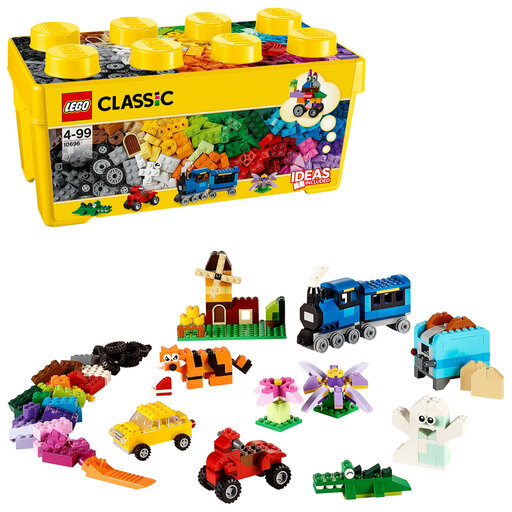
Why this product suits the profile: The box is specified for children aged 4 and over. It combines free building with organised storage and included building ideas.
The box provides a practical solution for keeping building bricks from becoming scattered. The age recommendation and warning about small parts make it easier to assess whether it is suitable for your household.
484 elements, 35 colours, wheels, windows and eyes, plus a plastic storage box, according to the manufacturer.
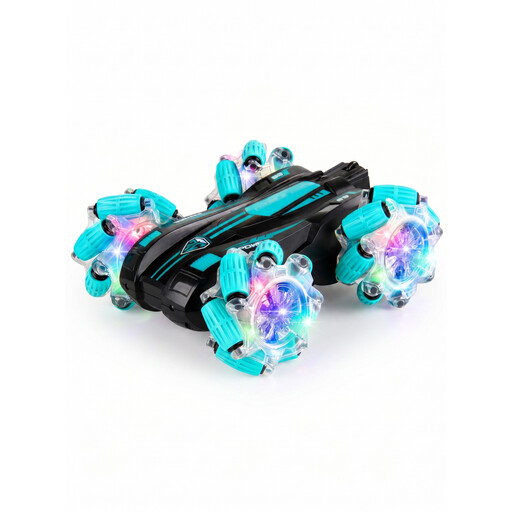
Why this product suits the profile: This remote-controlled car is designed for active indoor and outdoor play. It offers several driving modes for children who enjoy technology and vehicles.
The product description lists specific driving functions rather than making general promises about action. Before buying, you should also check the battery, charging time and intended play surface.
4WD drive, two-sided driving, sideways movement, 360-degree rotation and a rechargeable lithium battery, according to the product details.

Why this product suits the profile: This cooperative board game is designed for 2 to 4 players aged 6 and over. It is ideal for short family game sessions lasting around 20 minutes.
The number of players, recommended age and approximate playing time are clearly stated. This makes it easier to judge whether the game will fit into family life.
Cooperative gameplay, 2 to 4 players, approximately 20 minutes’ playing time and no batteries required.
We have put together a complete, regularly updated list of products that fully meet these strict selection criteria and the safety regulations applicable in the EU.
Products with a clear age recommendation, easy-to-grip parts and straightforward gameplay are suitable. With magnetic building blocks, warnings about small and powerful magnets must be observed. Adult supervision is particularly advisable for younger children.
Their lifespan depends on the battery, charging habits, build quality and play environment. A robot toy should be stored in a dry place, switched off after play and checked regularly for damaged joints or housing components. With an RC toy, impacts, the surface it is used on and wheel maintenance also affect its lifespan.
For children aged 6 and over, suitable options include LEGO building sets, cooperative board games, robot toys and more challenging construction sets. Your choice should be guided by whether the child prefers building, making up stories, solving puzzles or experimenting with technology. This way, you consider not only their age, but also how they are likely to use the toy.