
Lieferung heute & morgen

Qualitätsgarantie

Willkommens-Angebote freischalten: KOSTENLOSE Lieferung | Bis zu 80 % RABATT | Kostenlose 30-Tage-JoyPlus-Testphase
App herunterladen
Children’s toys should be entertaining, support their development and remain practical in everyday family life. The selection ranges from baby toys and Montessori toys to remote-controlled vehicles and role-play toys. However, the wide range of features can make comparisons difficult. A product with music, lights and lots of buttons is not automatically suitable for every child.
The indication “from 3 years” is not merely a buying recommendation. It may refer to small parts that could be swallowed, specific movements or the level of operation required. A toy with a remote control, small connecting shapes or detachable components should not be given to younger children, even if they already seem skilful.
Lights, music and movement quickly catch the eye in product images. What matters, however, is whether the child can activate the functions themselves and whether they suit their stage of development. Simple cause-and-effect play can be useful for babies, while older children may benefit more from role-play toys, motor-skills toys or an RC car for children.
Batteries are not always included with electronic children’s toys. For rechargeable products, charging times, supervision while charging and battery storage are all relevant. Buyers should also check whether the casing appears sturdy, whether the edges are rounded and whether the warnings are clearly presented.
The recommended age should match the child’s actual play behaviour. For babies and toddlers, no loose or easily detachable parts are particularly important. For products intended for children aged 3 and over, the warning about a choking hazard from small parts must be observed. Even a toy without small parts may require supervision during vigorous play.
Pay particular attention to:
Several of the products listed specify ABS plastic as the material. For some models, the supplier also describes the material as BPA-free and the edges as rounded. These details should be understood as the supplier’s product information and do not replace checking the actual labelling.
The CE marking indicates that the manufacturer claims to have taken the relevant EU requirements into account. The EN 71 series of standards relates to toy safety. Any labelling should be clearly legible. For wooden toys, the workmanship, stability, surface care and regular checking of screws are also important.
Musical toys for children can quickly become loud indoors. A volume control is therefore a practical feature. For battery-powered products, consider the batteries, compartment closure and how often they need replacing. For rechargeable products, charging accessories and safe charging habits should also form part of the buying decision.
Size is often underestimated, too. An activity cube measuring around 23 × 23 × 24 cm is easier to store than a large toy shop measuring over a metre wide. For small homes, travel or visits to restaurants, compact models are often more practical for everyday use.
The following selection groups products according to specific situations. It is not a general ranking, but takes age, features, space requirements and operation into account.

Why this product suits the profile: This compact cube combines eight play modes for children aged 1 to 3, while taking up comparatively little storage space.
The age group and dimensions are clearly stated. According to the product description, there are no loose parts; parents should nevertheless check the cube regularly.
Piano, guitar, telephone, gears and music functions in one device; ABS casing with rounded edges according to the supplier’s information.
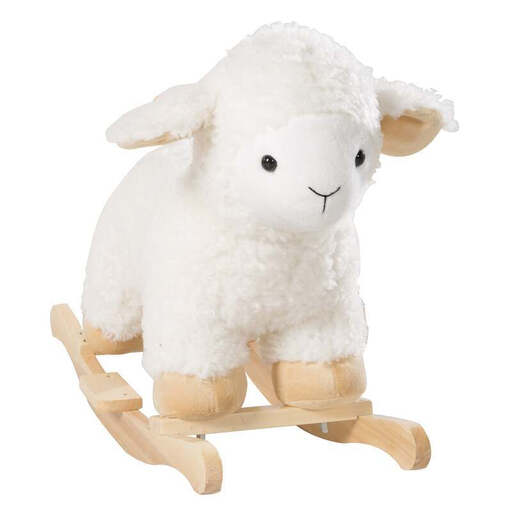
Why this product suits the profile: This rattle is intended for toddlers aged 18 months and over, making it a simple, easy-to-handle play option.
The usage instructions recommend checking the product before play and warn about small parts. This reduces the risk of overlooking the age limit.
Natural wood as the main material, wipe-clean surfaces and recommended use from the age of 3 for the toy shop model described.
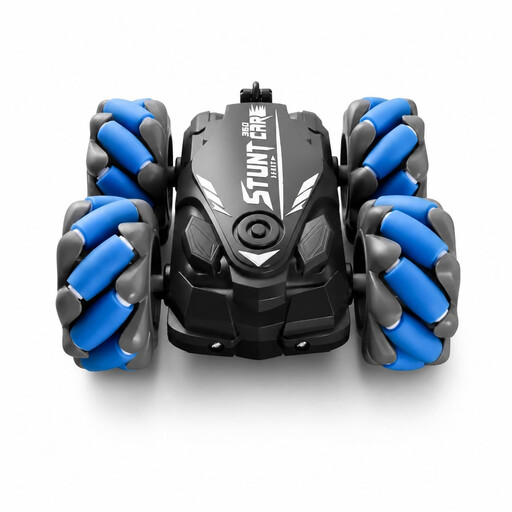
Why this product suits the profile: For children aged 8 and over who want to use movement functions and a rechargeable power supply.
The minimum age of 8, the warning about small parts and the charging instructions are all stated explicitly.
2.4 GHz remote control, gesture control, four-wheel drive, 360-degree spins and USB charging cable according to the product description.

Why this product suits the profile: This battery-powered role-play toy is aimed at children aged 3 and over and is ideal for family games centred on DIY and imitation.
The product warning mentions small parts and the need for supervision. This makes it clear that it is a toy rather than a real tool.
Lights and sawing sounds, plus simulated movement; requires two AA batteries, which are not included according to the product information.
We have put together a complete, regularly updated list of products that fully meet these strict selection criteria and the safety regulations applicable in the EU.
Age-appropriate rattles, simple grasping toys and sensory toys are suitable for babies. Securely attached components, rounded edges and a clear age recommendation are essential. Electronic features such as lights or music should be used sparingly and always offered under supervision.
Their lifespan depends on the material, use and care. With plastic toys, the casing, battery compartments, wheels and buttons should be checked regularly for cracks or loose parts. Wooden toys should be cleaned with a dry or slightly damp cloth; screw connections can loosen with frequent use.
Battery-powered toys incur ongoing costs for replacement batteries. Rechargeable models, on the other hand, require electricity and should be charged according to the manufacturer’s instructions. Before buying, check whether batteries are included, whether a USB cable is supplied and whether the toy can be switched off completely after play.