
Lieferung heute & morgen

Qualitätsgarantie

Willkommens-Angebote freischalten: KOSTENLOSE Lieferung | Bis zu 80 % RABATT | Kostenlose 30-Tage-JoyPlus-Testphase
App herunterladen
A children’s balance bike can make the transition to riding a bicycle easier later on, provided its size, weight and features are suitable for the child. However, many purchasing decisions fail not because of the design, but because of unsuitable dimensions or misleading advertising claims. A balance bike for children should therefore not be chosen based on age or colour alone.
The description “balance bike from 1 year” or “balance bike from 2 years” is only a guideline. Children of the same age can differ considerably in height and leg length. The key question is whether the child can place both feet securely on the ground while seated. Their knees should remain slightly bent so they can push off and brake.
You should therefore measure the inside leg length before buying and compare it with the lowest saddle height. An adjustable saddle is useful, but only if its adjustment range is actually suitable for the child’s height.
A lightweight balance bike is easier for children to steer and for adults to carry. However, its actual weight should be considered alongside its materials and features. A balance bike weighing around 2 to 3 kg is noticeably easier to handle every day than a heavy children’s bicycle with a steel frame.
A later children’s bike with stabilisers also includes pedals, brakes, a chain and accessories. This can significantly increase the weight. If the bicycle is too heavy, getting on, stopping and lifting it may be difficult for a small child.
According to product descriptions, EVA or polyurethane tyres are puncture-proof and require little maintenance. They do not need regular tyre-pressure checks, but may feel different on uneven ground from a balance bike with pneumatic tyres. Depending on their design, air-filled tyres provide more cushioning, but they need to be checked and inflated.
The term puncture-proof tyres also does not mean that wheels, axles or fixings are maintenance-free. Screws, grips, the seat post and, with air-filled tyres, valves and tyre pressure should all be checked regularly.
With a suitable children’s balance bike, the saddle should initially be low enough for both feet to reach the ground. The seat must not wobble and must be securely fastened after adjustment. An adjustable saddle extends the useful life of the bike if the frame and adjustment range can accommodate the child as they grow.
On some models, the seat can also be moved forwards or backwards. This can adapt the riding position to different body proportions. Nevertheless, specifications such as “for ages 2 to 6” should always be checked against the actual measurements.
For use around the home, on smooth courtyards or over short distances, EVA wheels are often practical because they are quiet and do not require tyre-pressure checks. A balance bike with air-filled tyres can offer more cushioning on paved paths and slightly uneven surfaces. However, checking the tyre pressure then becomes part of regular maintenance.
Aluminium, fibreglass and wooden frames differ in weight, appearance and care requirements. FSC-certified wooden parts refer to the origin of the wood, not automatically to every other component of the product. With all frames, you should check for cracks, sharp edges and loose connections before use.
A balance bike is not a vehicle for use on public roads. Adults should supervise its use and choose a suitable, protected area without stairs, steep slopes or traffic. A helmet can protect the child’s head; depending on the situation, knee and elbow pads may also be used.
Many balance bikes do not have a brake. The child usually brakes with their feet. A limited steering angle can reduce sudden steering movements, but it does not replace supervision. On a children’s bicycle, functioning brakes, a fully enclosed chain guard and correctly fitted accessories are important points to check.

Why this product suits the profile: According to the product information, this 12-inch model is intended for children aged 2 to 6 and features an adjustable seat and adjustable handlebars. It is suitable for families looking for straightforward essential features.
The age recommendation is backed up by a specific 12-inch wheel size and adjustable components. The tyres, described as no-puncture, eliminate the need for everyday inflation.
Adjustable seat and handlebars; easy assembly according to the product name; 12-inch version.
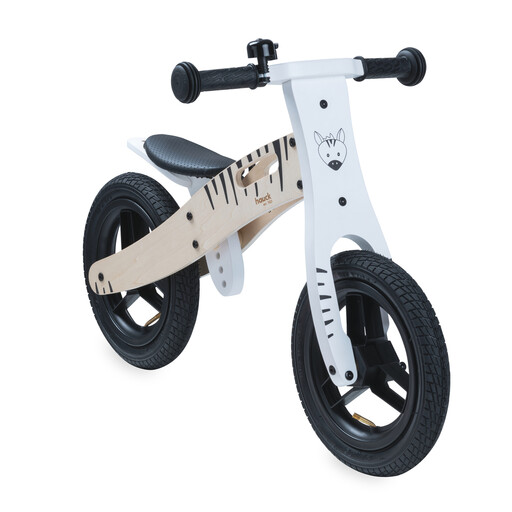
Why this product suits the profile: The product description lists FSC-certified wood, 12-inch air-filled tyres, a saddle with four height settings and a weight of 2.95 kg. Suitable for buyers who carefully compare material details and care instructions.
The air-filled tyres are not marketed as maintenance-free: the supplier explicitly recommends checking tyre pressure and screws. This makes the care required transparent.
FSC-certified wooden components according to the product information; seat height from 33 to 42 cm; integrated carrying handle.
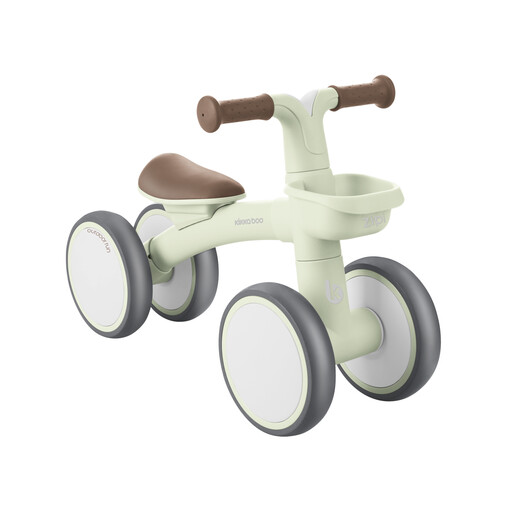
Why this product suits the profile: According to the product information, this model is designed for ages 1 to 3, weighs 2 kg and features EVA wheels, a movable seat and a limited steering angle. This makes it suitable for small children and frequent transport.
The compact design and low weight reduce the load when carrying it. The limited steering angle is described as a fixed safety feature and should not be altered.
2 kg weight; low-maintenance EVA wheels according to the product description; removable basket.
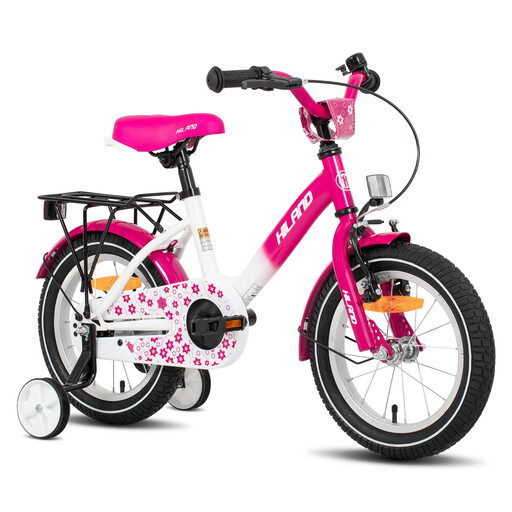
Why this product suits the profile: For children aged approximately 2 to 4 and measuring 80 to 105 cm, the product description specifies a 12-inch bicycle with stabilisers, a luggage rack, basket and two braking systems.
Alongside the age, the size recommendation includes a height range. Before use, the stabilisers, brakes, chain guard and handlebar protectors should be correctly fitted and checked.
Front V-brake and coaster brake according to the product information; approximately 90% pre-assembled; stabilisers and basket included.
We have put together a complete, regularly updated list of products that fully meet these strict selection criteria and the safety regulations applicable in the EU.
A children’s bicycle without pedals is a classic balance bike and is suitable for practising pushing off, steering and stopping. It is usually lighter than a bicycle and has fewer components. A bicycle with stabilisers, on the other hand, has pedals and brakes, but the side wheels change how it handles. Stabilisers are therefore no substitute for checking the saddle height, brake function and suitable frame size.
For older children, a 14-inch children’s bicycle or a 16-inch children’s bicycle may be suitable. The right choice depends on height, inside leg length and being able to reach the brake levers safely, not just on age.
A balance bike from 1 year is only suitable if the child can sit securely, reach the ground with both feet and control the handlebars. According to product information, many models are intended for ages 1 to 3 or 2 to 6. Saddle height and the child’s physical development remain the decisive factors.
How long it can be used depends on the saddle adjustment, wheel size and the child’s height. An adjustable saddle can extend the period of use. Once the child’s knees are sharply bent, the handlebars are too low or the permitted user weight has been reached, you should consider a different model.
EVA and polyurethane tyres do not need inflating and are described as puncture-proof in product information. Air-filled tyres must be checked regularly for pressure, tread and valve condition, but may offer more cushioning on certain surfaces. Running costs are manageable for both types; the deciding factors are the intended surface and the amount of maintenance you are prepared to carry out.