
Lieferung heute & morgen

Qualitätsgarantie

Willkommens-Angebote freischalten: KOSTENLOSE Lieferung | Bis zu 80 % RABATT | Kostenlose 30-Tage-JoyPlus-Testphase
App herunterladen
A children’s bedroom night light should provide orientation without unnecessarily brightening the room. For parents, a cute design is only part of the picture: the operating mode, light colour, sensors, cleaning and safe handling of mains electricity, rechargeable batteries or disposable batteries are what really matter.
Many poor purchases result from three common marketing traps:
For night-time orientation, a warm white night light of around 2700 to 3000 Kelvin is often chosen. This light feels less cool in the room than a higher colour temperature. Whether the brightness is sufficient for changing a nappy, breastfeeding or walking to the toilet at night also depends on the luminous flux in lumens and the beam angle.
A dimmable night light is practical when the same lamp is to be used at different times. Low settings may be enough for orientation, while a higher setting can be useful during night-time care. Claims such as “flicker-free” or “eye-friendly” should not be accepted uncritically when no technical details about the light source are provided.
A night light with a dusk sensor responds to the ambient brightness. The products in this selection specify, for example, a switch-on threshold of no more than 20 lux. This is relevant for hallways, staircases or children’s bedrooms when the lamp is intended to start automatically in the dark.
A night light with a motion sensor works differently: it only switches on when movement is also detected. The Grifema model is specified as detecting movement up to 3 metres away and within an angle of 120 degrees. It is also designed to switch off after 60 seconds without movement. Before buying, check whether furniture, curtains or an unsuitable socket height could restrict the sensor.
An LED night light with mains operation does not require batteries or charging. Pay attention to the stated mains voltage, indoor-use requirements and IP rating. The Aigostar model is specified as operating at 220–240 volts, with 1 watt, IP20 and use in dry indoor areas.
A rechargeable night light, on the other hand, is suitable for changing locations. Important factors include battery capacity, charging port, charging time and operating time. A soft silicone surface can feel pleasant on portable models, but it does not replace supervision. Electrical lights should not be covered, immersed in water or opened by children without supervision.
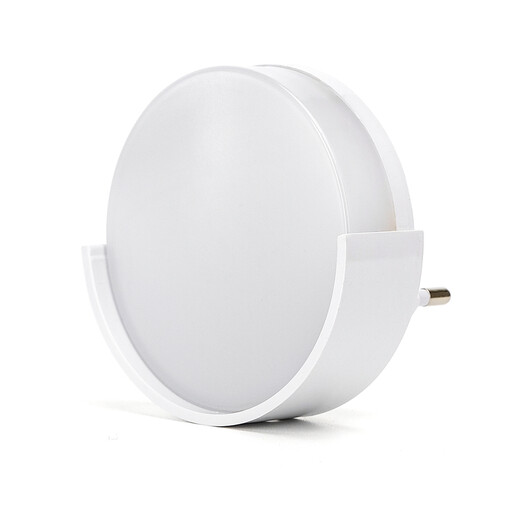
Why this product suits this profile: This plug-in night light is designed for hallways, children’s bedrooms or staircases and requires neither batteries nor charging.
Automatic activation below 20 lux reduces the need for manual switching. However, the fixed light colour of 6500 Kelvin should suit the intended room before you buy.
1-watt LED, 40 lumens, 120-degree beam angle and a stated lifespan of 25,000 hours.
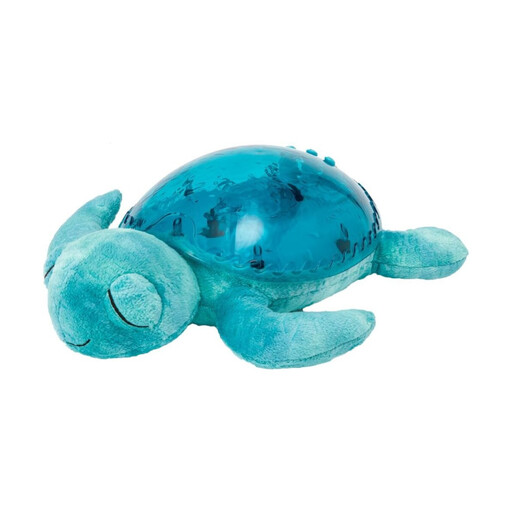
Why this product suits this profile: For families who want to combine light, projection and sounds in one portable device.
Automatic shut-off after 23 minutes limits unnecessary continuous operation. Music and projection can be selected separately; the cry sensor should be activated deliberately for everyday use.
USB-C charging, two melodies, two ocean sounds, adjustable brightness and automatic shut-off.

Why this product suits this profile: For hallways, staircases and night-time journeys where light is only needed in darkness and when movement is detected.
The motion sensor prevents the light from staying on continuously. The automatic shut-off after 60 seconds and the detection range should suit the installation location.
Five brightness levels, warm white light at 2700 Kelvin, 0.5 watts of power consumption and a detection range of up to 3 metres.
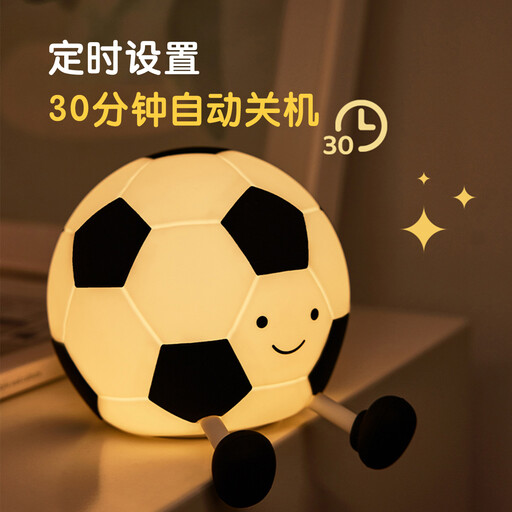
Why this product suits this profile: This rechargeable night light can be taken from the children’s bedroom to the hallway or used during night-time checks.
The USB-C battery avoids the need to keep buying disposable batteries. The stated operating time of up to 6 hours applies at maximum brightness, so the charge level should be checked regularly.
1200-mAh battery, Type-C port, three brightness levels and a soft silicone housing.
We have put together a complete, regularly updated list of products that fully meet these strict selection criteria and the safety regulations applicable in the EU.
Consumption depends on the power rating and operating time. A 0.5-watt model uses less energy during continuous operation than a light with a higher wattage. Sensors, timers and motion detectors can reduce the actual time the light is switched on. For an accurate cost calculation, you need your contract’s electricity price and the daily operating time.
That depends on where it will be used. A dusk sensor is suitable when the light should provide continuous guidance in the dark. A motion sensor is practical for a hallway or staircase when lighting is only needed as someone walks past. In a children’s bedroom, a continuously low light may be more suitable if parents regularly check on their child during the night.
For permanently integrated LEDs, a theoretical lifespan is often stated, such as 25,000 hours for the Aigostar model. The actual service life also depends on heat generation, switching cycles, the power supply, the battery and the surrounding conditions. With rechargeable models, you should also take battery ageing into account.