
Lieferung heute & morgen

Qualitätsgarantie

Willkommens-Angebote freischalten: KOSTENLOSE Lieferung | Bis zu 80 % RABATT | Kostenlose 30-Tage-JoyPlus-Testphase
App herunterladen
A children’s bedroom night light should provide orientation without unnecessarily brightly lighting the room. For parents, it is not just the shape and colour that matter. Installation, heat generation, light source, sensor function and achievable brightness all determine whether the light is genuinely suitable for everyday use.
However, three common and avoidable pitfalls often arise when buying:
For orientation at night, many people choose a night light with warm white light. In a home environment, warm white light usually feels less intrusive than cool white light. However, the manufacturer’s specific details are what really matter:
With a light featuring an E14 fitting, the bulb must be purchased separately if the product details state “Bulb included: No”. With an LED night light, the light source is often integrated. A product with adjustable brightness can be more practical for different situations: low brightness for the hallway, and a little more light for safely finding clothes or navigating the stairs.
A children’s bedroom wall night light can save space on a chest of drawers or bedside table when installed appropriately. Before buying, check the wall material, mounting method and cable routing. Depending on its design, a ceramic light can project considerably further from the wall than a flat plug-in night light.
The dimensions are also important. A large decorative wall lamp may look intrusive on a narrow wall beside the door. It should be positioned so that:
Ceramic and porcelain are easy-care materials, but they can be damaged by knocks. A ceramic night light is therefore better suited to permanent wall mounting than to frequent repositioning. Instructions such as “Do not clean while the product is plugged in” and “Do not use as a toy” should be taken seriously.
For electrical products intended for German households, checking the manufacturer and importer details, suitable mains voltage and required markings is also part of assessing a purchase. If a product does not have sufficient technical documentation, caution is advisable. For babies and toddlers, the night light should be mounted out of reach.
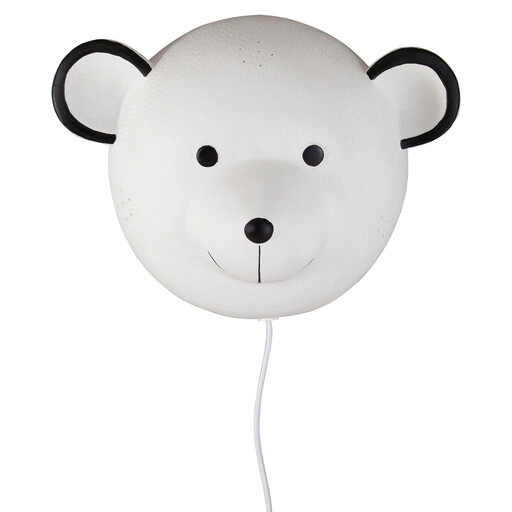
Why this product suits this profile: The bear shape adds a decorative touch to a child’s bedroom. The white porcelain body measures 25 × 13 × 19 cm and is designed for permanent wall mounting.
The product details clearly state the material, dimensions and E14 fitting. This allows you to check before buying that the bulb is required separately.
Porcelain surface, perforated light points and a stated E14 rating of up to 25 W.
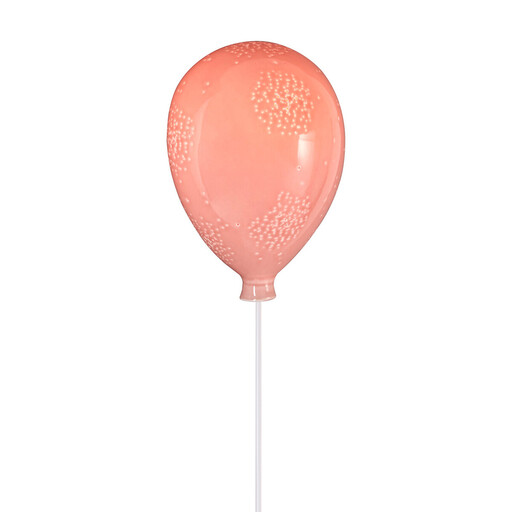
Why this product suits this profile: The glossy pink balloon shape is ideal for families who want to coordinate a decorative children’s bedroom wall lamp with the room’s overall design.
The product description highlights the decorative recesses and wall mounting. The fact that no bulb is included is made clear: an E14 bulb of up to 25 W must be purchased separately.
Porcelain construction, glossy surface and dimensions of 18 × 12 × 25 cm.
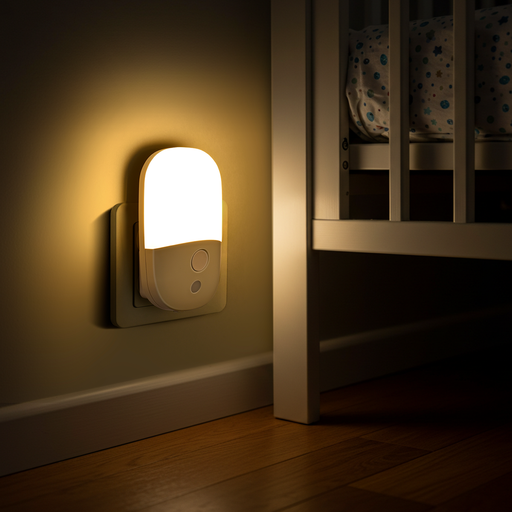
Why this product suits this profile: As a plug-in night light, it is suitable for hallways, stairs, bedrooms or kitchens whenever automatic guidance in the dark is required.
The details specify a dusk and daylight function, adjustable brightness and 2700 K warm white light. This gives you clear information about key purchase criteria.
LED technology, 2700 K, adjustable brightness and automatic activation in low ambient light.
We have put together a complete, regularly updated list of products that fully meet these strict selection criteria and the safety regulations applicable in the EU.
Warm white light with a low colour temperature is often perceived as less intrusive. However, this does not mean it is automatically suitable for every baby. The actual brightness, distance from the cot and position of the light are what matter. The light should not shine directly into the eyes. With wall-mounted and plug-in models, you should also ensure that babies and toddlers cannot reach the light or its cable.
Consumption depends on the power rating and how long the light operates each day. An LED night light with a low wattage will generally use less energy than a light with a higher-wattage replaceable bulb. For a realistic estimate, multiply the wattage by the operating hours and your electricity tariff. With a night light featuring a dusk sensor, the daily running time may also be reduced because it does not remain lit in daylight.
A night light with a dusk sensor is useful for hallways, stairs and paths that only need to be lit in the dark. In a child’s bedroom, a manually switched model may be more suitable if parents want to control the lighting deliberately at bedtime. Before buying, check whether the sensor sensitivity can be adjusted sufficiently and whether the socket remains freely accessible.