
Lieferung heute & morgen

Qualitätsgarantie

Willkommens-Angebote freischalten: KOSTENLOSE Lieferung | Bis zu 80 % RABATT | Kostenlose 30-Tage-JoyPlus-Testphase
App herunterladen
A children’s bedroom night light should provide orientation without unnecessarily brightening the room. In practice, unclear product specifications, unsuitable sensors and batteries that are difficult to replace often lead to disappointing purchases. The key consideration is therefore not just the design, but how the light, power supply, controls and intended location work together.
A night light with high brightness can be disruptive in a child’s bedroom. Specifications such as wattage or the number of LEDs also provide only limited insight into how much light actually reaches the room. More useful details include luminous flux in lumens, colour temperature and available dimming levels.
Warm white light is often suitable for sleeping areas. An LED night light with a colour temperature of 2700 to 3000 Kelvin appears warmer than one with 6500 Kelvin. The latter is described as whiter and more functional, making it more suitable for hallways or entrance areas.
A night light with a motion sensor normally switches on only when movement is detected in darkness. A night light with a dusk sensor, on the other hand, responds to the ambient brightness. Both functions are suited to different applications:
Important: With sensor lights, the sensor must not be blocked by furniture, curtains or decorations. The actual detection range and switch-off time should be stated in the product description.
A rechargeable night light can be used flexibly, but it needs to be charged regularly. Check whether a charging cable is included, which connector is used and whether a specific operating time is stated. A USB-C night light can be connected to many modern power supplies, laptops or power banks. For battery-powered models, check the battery type and what is included in the delivery.
When young children are involved, stability, ease of cleaning and the handling of small parts are also important. Glass housings can be decorative, but are less suitable for areas where there is a high risk of falling. Information such as ‘for indoor use only’, ‘keep dry’ or ‘keep out of reach of young children’ should be taken into account before purchase.
A dimmable night light offers more flexibility than a model with just one fixed brightness level. A low setting is often sufficient for finding your way around, while more light is needed for reading stories or changing a nappy. With RGB models, you should also check whether a warm white mode is available in addition to seven colours. An RGB night light is therefore not automatically suitable for every situation.
Plug-in night lights do not require a battery and can remain permanently connected to the intended socket. This is practical for hallways and staircases, but requires a suitable, undamaged socket. A portable bedside lamp, by contrast, can be used flexibly in a child’s bedroom, bedroom or when camping.
Touch controls, remote controls and timers differ in terms of everyday convenience. A remote control is helpful when the light needs to be operated from the bed. Touch controls are suitable for making quick adjustments directly on the device. With young children, the controls should not encourage them to open the device unsupervised or pull on the cable.
Before buying, compare the dimensions with the intended location. A compact plug-in model fits into narrow spaces, while a portable bedside lamp requires a stable, level surface. Technical details such as 0.5 to 1 watt power consumption, IP20 for dry indoor areas or a stated sensor range help you assess whether a product is suitable.
For products with CE or RoHS specifications, the information should be checked directly in the relevant product description. Labelling does not replace the need to follow the instructions for use. Lamps must not be covered, immersed in water or modified independently.
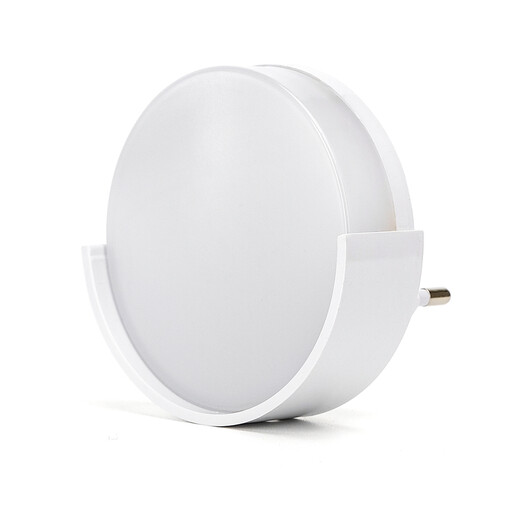
Why this product suits this profile: This plug-in night light is designed for hallways, children’s bedrooms and staircases, and requires neither batteries nor charging.
According to the product specifications, the integrated sensor switches on below 20 lux and switches off when there is sufficient light. This removes the need for constant manual operation.
1 watt power consumption, 40 lumens, 6500 Kelvin, IP20 and a stated LED lifespan of 25,000 hours.
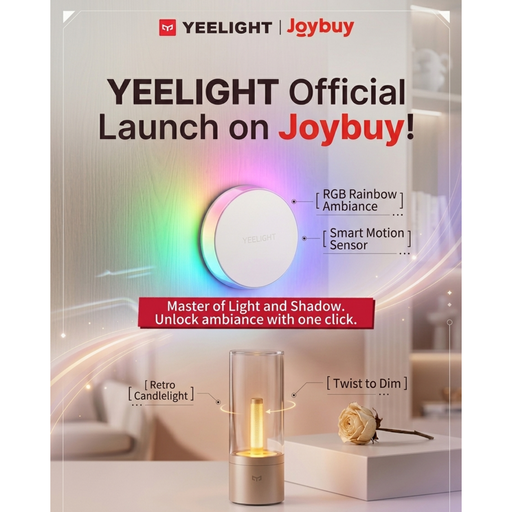
Why this product suits this profile: The combination of RGB lighting, pre-set effects, a motion sensor, magnetic mounting and USB-C charging is ideal for flexible lighting concepts.
The product name specifies 11 pre-set effects and a motion sensor. This makes it easier to choose the right setting than with a model offering only fixed light.
Rechargeable design, USB-C connection, magnetic mounting and use in living rooms, bedrooms or playrooms.

Why this product suits this profile: This plug-in model is designed for children’s bedrooms, hallways, staircases and other dry indoor areas, combining sensor control with five brightness levels.
According to the product specifications, movement is detected only in darkness; after 60 seconds without movement, the light switches off. This limits unnecessary operating time.
Five brightness levels from 20 to 100 per cent, warm white light at 2700 Kelvin, a detection range of up to 3 metres and 120 degrees.
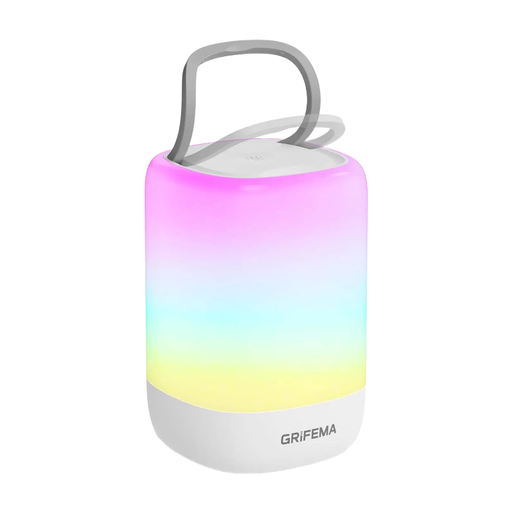
Why this product suits this profile: This portable bedside lamp can be used in a child’s bedroom, bedroom or when camping, and features touch controls.
The brightness can be adjusted from 100 to 5 per cent by pressing and holding the control. A 30-minute timer can replace manual switch-off.
Warm white light, seven RGB colours, touch controls, 1500-mAh lithium-ion battery and USB-C charging at 5 V/1 A.
We have put together a complete, regularly updated list of products that fully meet these strict selection criteria and the safety regulations applicable in the EU.
That depends on how it will be used. A low dimming level is usually enough for subtle orientation. More light may be needed for changing a nappy or reading stories. Look for adjustable brightness and a suitable light colour rather than focusing solely on wattage.
A motion sensor is practical for short routes, such as in a hallway or by the stairs. A dusk sensor switches the light on depending on the ambient brightness and is suitable for consistent orientation. Models with both sensors combine these functions, but require a suitable location where the sensor area is not obstructed.
The cost depends on power consumption, operating time and your electricity tariff. A model with 0.5 watts uses 0.012 kilowatt-hours per day when operated for 24 hours. Rechargeable devices also involve charging intervals and the electricity consumed by the charger. For an accurate estimate, calculate the wattage and usage figures stated for the product using your own tariff.