
Lieferung heute & morgen

Qualitätsgarantie

Willkommens-Angebote freischalten: KOSTENLOSE Lieferung | Bis zu 80 % RABATT | Kostenlose 30-Tage-JoyPlus-Testphase
App herunterladen
A children’s bookcase should display picture books where they can be seen, keep toys tidy and be easy to reach every day. It also needs to suit the available space and your child’s age. Many options look similar at first glance, but can differ significantly in dimensions, load capacity, materials and tip-over protection.
Three common pitfalls can cause problems when buying:
Start by measuring the space available in your child’s bedroom or nursery. As well as the width, height and depth, check whether the bookcase will obstruct doors, radiators or walkways.
Low shelves and open compartments are practical for toddlers. A Montessori bookcase is typically designed so children can reach books and toys independently. However, the name alone isn’t a binding safety or quality standard. The actual dimensions and assembly instructions are what matter.
Examples from the selection:
A children’s bookcase with compartments isn’t necessarily equally suited to books and toys. Narrow, open shelves are ideal for picture books and magazines. Larger compartments or a separate box can hold building blocks, dolls, soft toys and other playthings.
Look for:
For combined book and toy storage, a model with open compartments at the top and a larger section at the bottom can be a good choice. Frequently used books stay in sight, while toys can be kept together in a larger compartment.
Children’s bedroom furniture is made from materials including MDF, chipboard and solid wood. The material name alone doesn’t tell you how well a piece will stand up to everyday use. So check the finish, surface coating and assembly instructions too.
Rounded edges can help reduce the risk of injury if someone accidentally bumps into the furniture. However, they’re no substitute for safe use. The unit should stand on a level surface and be fixed to the wall according to the instructions if tip-over protection is provided.
Details such as MDF (E1) refer to the material class stated for the specific product. The maximum load capacity is a specific figure provided by the manufacturer and must not be exceeded. Children should not climb on bookcases, hang from them or use the compartments as seats.
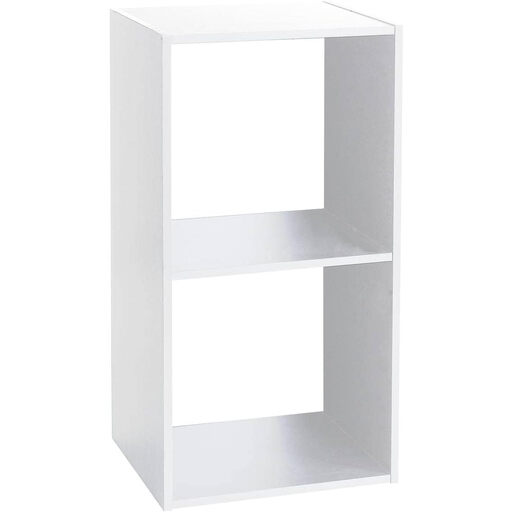
Why this product suits your needs: Its compact dimensions make it a good fit for smaller children’s bedrooms, alcoves or extra storage alongside existing bedroom furniture.
Its manageable size reduces the risk of buying a storage unit that’s too large for a small space. Assemble and load the stated chipboard construction according to the instructions.
Two compartments, a lacquered finish and a width of approximately 34.5 cm.
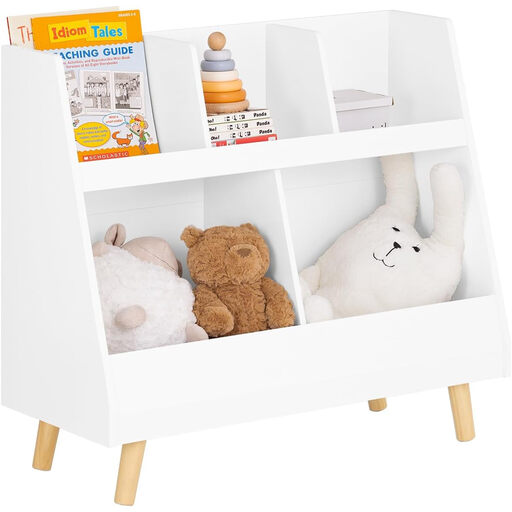
Why this product suits your needs: With five compartments, an MDF body and solid pine legs, it offers a well-organised solution for books, puzzles and toys.
The product details give dimensions of 86 × 36 × 78 cm, rounded edges and a maximum total load of 25 kg. This lets you check the space required and load capacity before buying.
Five open compartments, MDF (E1), a lacquered finish and a compact depth of 36 cm.
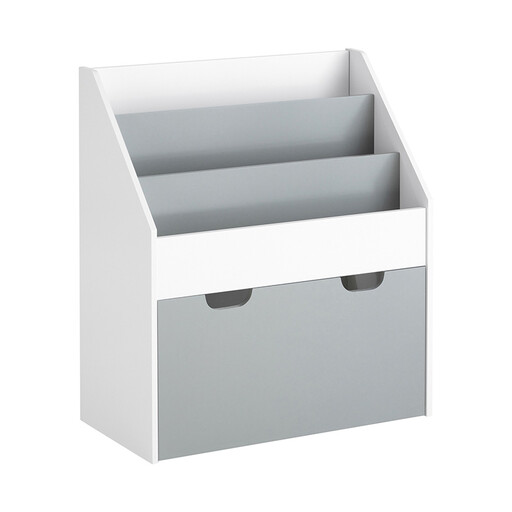
Why this product suits your needs: For families who want to store larger toys as well as books, a movable box adds extra storage alongside the open shelves.
The layout makes it clear which items are intended for the upper compartments and which belong in the lower box. Move the box slowly and secure the bookcase to the wall according to the instructions.
Three compartments, a removable toy box with optional wheels, approximately 63 × 70 × 30 cm and a maximum total load of 25 kg.
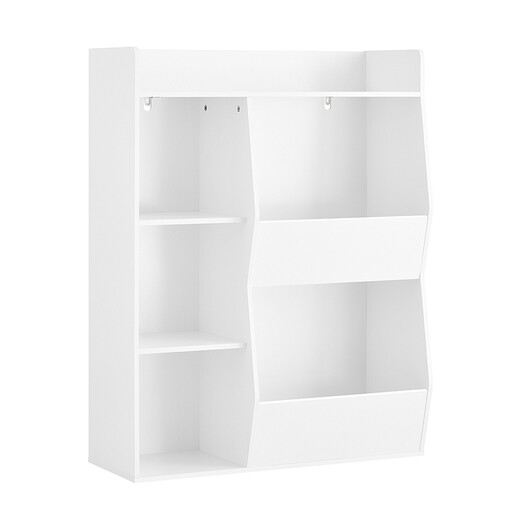
Why this product suits your needs: Its five open shelves offer room for books, soft toys and accessories when a single shelf is no longer enough.
The open layout keeps books from getting lost in deep, hard-to-see compartments. At 104 cm tall, it’s particularly important to use the wall fixings provided for this purpose.
Five open shelves, PB (E1), rounded edges and a stated maximum total load of 53 kg.
We’ve put together a complete, regularly updated list of products that meet these strict selection criteria and fully comply with the safety regulations in force in the EU.
It depends on your child’s age and height. Low models of around 70 cm are easier for toddlers to reach. Taller bookcases offer more storage, but should be positioned and secured so children can’t climb on them.
For models that require tip-over protection or are taller, wall fixing is an important part of safe assembly. Read the manufacturer’s instructions and use fixings suitable for your type of wall. A bookcase shouldn’t be used as a seat, step or climbing aid.
Its lifespan depends on the materials, load, assembly and care. Evenly distributing the weight, keeping it in a dry indoor space and checking the screws regularly can help the furniture last longer with everyday use. The manufacturer’s specific guidance on load capacity and use remains the most important factor.