
Lieferung heute & morgen

Qualitätsgarantie

Willkommens-Angebote freischalten: KOSTENLOSE Lieferung | Bis zu 80 % RABATT | Kostenlose 30-Tage-JoyPlus-Testphase
App herunterladen
A children’s bookcase should keep books and toys neatly organised without becoming a tripping hazard. Many designs look child-friendly at first glance, but their drawbacks only become apparent in everyday use: shelves are too high, storage boxes are difficult to pull out, or the unit is not stable enough without being fixed to the wall.
That’s why three common buying mistakes matter to parents, grandparents, nurseries and childminders:
A children’s bedroom bookcase should be low enough for children to reach the books and toys they use most often. Open, easy-to-see shelves are practical for toddlers and pre-schoolers. Clear visibility is especially important in a Montessori bookcase: display picture books with their covers facing forwards and store toys on the lower shelves.
Check:
A 70 cm-high model may be easier for younger children to reach than a 104 cm-high children’s bookcase. For older pre-schoolers, however, the extra height can provide more storage.
The models described here use materials including MDF(E1), chipboard, solid wood and steel. The E1 designation refers to an emissions class for wood-based materials. However, it is no substitute for reading the manufacturer’s information, assembly instructions and care guidance.
For everyday use, consider the following:
The surface should not be left wet for long periods. Wood-based materials are best kept in a dry, well-ventilated environment.
An open bookcase for children must be assembled correctly. If the manufacturer specifies, secure it to the wall using the supplied tip-over restraint. Children should not climb on the shelves, sit in the compartments or use the furniture as a step.
Before buying, check:
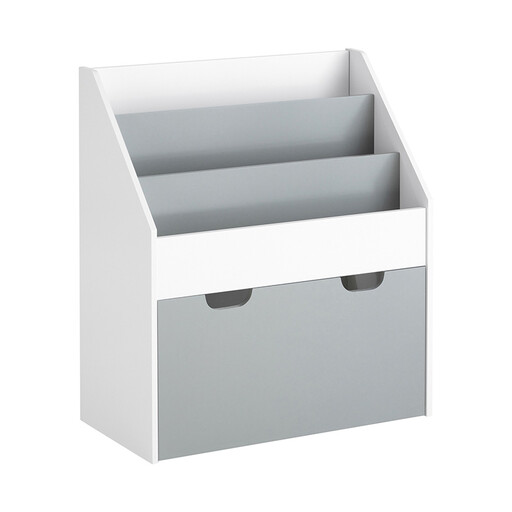
Why it suits this profile: Measuring approximately 63 × 70 × 30 cm, this compact unit combines three open compartments with a removable toy box, making it a good fit for smaller children’s bedrooms.
Its low height makes everything easier to reach. The manufacturer specifies rounded edges and a supplied anti-tip system; the unit must be fixed to the wall.
Three compartments, a removable box with optional wheels, MDF(E1) and a stated load capacity of up to 25 kg.
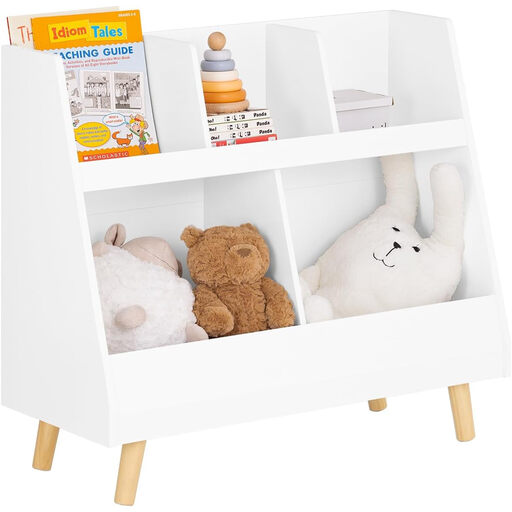
Why it suits this profile: With five open compartments, this design makes it easy to keep picture books, puzzles and toys separate. At 86 × 78 × 36 cm, it makes good use of floor space.
The open compartments avoid hard-to-reach spaces at the back. Rounded edges and floor mounting are specified; do not exceed the 25 kg load capacity.
MDF(E1), solid pine legs, a painted finish and five storage compartments.
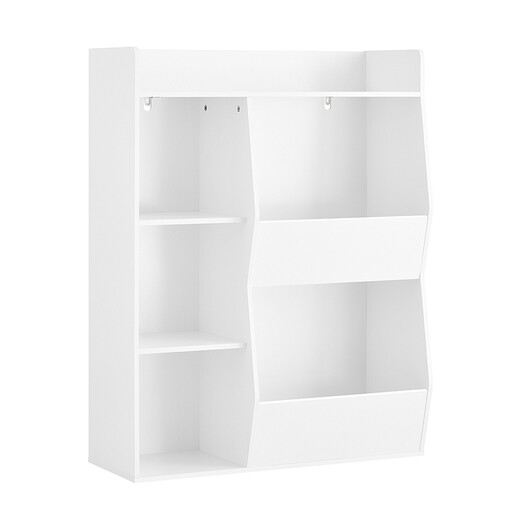
Why it suits this profile: Measuring 80 × 104 × 34 cm, this bookcase offers five open shelves for a child’s bedroom, play area or childcare setting.
The open shelves make it easier to see and sort what’s stored. The manufacturer specifies rounded edges and anti-tip protection; the unit must still be firmly fixed to the wall.
Five open compartments, a stated load capacity of up to 53 kg and a height that accommodates books and toys in different sizes.
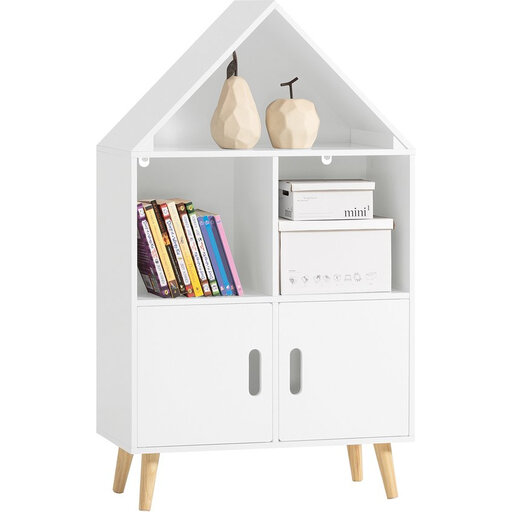
Why it suits this profile: Three open shelves and two doors combine visible book storage with closed compartments for toys and soft toys.
The mix of open and closed storage means toys don’t all have to stay on display. Rounded edges and an anti-tip device are specified.
MDF(E1) with solid pine components, three open compartments, two doors and a stated load capacity of up to 70 kg.
We’ve put together a complete, regularly updated list of products that meet these strict selection criteria and the safety regulations in force in the EU.
A bookcase works better day to day when its layout suits the way it’s used:
Before buying, measure the doorway width, distance from the wall, skirting boards and available floor space. For a nursery or childminding setting, also take regular cleaning, frequent use and professional installation into account.
Low models with easy-to-reach shelves are usually practical for toddlers. A height of around 70 to 80 cm can make it easier for them to reach things independently. Taller bookcases offer more storage, but should be secured to the wall with particular care.
Assemble the bookcase according to the instructions, place heavier items on the lower shelves and use the specified anti-tip system. The right fixing depends on the type of wall. Children should never climb on the shelves or use the bookcase as a ladder.
Its lifespan depends on the material, load, moisture, assembly and care. Check the fixings regularly, clean the surface according to the manufacturer’s guidance and observe the maximum load capacity. This helps you spot loose fixings and unnecessary strain on the materials early.