
Lieferung heute & morgen

Qualitätsgarantie

Willkommens-Angebote freischalten: KOSTENLOSE Lieferung | Bis zu 80 % RABATT | Kostenlose 30-Tage-JoyPlus-Testphase
App herunterladen
Choosing a child's first cutlery set is a significant milestone on their path to independence. However, the market for children's cutlery is overwhelming and full of promises. As parents or gift-givers, you face the challenge of finding a product that not only looks appealing but is, above all, safe, functional, and age-appropriate. Many well-intentioned purchases prove to be impractical in daily use or even hinder a child's development.
To help you make an informed decision, we will highlight the most common pitfalls and show you which objective criteria truly matter.
To avoid a poor investment, you should check three core aspects before buying. These objective parameters will help you evaluate the quality and suitability of a children's cutlery set.
The material has a direct impact on safety, durability, and hygiene. Each has specific pros and cons that should be weighed according to the child's age.
The design of the cutlery must be adapted to the child's motor skills. Good toddler cutlery is characterised by the following features:
A cutlery set for children aged 1 and up should meet these criteria to optimally support the transition from being fed to eating independently.
Instead of making a blanket recommendation, we have selected products that are tailored to specific age groups and needs.
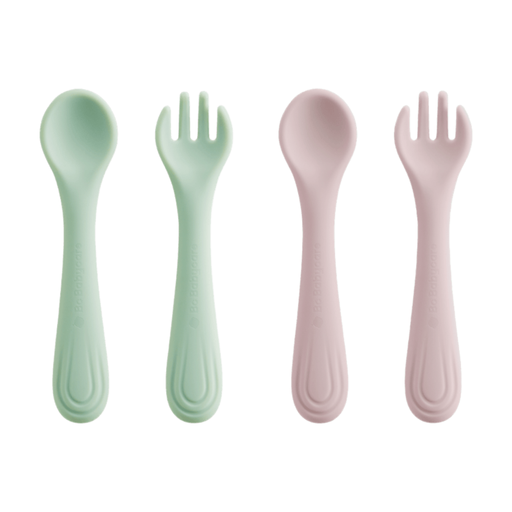
Why this set is a great fit: Perfect for starting solid foods. The soft silicone is especially gentle on sensitive gums and first teeth. The short, easy-to-grip handles are perfectly designed for a baby's small hands.
This set is specifically designed for the 6+ month age group, avoiding the "one-size-fits-all" approach. It focuses exclusively on the needs of the very youngest eaters.
Made from food-grade silicone, explicitly declared as BPA-free. Includes a convenient travel case for hygienic transport.

Why this set is a great fit: A classic cutlery set for children aged 1 and up. It combines durable stainless steel functional parts with lightweight, ergonomic plastic handles that toddlers can hold securely.
The handles are specially shaped for small hands, not just a scaled-down version of adult cutlery. This prevents frustration caused by poor ergonomics.
Meets the safety requirements of standard EN 14372. The combination of rustproof 18/10 stainless steel and dishwasher-safe PP plastic is both practical and safe.
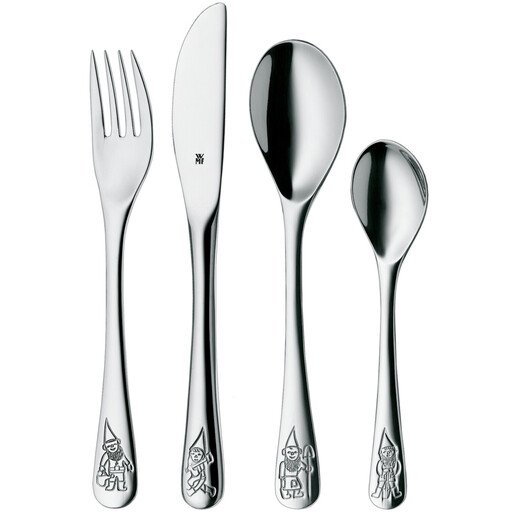
Why this set is a great fit: For children who have mastered using cutlery and want a set that resembles the one adults use. It is a long-lasting investment that can be used for years.
This set relies on verifiable material quality. According to the manufacturer, it uses Cromargan stainless steel 18/10, a specific and high-quality alloy, instead of vague material descriptions.
Extremely durable, retains its shape, hygienic, and dishwasher-safe. The child-friendly proportions and blunt knife are perfectly tailored to the abilities of children aged 3 and up.
We have compiled a complete, up-to-date list of products that fully meet these strict selection criteria and rigorous safety standards.
A first set of baby cutlery, usually made of soft silicone, is useful from the start of weaning at around 6 months to playfully introduce the child to the tools. A proper toddler cutlery set with a fork and spoon generally becomes relevant from the age of 12 to 18 months, when the child's fine motor skills are more developed and they begin to want to eat independently.
For babies (approx. 6-12 months), BPA-free silicone is often recommended. It is soft, flexible, and gentle on sensitive gums. For toddlers from about 1.5 to 2 years, stainless steel is an excellent choice. It is extremely hygienic, robust, and durable. Many sets combine stainless steel functional parts with ergonomic plastic handles to unite the advantages of both materials.
Look for rounded edges, especially on the fork tines and the bowl of the spoon. The knife should have a blunt blade. A reliable, objective feature is compliance with the safety standard EN 14372. Furthermore, all plastic and silicone parts should be explicitly labelled as BPA-free. Inspect the cutlery for any damage before each use.