
Lieferung heute & morgen

Qualitätsgarantie

Willkommens-Angebote freischalten: KOSTENLOSE Lieferung | Bis zu 80 % RABATT | Kostenlose 30-Tage-JoyPlus-Testphase
App herunterladen
As a Joybuy Product Recommendation Officer, I see parents and relatives every day searching for the perfect first cutlery set for a child. The selection is vast, but not every product delivers on its promise. Many well-intentioned purchases turn out to be impractical or unhelpful for a child's motor skill development. Before you make a decision, you should know the most common pitfalls that lead to bad buys.
Navigating the market for baby and children's products can be difficult. Marketing messages often highlight visual appeal while functional disadvantages remain hidden. Pay attention to these three points to make an informed choice.
To avoid the mistakes mentioned above, you should base your selection on objective criteria. The following three parameters are decisive for the safety, durability, and learning success of your child.
The choice of material depends directly on the child's age and abilities.
A good set of toddler training cutlery is designed so that the child cannot get injured.
In the hustle and bustle of family life, things often need to be done quickly. A dishwasher-safe children's cutlery set saves time and ensures hygienic cleanliness. Stainless steel cutlery has a clear advantage here, as it remains stable and attractive even after many wash cycles. Sets that can be personalised as engraved children's cutlery are usually high-quality stainless steel models intended as a lasting keepsake.
Based on the criteria mentioned, we have identified some products that are suitable for specific requirement profiles.

Why it's a great fit: Perfect for babies starting on solid foods. The soft silicone tips are gentle on sensitive gums and emerging teeth, making the transition to self-feeding easier.
This set avoids the mistake of using hard materials too early. It's specifically designed for the needs of babies from 6 months, prioritising safety above all else.
Made from BPA-free, food-grade silicone. The ergonomic handles have a textured surface to give little hands a secure grip. Includes a practical travel case for on-the-go use.

Why it's a great fit: A practical transitional set for toddlers from 12 months who are learning to use a fork and spoon. The combination of stainless steel and plastic handles offers durability and child-friendly handling.
This set solves the problem of poor ergonomics. The lightweight, small, and ergonomically shaped handles are made specifically for little hands and encourage a proper grip.
The utensils, made from rust-proof 18/10 stainless steel, are durable and dishwasher-safe. The rounded spoons and dull fork tines comply with the EN 14372 safety standard.
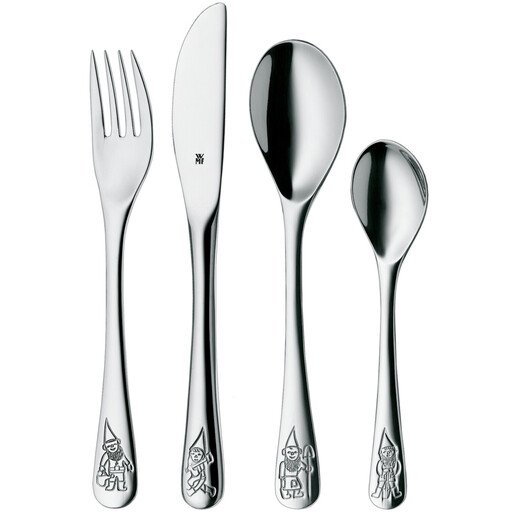
Why it's a great fit: For anyone looking for a durable, high-quality gift for a christening, birth, or birthday. The quality of a renowned German brand and the option for engraving make it a special keepsake.
This set bypasses the pitfall of buying short-lived products with poor material quality. It is designed for long-term use and retains its shape and appearance even with intensive use.
Crafted from Cromargan 18/10 stainless steel, it is robust, acid-resistant, and dishwasher-safe. The set is optimised for children aged 3 and up and offers the option for a personal engraving.
We have compiled a complete, up-to-date list of products that fully meet these strict selection criteria and safety regulations.
Special baby cutlery, usually made of soft silicone, is useful from the start of weaning at around 6 months. It helps the baby get used to the shape of a spoon and fork. A proper set of toddler training cutlery made of stainless steel with plastic handles is generally recommended from the age of 12 to 18 months, when the child begins to grasp more purposefully and wants to eat independently.
BPA (Bisphenol A) is a chemical compound used in the manufacturing of some plastics. It can leach from the material and transfer to food. Especially in babies and toddlers, it is suspected that BPA can affect the endocrine system. The BPA-free label ensures that this substance is not present in the product, making it a safer choice for your child.
Yes, many high-quality stainless steel children's cutlery sets are suitable for engraving. Engraved children's cutlery is a popular and personal gift for a birth, christening, or first birthday. Brands like WMF often explicitly mention this option. The engraving makes the cutlery unique and a beautiful memento.