
Lieferung heute & morgen

Qualitätsgarantie

Willkommens-Angebote freischalten: KOSTENLOSE Lieferung | Bis zu 80 % RABATT | Kostenlose 30-Tage-JoyPlus-Testphase
App herunterladen
The transition from using hands to a fork and spoon is a major milestone in a child's development. Choosing the right children's cutlery plays a key role in this process. It's not just about getting food from the plate to their mouth; it's also about fostering motor skills and encouraging independence at the dinner table. However, with the vast array of materials, shapes, and designs available, the decision can be complex.
This guide is designed to help you make an informed choice. We'll highlight the essential criteria for safe and functional children's cutlery and present a selection of models for different age groups, from the first baby cutlery to a complete kids' cutlery set for toddlers.
Before you make a decision, there are a few fundamental aspects to consider. These criteria will help you find a product that is safe, durable, and tailored to your child's developmental stage.
The material is one of the most important distinguishing features of training cutlery.
Good training cutlery is designed to support motor development while minimising the risk of injury.
An engraved children's cutlery set is a popular and personal gift idea for a christening, birthday, or first day of school. Many stainless steel sets offer the option to engrave the child's name or a special date, turning the cutlery into a lasting keepsake.
Here is a selection of products tailored to different age groups and needs.

Why it stands out: This set was specifically designed for the weaning phase. The material is soft and flexible, making it exceptionally safe for babies who tend to chew on their cutlery.
Advantages:
Who it's for: Parents of babies aged 6 months and up who are looking for a safe and functional baby cutlery set to start their journey into independent eating.
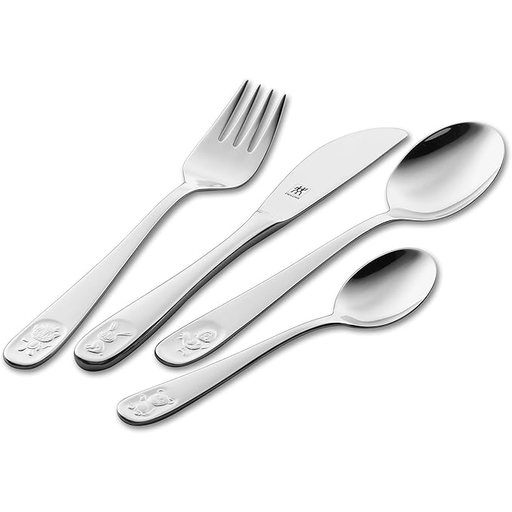
Why it stands out: The set from Zwilling combines the material quality of adult cutlery with a thoughtful, child-safe design. The embossed animal motifs turn mealtime into a playful experience.
Advantages:
Who it's for: Toddlers aged 3 and up who are ready to learn how to use a complete kids' cutlery set with a knife, fork, and spoons.
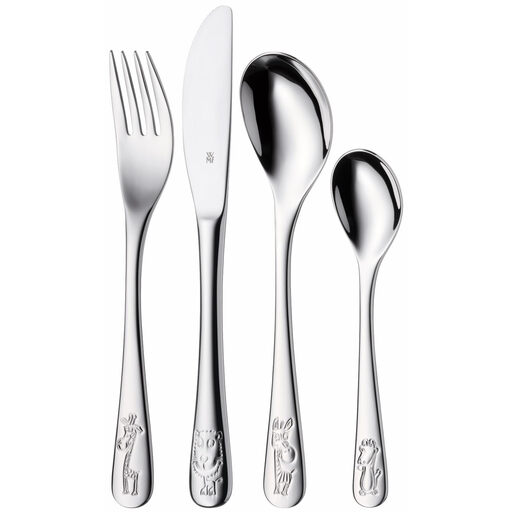
Why it stands out: WMF combines its proven material expertise with an appealing design. The safari motifs on the handles stimulate the imagination and can boost motivation at mealtimes.
Advantages:
Who it's for: Children aged 3 and up who enjoy playful designs. It is also an excellent choice for anyone looking for a high-quality and practical gift.
The selection of children's tableware is diverse. If you're looking for other materials or designs, such as sustainable alternatives like a bamboo baby feeding set, you can find more products in our broader category.
Explore our entire range of children's tableware here
1. When does it make sense to introduce children's cutlery? A first baby cutlery set, usually consisting of a soft spoon, is useful from the start of weaning at around 6 months. A full training cutlery set with a fork and spoon typically becomes relevant between 12 and 18 months, when the child starts to reach for food more purposefully. A complete kids' cutlery set including a knife is intended for children from about 3 years of age.
2. What is the difference between baby cutlery and children's cutlery?Baby cutlery is designed for the very youngest. It is usually made of soft, gum-friendly materials like silicone and has very short, thick handles for a palmar grasp. Children's cutlery is aimed at toddlers, is often made of stainless steel, and already mimics the shape of adult cutlery, but is smaller, lighter, and equipped with safety features like dull blades and rounded tines.
3. How do I properly clean stainless steel children's cutlery?Stainless steel children's cutlery is generally dishwasher-safe. To prevent flash rust (small rust spots transferred from other metal items in the dishwasher), it's advisable to remove and dry the cutlery soon after the cycle finishes. When hand-washing, use mild detergents and a soft cloth to avoid scratching the polished surface.