
Lieferung heute & morgen

Qualitätsgarantie

Willkommens-Angebote freischalten: KOSTENLOSE Lieferung | Bis zu 80 % RABATT | Kostenlose 30-Tage-JoyPlus-Testphase
App herunterladen
A children's doctor kit is more than just a toy. It provides a platform for imaginative doctor role-playing, fosters social skills, and can help reduce anxiety about the next visit to the doctor. However, the range of models is vast, and choosing the right doctor playset can often be difficult. This guide is designed to provide you with direction by explaining key purchasing criteria and presenting a selection of models for 2026.
To find a suitable and safe doctor toy, several objective criteria should be considered.
Your child's safety is the top priority. Look for the CE marking, which confirms that the product complies with EU safety standards. The plastics used should be free of harmful plasticisers. High-quality craftsmanship is evident in rounded edges and sturdy components that do not break easily, even during intensive play. Especially for a doctor kit for ages 3 and up, it is crucial to watch out for small, swallowable parts and to follow the manufacturer's age recommendation.
A good doctor kit with accessories includes a selection of instruments that children will recognise from real life. These typically include a stethoscope, a syringe, a thermometer, and a reflex hammer. Some sets offer additional accessories like an otoscope, plasters, or even a toy mobile phone. The instruments should be ergonomically designed to fit comfortably in small hands and playfully train motor skills.
Products from established manufacturers, such as the Theo Klein doctor kit, are often known for their durability. The country of origin can also be an indicator of quality standards. Toys "Made in Germany" are subject to strict production controls and stand for robust construction that provides years of enjoyment.
Here you will find a curated selection of models that stand out based on their features and product characteristics.
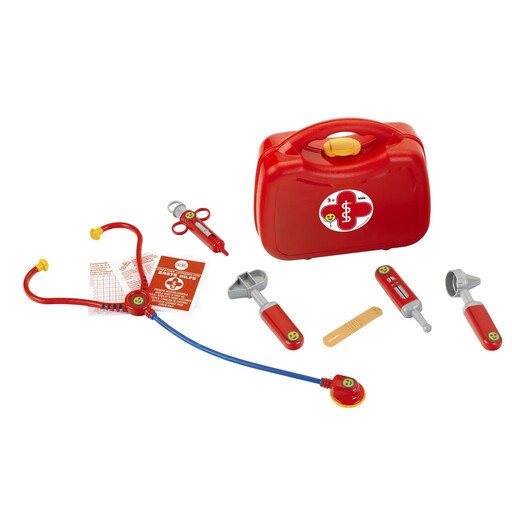
Why It Stands Out: This set is a classic toy doctor kit that includes all the essential instruments for aspiring little medics. Its manufacturing in Germany signifies high material and build quality.
Pros:
Who It's For: This model is an excellent choice for parents and grandparents looking for a solid and durable starter set for children aged three and up, containing the essential instruments for doctor play.

Why It Stands Out: The transparent lid of this case allows children to see the contents at a glance, promoting tidiness. The ergonomic handle makes it ideal for mobile use in the playroom.
Pros:
Who It's For: Ideal for children who like to keep things organised and want to have their toys in sight at all times. The set is well-suited for an introduction to doctor role-playing.

Why It Stands Out: This case, designed in the style of "Die Sendung mit der Maus," has been awarded the "Spiel Gut" seal of approval. It includes extra accessories like plasters and prescription pads, which deepens the play experience.
Pros:
Who It's For: This set is aimed at fans of "The Mouse" and anyone looking for a particularly comprehensive doctor playset with high educational value.

Why It Stands Out: This model integrates a modern element into classic doctor play: a toy mobile phone with sound effects. This expands the role-playing possibilities, allowing children to schedule appointments or simulate emergency calls.
Pros:
Who It's For: Perfect for children who enjoy tech toys and want to enhance their role-playing with interactive components.
Sometimes a complete kit isn't needed, but rather a single instrument to supplement an existing set. If you are specifically looking for a toy syringe, for example, you will find suitable options for that as well.
Discover our selection of individual toy syringes and other accessories to customise the play experience.
Most manufacturers recommend their doctor kits for children aged 3 and up. This is because the sets often contain small parts that could pose a choking hazard to younger children. It is advisable to always check the age recommendation on the product packaging and to supervise the child during play.
In summary, the most important criteria are: safety (CE marking, non-toxic materials, rounded edges), age-appropriate accessories with robust and ergonomically designed instruments, and durable construction to ensure the toy provides long-lasting enjoyment.
Through doctor role-playing, children can familiarise themselves with medical instruments and examination scenarios in a playful way. Re-enacting doctor visits with dolls or stuffed animals can help alleviate uncertainty and demystify the situation. However, it does not replace empathetic preparation by parents.