
Lieferung heute & morgen

Qualitätsgarantie

Willkommens-Angebote freischalten: KOSTENLOSE Lieferung | Bis zu 80 % RABATT | Kostenlose 30-Tage-JoyPlus-Testphase
App herunterladen
A children’s electric scooter can be an appealing option for leisure rides on private land, an introduction to electric mobility and short journeys. For parents, however, the stated top speed is not the only consideration. The recommended age, child’s height, brakes, tyres, charging time and legal use all determine whether a model is genuinely suitable for everyday use.
Anyone looking to buy an electric scooter for children should also be aware of common marketing pitfalls. For example, a long range only applies under certain conditions. Weight, riding mode, hills, outside temperature and surface all affect the actual riding time. A foldable children’s electric scooter is not automatically light enough to carry comfortably over longer distances either.
Figures such as “up to 17 km” are intended as a guide. They generally refer to defined test conditions rather than every everyday situation. A higher rider weight, frequent starting and stopping or hills can reduce the range. For children and teenagers, the maximum range should therefore not be the only deciding factor.
An electric scooter for children aged 6 and over should suit the child’s stage of development and height. A model with several riding modes allows them to get used to it gradually. It is important that the child can start, steer and slow down the scooter safely. A higher speed is no substitute for easy handling and supervision.
Solid rubber tyres are less prone to punctures, but they can absorb uneven surfaces differently from pneumatic tyres. Small wheels are more sensitive to kerbs, gravel and cracks in the surface. An IPX4 rating should not be confused with complete waterproofing either: it only describes limited protection against splashing water.
The recommended age is a useful first filter, but it does not replace checking the child’s height. The handlebar should be adjustable so that the child can stand upright with both hands securely on it. The maximum load must also be taken into account. For the models featured here, it is up to 50 kg.
When choosing a children’s electric scooter for ages 6–14, it is worth considering how the child is likely to grow. An adjustable-height handlebar can extend the useful life of the scooter. Even so, the model should only be used within the age, height and weight limits specified by the manufacturer.
An electric scooter with 3 riding modes can accommodate different levels of experience. Typical settings include a standard mode, an assistance mode and a faster sport mode. Before the first ride, a low setting should be selected on a clear, flat area of private land.
When it comes to the brakes, the specific design and ease of use are important. Drum brakes are electrically operated on several of the children’s scooters featured here. What matters is that the child practises braking and always keeps a sufficient distance. A dual braking system, as specified for the Ladped LP65, should be examined more closely using the manufacturer’s description and instruction manual.
7-inch solid rubber tyres, or puncture-resistant tyres, reduce the risk of a flat tyre. However, they do not make the scooter suitable for wet, slippery or uneven paths. The scooter’s own weight is important when transporting it: a model weighing 7.8 kg will be handled differently in everyday use from one weighing 10.7 kg.
Charging time should also be included in the comparison. According to the available specifications, it is around four to 5.5 hours, depending on the model. The charger should only be used in accordance with the instructions. The battery and charger should be kept away from children, stored in a dry place and kept away from sources of heat.
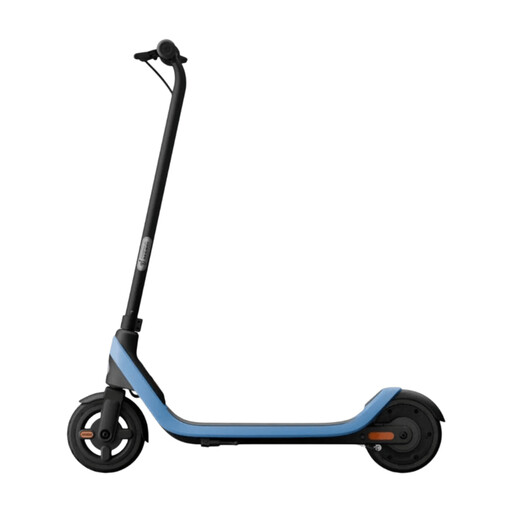
Why this product suits this profile: According to the product specifications, this model is intended for children aged 6 to 10 and a height of 115 to 145 cm. Weighing 7.8 kg and featuring a foldable frame, it is suitable for occasional transport.
The clear age and height specifications help prevent you from choosing a scooter that is too large. Three riding modes allow the scooter to be adjusted gradually as the child gains experience.
Top speed of 16 km/h, range of up to 14 km, 7-inch solid rubber tyres, drum brake, IPX4 rating and foldable frame.
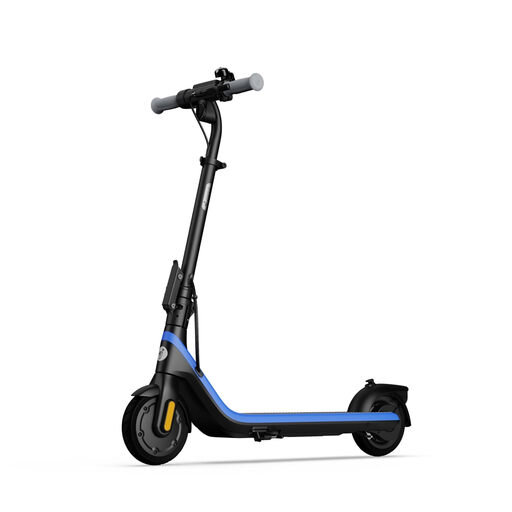
Why this product suits this profile: According to the product specifications, the C2 Pro E is designed for children and teenagers aged 6 to 14. Its adjustable-height handlebar accommodates different heights and can be raised as the child grows.
The three riding modes mean that the highest setting does not have to be used all the time. The stated maximum load of 50 kg provides a transparent limit when choosing a model.
260 W motor, speeds of up to 16 km/h, range of up to 17 km, 7-inch maintenance-free tyres, mechanical drum brake and Bluetooth speaker.
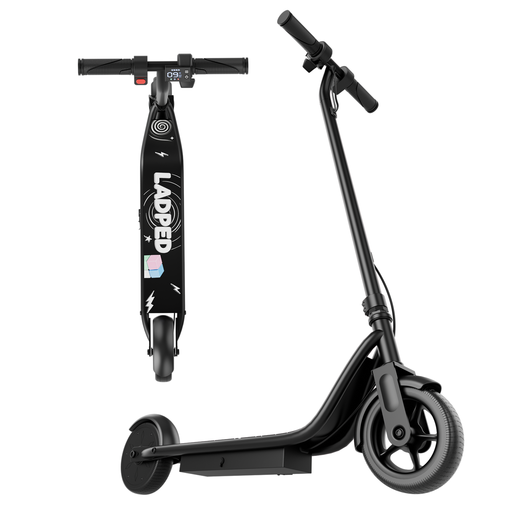
Why this product suits this profile: According to the available product specifications, the Ladped LP65 is designed for children aged 6 to 12 and combines a moderate top speed with a stated range of up to 16 km.
The combination of the stated age range, top speed of 15 km/h and solid rubber tyres provides specific points of comparison rather than relying on a single marketing claim.
250 W motor, speeds of up to 15 km/h, range of up to 16 km, 25.2 V/4.4 Ah battery, 6.5-inch solid rubber tyres and dual braking system according to the product specifications.
According to the product information provided, the models listed are not approved for use on public roads. Before buying and before every ride, parents should check the current legal position, local requirements and whether the scooter may be used on the relevant grounds. In Germany, special requirements apply to electric micro-vehicles on public roads; a children’s electric scooter does not automatically meet them.
For private paths and suitable areas, the following basic equipment is recommended:
A scooter should not be used in the rain, on slippery surfaces or near traffic, stairs and heavily uneven ground. An electric scooter with a seat is not included in this selection, as the focus here is on traditional deck-style models for children.
We have put together a complete, regularly updated list of products that fully meet these strict selection criteria and the safety regulations applicable in the EU.
This depends on the specific model, the child’s height, weight and ability to operate it safely. According to the product specifications, the Segway-Ninebot models listed here are intended for children aged 6 and over. An adult should accompany the child on their first ride and assess their suitability individually.
The usage time per charge depends on the range, riding mode, rider weight, temperature, hills and surface. The stated figures of up to 14 to 17 km should therefore be understood as maximum or guide values. After every ride, the battery should be charged according to the instructions and stored in a dry place.
The electricity cost of a single battery charge is generally modest compared with the purchase price. However, additional expenses may arise for safety equipment, spare parts, maintenance and, where necessary, a replacement battery. Before buying, parents should therefore also check the charger, spare-parts availability, warranty terms and intended use.