
Lieferung heute & morgen

Qualitätsgarantie

Willkommens-Angebote freischalten: KOSTENLOSE Lieferung | Bis zu 80 % RABATT | Kostenlose 30-Tage-JoyPlus-Testphase
App herunterladen
A children’s excavator toy should look like more than just a small construction machine. What matters is whether its age suitability, construction and intended environment match your needs. Some models look sturdy in product images but have delicate joints or small detachable parts. Others are designed for the sandpit but are only practical for older children because of their seat height or controls.
Three common pitfalls occur particularly often when buying children’s excavators:
The recommended age is an important consideration when choosing a model. For an excavator for children aged 2 and over, the construction should be as straightforward as possible and free from easily detachable small parts. Models for children aged 3 or 4 and over may include additional features such as a rotating cab, detachable bucket or detailed interior.
The information on the product page and packaging is decisive. The BRUDER 02483 Cat Crawler Excavator has a recommended age of 4 years and over; the product information also warns about small parts and advises direct adult supervision. A toy with a moving arm should be checked regularly for loose connections or damage.
Materials and construction are important for frequent play in the garden or sandpit. Reinforced plastic can be easy to clean and is suitable for many everyday situations. A metal excavator for children may offer a different feel and greater weight, but that does not automatically make it more comfortable for every child to use.
Look out for:
A stated standard should always relate to the specific product. According to the product description, the BRUDER 02483 includes wording confirming compliance with EN 71. However, this should not automatically be taken to apply to other children’s excavators.
An excavator with a moving arm encourages active role play when the handle is within the child’s reach and the mechanism is not too stiff. A 360-degree rotation can enable realistic play scenarios, but it requires sufficient free space. For the bedroom, compact manually operated models are often more practical than a large ride-on excavator.
Also check whether the model:
A remote-controlled excavator for children could be an interesting option, but it is not included in the selection presented here. For ride-on models, the maximum load, a secure seating position and supervision are particularly important.

Why this product suits the profile: According to the product information, this toy excavator is approximately 35 cm in size, suitable for children aged 2 and over, and can be used indoors and outdoors. It is ideal for families looking for a straightforward starter model that requires no assembly.
The product description specifies reinforced plastic, no assembly required, and no sharp edges or small detachable parts. Nevertheless, the exact packaging information should still be checked.
Suitable for children aged 2 and over according to the supplier’s information; functional excavator arm and manual operation without batteries.
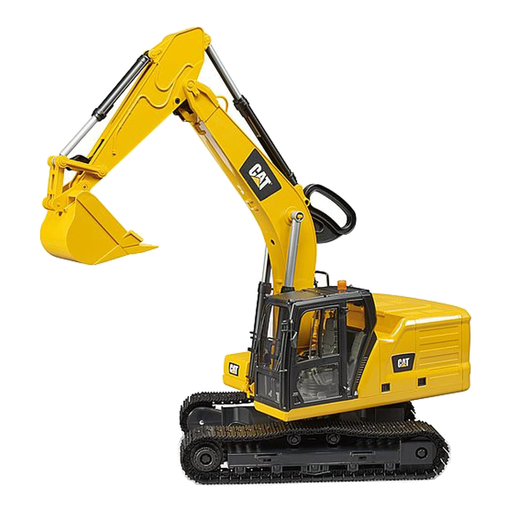
Why this product suits the profile: This 1:16 scale model combines a rotating cab, moving arm and detachable bucket with a stated recommended age of 4 years and over.
The product details clearly state the materials, dimensions, age recommendation and warnings. This makes it easier to match the detailed model to the child’s age and the available play space.
ABS plastic according to the product information; 360-degree cab, tracks and fully articulated excavator arm.
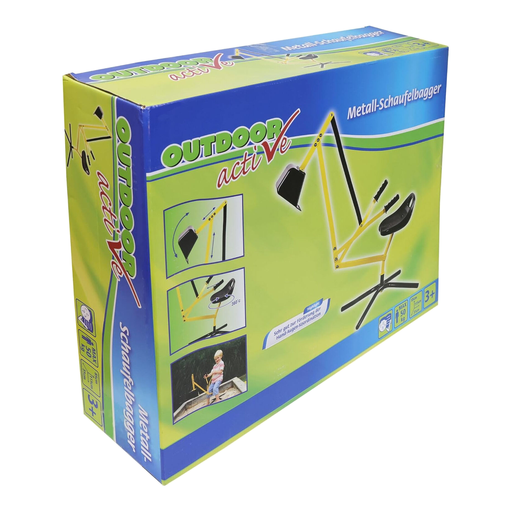
Why this product suits the profile: This ride-on excavator is designed for outdoor use and, according to the product description, is suitable for children aged 3 and over. Its rotating seat construction is intended for sandpit and garden play.
The age recommendation, metal construction and maximum load of 30 kg are stated explicitly. This allows you to check before buying whether the seat, the child’s weight and the intended environment are a good match.
Metal construction according to the product information; rotating seat and no assembly required.
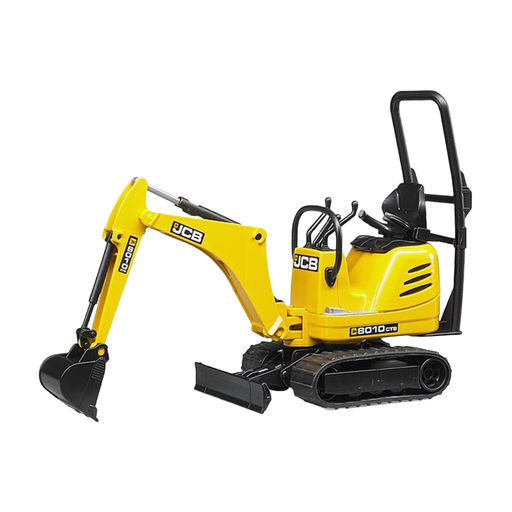
Why this product suits the profile: The compact 1:16 scale and moving equipment appeal to children who want to recreate construction-site scenarios in the bedroom or sandpit. According to the product information, the model is suitable for children aged 3 and over.
The product description points out the small parts and the need for supervised use. This makes it clear that the detailed model is not intended as an excavator for toddlers under 3.
360-degree rotating superstructure, moving arm and dozer blade; manual operation without batteries.
We have put together a complete, regularly updated list of products that fully meet these strict selection criteria and the safety regulations applicable in the EU.
After playing in sand, remove grains of sand from the joints, wheels and tracks. Several models recommend cleaning with a dry or slightly damp cloth. Fully immersing the toy in water or using harsh cleaning products may damage the materials and mechanisms.
For children aged approximately 2 to 6:
A model for children aged 2 and over should have a suitable age label, straightforward mechanisms and as few loose small parts as possible. According to the product information, the lena 04151 Active Excavator is suitable for children aged 2 and over. The information on the packaging and product page should also be checked before buying.
That depends on the materials, dimensions and care instructions. Compact plastic models are usually easier to use in the bedroom. For the sandpit, robust designs with an easily reached arm and a stable base are a sensible choice. After outdoor use, the toy should be cleaned and stored dry.
Many classic toy excavators are operated manually. The BRUDER models and the lena excavator included in this selection work without batteries. A manual excavator has no ongoing battery costs; nevertheless, you should check the relevant product description before buying.