
Lieferung heute & morgen

Qualitätsgarantie

Willkommens-Angebote freischalten: KOSTENLOSE Lieferung | Bis zu 80 % RABATT | Kostenlose 30-Tage-JoyPlus-Testphase
App herunterladen
Children’s games for ages 3 and up should be easy to understand, safe and suited to a child’s stage of development. In practice, however, choosing the right game often leads to disappointing purchases: a game may be labelled “ages 3+” but contain many small parts or require more patience than a preschooler is willing to give. Other games promote educational benefits but offer only limited variety.
This buying guide from the Joybuy Product Recommendation Officer helps parents, grandparents and families compare board games for children, children’s puzzles and dexterity games objectively.
“3+” indicates a recommended age range, but it does not automatically mean that the game is right for every child. Also consider:
A game for 2 to 4 players may be well suited to a family, while a puzzle or magnetic game may be better for calm, independent play.
According to their product descriptions, many educational games for children help develop skills such as colour recognition, counting, hand-eye coordination or following rules. However, this does not mean that every child will develop these abilities automatically or at the same pace. Educationally valuable games tend to work best when adults support the child’s introduction to the game without creating performance pressure.
Small cards, dice and playing pieces can be lost or pose a choking hazard. Electronic games also involve batteries and moving mechanisms. Before buying, therefore, check the safety warnings and storage options. For children under three, the manufacturer’s information should be followed particularly carefully; even with older children, supervision is advisable when small parts are involved.
For first board games from age 3, simple colour- or dice-based rules are generally easier to grasp than lengthy strategic sequences. A playing time of around 10 to 15 minutes is often ideal for short afternoon sessions. With family games for children, the youngest participant should determine the appropriate difficulty level.
Also check whether the game is genuinely suitable for the group you have in mind:
Wooden games should have smooth, well-finished pieces. For card games and puzzles, sturdy cardboard, clearly recognisable images and a manageable number of pieces are important. A dry cloth is sufficient for many wooden and plastic components; cardboard parts should not be cleaned with water.
A compact format is useful when the game needs to take up little space on a shelf or be used as a travel game for children. Larger game boards, on the other hand, provide a better overview for several players.
Pay attention to the recommended age marking as well as warnings about small parts, cords and batteries. Product information should also include details about the manufacturer, materials and intended use. Direct supervision is recommended for younger children playing with small cards, dice or figures.
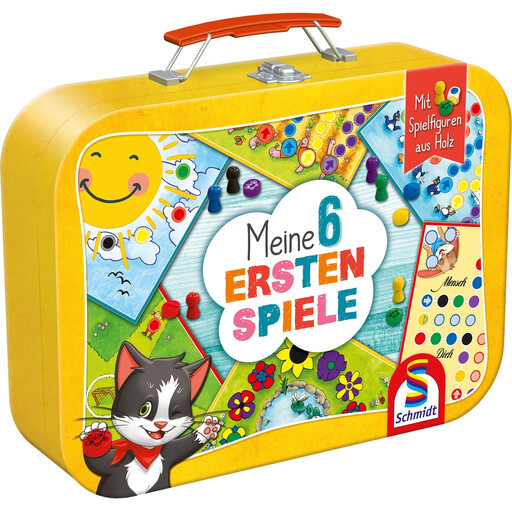
Why it’s a good fit: This collection contains six colour-dice and dexterity games for 2–4 players aged 3 and up. Families can therefore explore different types of play without having to purchase several boxes.
The six variations add variety and reduce the risk of a single game mechanic quickly becoming uninteresting.
2–4 players, six games in one box, no batteries required.
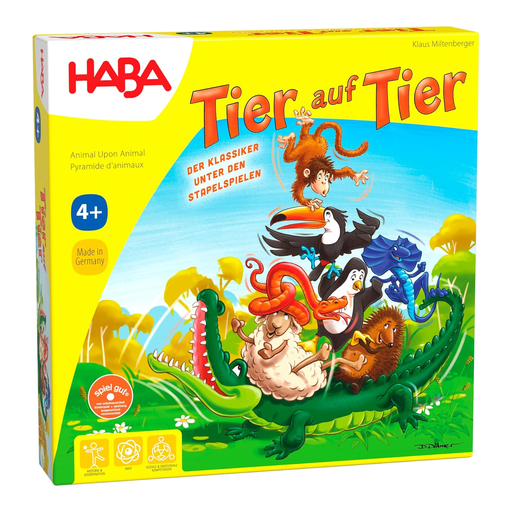
Why it’s a good fit: This wooden stacking game is designed for 2–4 players aged 4 and up and can also be played solo, according to the product information.
The game concept is immediately clear and requires neither lengthy rulebooks nor batteries.
Wooden figures, solo option, dimensions of approximately 22.2 × 22.3 × 4.9 cm.
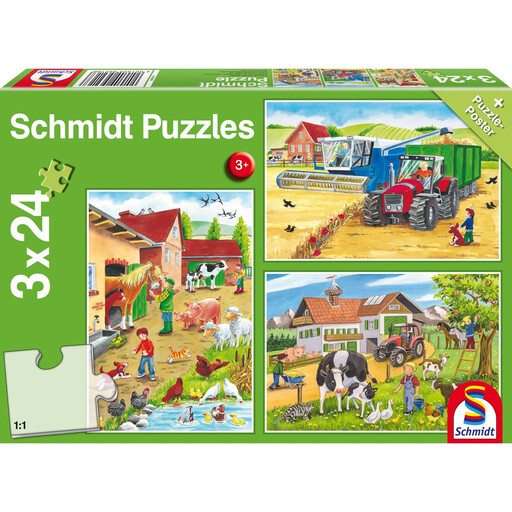
Why it’s a good fit: Three children’s puzzles with 24 pieces each provide an accessible introduction for children aged 3 and up. The farm-themed images make it easier to find the right pieces.
The number of pieces is manageable, while three images offer variety without significantly increasing the difficulty.
3 × 24 pieces, matt linen-textured surface, no batteries.
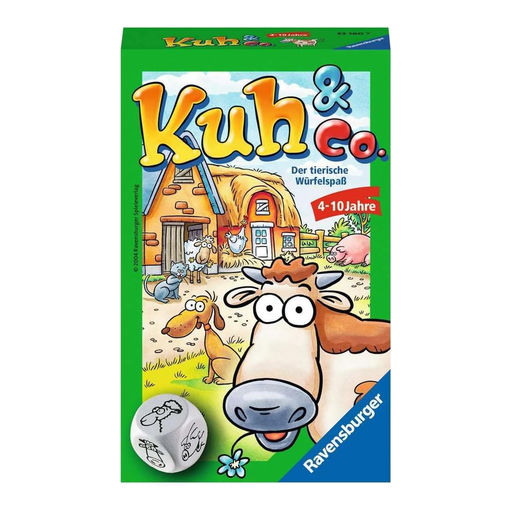
Why it’s a good fit: This animal dice game is designed for 2–6 players aged 4 and up and can be played without any set-up, according to the product information.
The game requires no batteries and works well for larger groups. Dice and cards should be stored in a dry place after playing.
2–6 players, compact game concept, no batteries required.
We have put together a current selection of products that meet these criteria and take Germany’s applicable safety requirements into account.
For games for children aged 4 and up, more challenging stacking, dice and reaction games may be suitable. HABA Animal upon Animal and Hasbro Looping Louie, for example, are designed for children aged 4 and up. Looping Louie requires batteries, so the instructions for use should be followed carefully.
With games for children aged 5 and up, number sequences and simple strategic decisions can play a greater role. MATTEL Skip-Bo Junior is designed for children aged 5 and up. According to the product information, it supports stacking cards in sequence from 1 to 10 and offers two levels of play for 2–4 players.
For younger children aged 3 and up, the Filapen magnetic maze with colours and numbers or Schmidt Spiele’s Bobo Dormouse game with a colour die and short playing time may also be suitable options. For both products, pay attention to the relevant warnings concerning small parts.
Simple dice, colour and rule-based games with short playing times are suitable choices. Examples from our selection include “My First 6 Games”, Bobo Dormouse and several classic family games from Schmidt Spiele.
As a general guide, around 12 to 24 pieces are often appropriate. The right level ultimately depends on the child’s experience, interests and ability to concentrate. Three images with 24 pieces each can offer a flexible middle ground.
Many board games, puzzles and wooden games do not require batteries. For electronic or moving games such as Looping Louie, parents should check whether batteries are included, which battery types are required and whether the supervision instructions are followed.