
Lieferung heute & morgen

Qualitätsgarantie

Willkommens-Angebote freischalten: KOSTENLOSE Lieferung | Bis zu 80 % RABATT | Kostenlose 30-Tage-JoyPlus-Testphase
App herunterladen
Children’s games should suit the age group, the desired playing time and the space available. In practice, however, unclear age recommendations, missing parts or an unsuitable level of difficulty can quickly lead to disappointing purchases. This applies equally to children’s games, board games, card games and electronic indoor games.
This buying guide from the Joybuy Product Recommendation Officer explains which details matter before you buy and which choices suit different family situations.
“From 6 years” does not automatically mean that every child can play the game independently. A game with simple rules, short rounds and few components may be more accessible to younger children than a comprehensive board game with numerous exceptions. You should therefore also consider:
For games from age 6, short card or reaction games are suitable, for example. Games from age 8, on the other hand, may include more complex rules, strategy or longer periods of concentration.
Descriptions such as “educational game”, “for the whole family” or “ideal for travel” are only meaningful when the specific features match. Check whether the product really has compact packaging, easy-to-understand instructions or an age-appropriate game mode.
For electronic games, you should also consider the power supply, battery type and charging time. A USB-rechargeable game can be convenient, while battery-powered models may require spare batteries.
Many board games and card games for children contain playing pieces, counters or markers. For children under 3, swallowable small parts pose a particular risk. The manufacturer’s safety instructions and the age recommendation on the packaging are decisive.
The surroundings also matter: flying toys are only suitable for indoor use when there is sufficient distance from furniture, lamps and people. Before use, the components of every children’s game should be checked for damage.
The age recommendation is the first filter, but it is not the only criterion. For children from age 3, short, easy-to-understand family games with manageable rules are usually more suitable. From age 6, reaction, memory and simple strategy games can be added. From age 8, detective, escape-room and more comprehensive board games may be of interest.
Also consider whether a game is designed for one person, two players or a larger group. A solo game is suitable for quieter activities, while party and family games may require at least four players.
For games that are used frequently, sturdy cards, neatly finished edges and practical storage are important. Compact games with integrated compartments or folding playing surfaces are ideal for travel. Check the product dimensions rather than relying solely on the term “travel game”.
Wooden games should have a smooth surface free from sharp edges. For plastic and electronic products, follow the instructions for cleaning, storage and battery handling.
Electronic children’s games often require batteries, while other products work without power. One example is Hasbro Simon Classic, which, according to the product details, requires three AAA batteries; test batteries are included. Batteries are not included with Looping Louie, according to the product description. These ongoing costs should be taken into account when choosing a game.
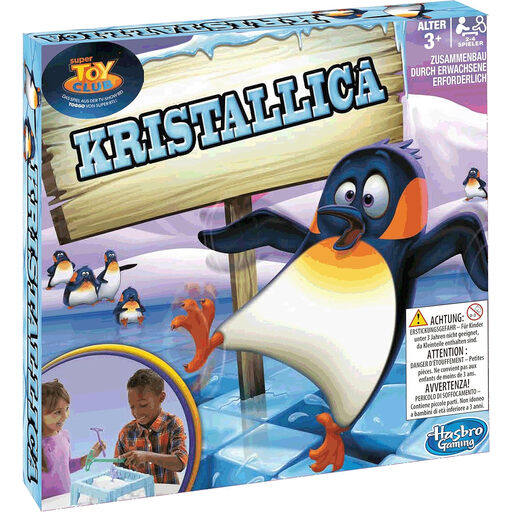
Why this product suits the profile: According to the product details, the game is designed for children from age 3 and for 2 to 4 players. The rules are based on simple gameplay and no batteries are required.
The age recommendation, number of players and fact that no batteries are required are clearly stated. This makes it easier to assess follow-up costs and whether the game might be too complicated for beginners.
Designed for 2–4 players from age 3, with compact product dimensions of approximately 26.7 × 26.7 × 6.4 cm.
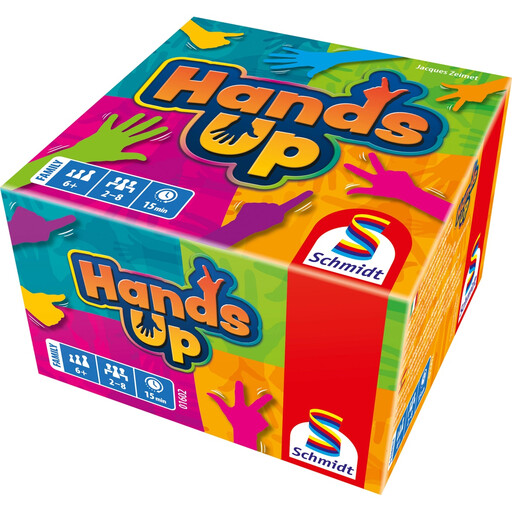
Why this product suits the profile: The card game is designed for children from age 6 and does not require batteries. The sturdy folding box helps keep the cards neatly stored.
The age limit and card storage are described specifically. This reduces the risk of buying an electronic game with additional running costs.
Card-game format, packaging measuring 10 × 10 × 6.8 cm, and suitability for family game sessions from age 6.

Why this product suits the profile: According to the product details, this compact edition is designed for two players from age 7 and is intended for use in the car, on trains, on flights or when camping.
The folding game components and integrated storage are explicitly described. This makes it more suitable for mobile use than a large board game.
Foldable command centres, storage for ships and pegs, and a weight of approximately 250 g.
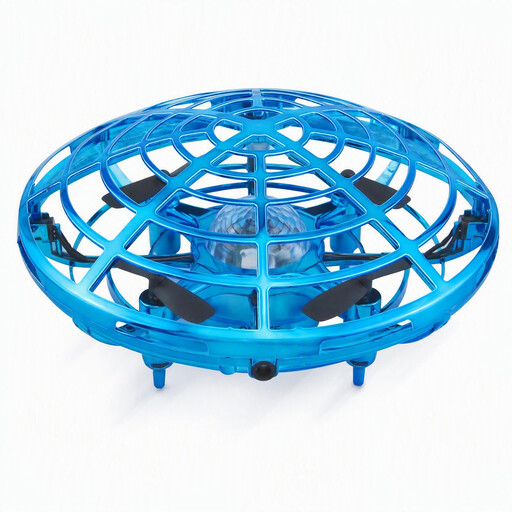
Why this product suits the profile: According to the product details, this hand-controlled flying toy is designed for children from age 6 and is charged via USB. It is suitable for supervised indoor play with plenty of clear space.
A protective cover around the propellers and obstacle sensors are listed as product features. Nevertheless, the safety instructions still apply: do not use it near faces, lamps or sharp objects.
Measures 11.5 × 11.5 × 5 cm, with LED lighting, an integrated lithium battery and gesture control.
We have put together a complete, regularly updated list of products that fully meet these strict selection criteria and the safety regulations applicable in the EU.
For shared time at home, educational games, detective games and classic board games for children are also worth considering alongside the products mentioned above. KOSMOS EXIT Kids: Monster Puzzle Fun is designed for children from age 5, 1–4 players and shared puzzle-solving sessions. For older children, compact editions of Cluedo, Connect 4 or Monopoly from age 8 may be suitable, for example.
As gift ideas for children, games are particularly suitable when the number of players matches the family. For birthday parties with several children, short rounds and simple rules are generally more practical than a lengthy strategy game. For travel, travel games for children with secure storage and few loose parts are a sensible choice.
From age 3, games with few rules, large or easy-to-handle components and short rounds are worth considering. The specific age recommendation for the individual product remains decisive. For small parts, check the warning on the packaging; adult supervision is also advisable.
When you’re on the move, compact games with folding game boards or integrated storage compartments are practical. Examples include Battleship Grab And Go, Guess Who Grab And Go and Connect 4 Grab And Go. Before buying, check the dimensions, weight, number of players and the language of the instructions.
The lifespan depends on the materials, storage conditions and how often the game is played. Cards and cardboard components should be stored in a dry place and protected from moisture. Electronic games require batteries or rechargeable batteries to be handled correctly. Damaged components, cracks or sharp edges are reasons to stop using the game.