
Lieferung heute & morgen

Qualitätsgarantie

Willkommens-Angebote freischalten: KOSTENLOSE Lieferung | Bis zu 80 % RABATT | Kostenlose 30-Tage-JoyPlus-Testphase
App herunterladen
Choosing suitable children’s games may seem straightforward at first. However, colourful packaging, supposed educational claims and extensive accessory lists can make comparing products more difficult. Parents, grandparents and families should therefore look beyond the theme and consider age, gameplay, materials and where the game will be used.
A game marked “from 4 years” may still be too demanding for a child who has just turned four if it involves lots of rules, small playing pieces or long waiting times. With children’s board games, it is crucial that the youngest player can understand the rules and take an active part. A realistic number of players and a short playing time are often more important for younger children than an elaborate theme.
Buyers should not assess terms such as “learns”, “encourages” or “develops” in isolation. Verifiable features are more meaningful: the number of cards, game mechanics, difficulty levels, number of players and materials required. For example, a colour dice game practises matching colours as part of the gameplay; this should not, however, be turned into a general claim about learning or development.
Children’s board games may contain small figures, marbles or playing pieces. The warnings on the packaging are therefore particularly important. Batteries, delicate cardboard components and the lack of storage options can also affect how practical a game is for everyday use. A game whose pieces are left loose in a drawer after every round is less convenient for family life than a set with a box or integrated storage.
Games for children from 3 years are generally suited to simple colour, dice or dexterity mechanics with short rounds. Games for children from 4 years can already introduce simple matching and collecting rules. From around the age of 6, initial strategy games for children involving planning and decision-making can also be suitable. The manufacturer’s age recommendation remains the key reference point.
Check the following before buying:
For games made from cardboard, cards and game boards should be stored in a dry place. Plastic parts should be sturdy and free from sharp edges. If a game contains marbles, dice or small figures, it must not be given to children who could swallow the pieces. The warning “not suitable for children under 3 years” is often due to the risk of swallowing small parts.
Sturdy boxes, sorting options and foldable components are also practical for regular use. This is particularly true of travel games for children, which are frequently transported.
Anyone looking for a game for the garden should distinguish between indoor and outdoor use. Outdoor games for children, such as a throwing game or large tic-tac-toe, require sufficient space and should be stored somewhere dry after use. For electronic games, check the battery type, what is included and the volume. A game without batteries is often easier to use when travelling or for spontaneous games.
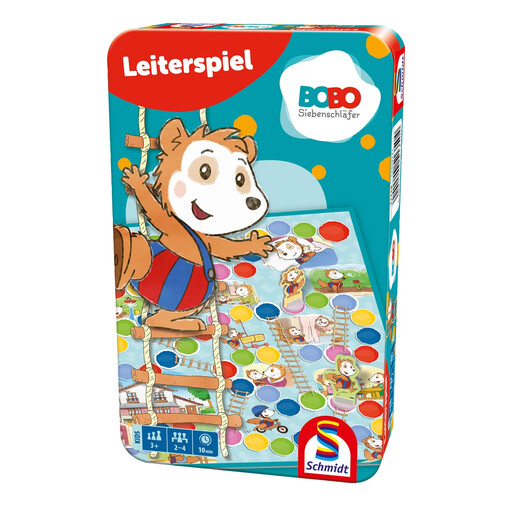
Why this product suits the profile: This snakes and ladders game is designed for 2–4 players aged 3 and over and takes approximately 10 minutes according to the product information. This makes it suitable for first games without lengthy preparation.
The rules remain easy to follow, while the large die and colour-based movement reduce the time needed to explain the game to younger children.
Short playing time, 2–4 players, no batteries and storage dimensions of 18,5 × 11,4 × 3,8 cm.
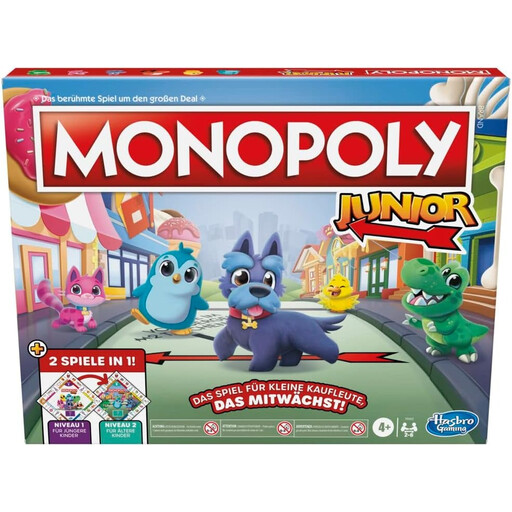
Why this product suits the profile: The double-sided game board offers one version for ages 4–5 and another for children aged 6 and over. It is designed for 2–6 players, allowing it to grow with the family.
The two rule levels make it clear how the difficulty changes, rather than assuming one uniform level of play for all age groups.
Double-sided game board, 2–6 players, no batteries and game materials made from cardboard and paper.
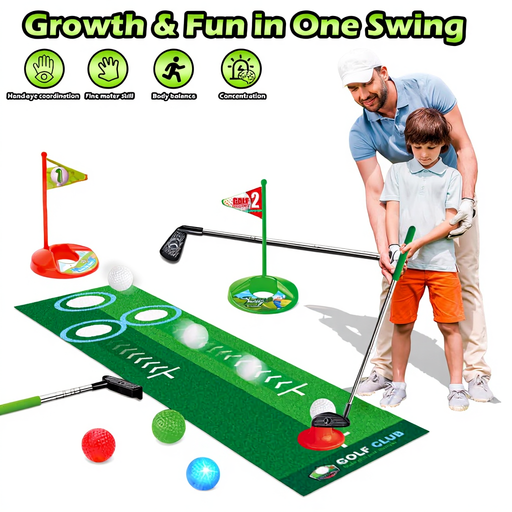
Why this product suits the profile: This 16-piece set is intended for children aged 3 and over and can be used both indoors and outdoors. Adjustable clubs, a mat and ball return are ideal for active play sessions.
The product description clearly states what is included, as well as the adjustable clubs and the requirement for 2 × AA batteries. Batteries are not included.
16 pieces, putting mat, automatic ball return, LED golf balls and indoor as well as outdoor use.
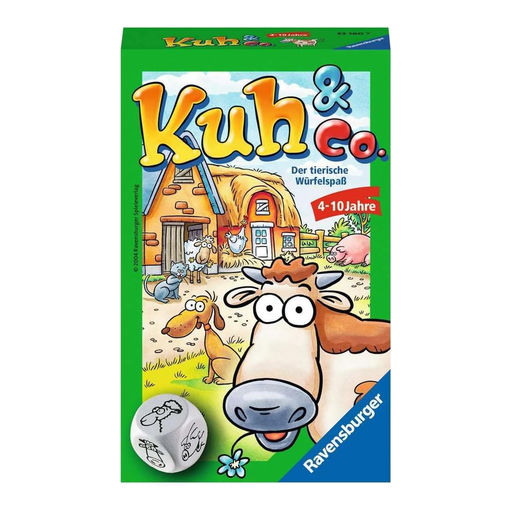
Why this product suits the profile: This dice game is intended for 2–6 players aged 4 and over and is described as a compact option to take on trips and holidays.
The number of players, age recommendation and manual operation are clearly stated. This means there are no additional battery or set-up requirements while travelling.
2–6 players, no batteries, German language in the stated version and a weight of 200 g.
We have put together a complete, regularly updated list of products that fully meet these strict selection criteria and the safety regulations applicable in the EU.
For a children’s birthday party, short games requiring little set-up are ideal, such as a colour dice game, a simple dexterity game or a compact travel game. If several guests are playing, the stated number of players should match the size of the group.
For children aged 6 and over, strategy games for children such as Connect 4 or Catan Junior may be suitable. For quiet afternoons, puzzles, dominoes or early learning games are good options. Outdoor games for children, on the other hand, should be chosen based on the space required, weather conditions and supervision. For all types of game, the age recommendation, warnings and complete list of included items should be checked before buying.
Simple games with short rounds, large components and just a few rules are generally suitable. Examples from the selection include a snakes and ladders game for children aged 3 and over or an action card game for children aged 3 and over. If a game contains small parts, adult supervision is particularly important.
Lifespan depends on the materials, storage and frequency of use. Cardboard should be stored somewhere dry, plastic parts should be checked regularly for damage and small pieces should be kept together in the original box. Outdoor toys should be stored somewhere dry after every use.
For children’s birthday parties, easy-to-understand games with short playing times and several players are practical. A game for children aged 4 or 6 and over should be suitable for the ages of the invited children. When children of different ages are playing, different levels or flexible rules can make choosing easier.