
Lieferung heute & morgen

Qualitätsgarantie

Willkommens-Angebote freischalten: KOSTENLOSE Lieferung | Bis zu 80 % RABATT | Kostenlose 30-Tage-JoyPlus-Testphase
App herunterladen
Children’s games should be easy to understand, safe and suited to the family in question. In practice, however, the wide choice can quickly lead to unsuitable purchases: a game may be chosen because of eye-catching packaging, yet be too complicated for the child or lose their interest after just a few rounds. Even family games that appear versatile do not always suit the actual number of players or the space available.
That is why the Joybuy Product Recommendation Officer focuses on clear criteria such as recommended age, number of players, game mechanics, materials, dimensions and safety information. These points help distinguish marketing claims from a suitable purchasing decision.
A game for ages 5 and up is not automatically suitable for every younger child. What matters is their ability to understand rules, read, use fine motor skills and follow several consecutive steps. For board games for ages 3 and up, short rules and just a few components are usually helpful. For board games for ages 4 and up, simple dice, reaction or matching games may already be suitable.
Important: the age recommendation is not a guarantee that a child can play alone. For younger children, support from an adult can make it easier to get started.
A game for 2 to 4 people is not automatically suitable for a household of six. Before buying, parents and grandparents should check:
With family games in particular, a short playing time is often more practical when children of different ages are taking part.
Learning games for children can incorporate counting, matching, memory, language or reaction skills into the gameplay. That does not automatically make a product a learning aid for every situation, however. Claims should relate to the specific game mechanics. For example, a card game featuring number sequences can provide practice in recognising and ordering numbers, but this should not be turned into a therapeutic or medical claim.
Check the official age recommendation and whether the rules match the child’s development. For pre-school children, picture-based cards, simple movement tasks and clearly defined objectives are often easier to engage with. For children aged 5 or 6 and over, several difficulty levels or tactical decisions may be appealing.
The stated number of players should match how you intend to use the game. For a family evening with two people, different board games for children will be suitable than for a group of four or more players. For travel games, compact dimensions, a manageable number of pieces and a quick set-up time are particularly important.
Check whether cards, playing pieces or dice contain small parts. Many products are expressly not suitable for children under 3 years of age because they may contain components that could be swallowed. For games intended for ages 3 or 4 and over, adults should follow the safety information on the packaging and remove any damaged parts.
The material is also important: cardboard components should be stored in a dry place, while plastic parts should be checked regularly for cracks or breakage. The recommendations below do not require batteries. This reduces the organisational effort involved, but says nothing about the overall quality of the game.
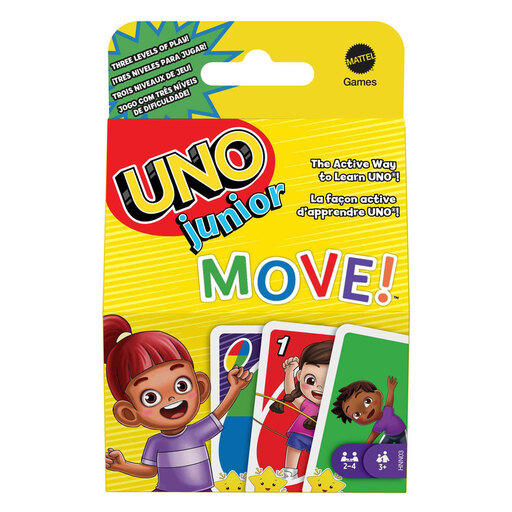
Why this product suits the profile: This card game is designed for 2 to 4 players aged 3 and over and offers three difficulty levels. This allows the family to adapt the rules to the youngest player taking part.
The age levels and colour- or number-based matching make it easier to get started than a game with long chains of rules.
2–4 players, three rule levels, movement cards and no batteries required.
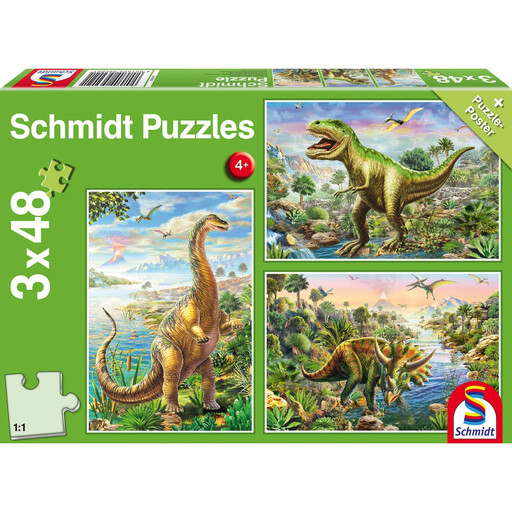
Why this product suits the profile: The set contains three puzzles, each with 48 pieces, and is suitable for children aged 4 and over. The puzzle posters with cut lines make it easier to get started.
The three separate pictures mean that children are not limited to using just one puzzle for weeks on end. The number of pieces remains manageable for each picture.
Three pictures, 48 pieces each, matt linen-textured surface and no batteries required.
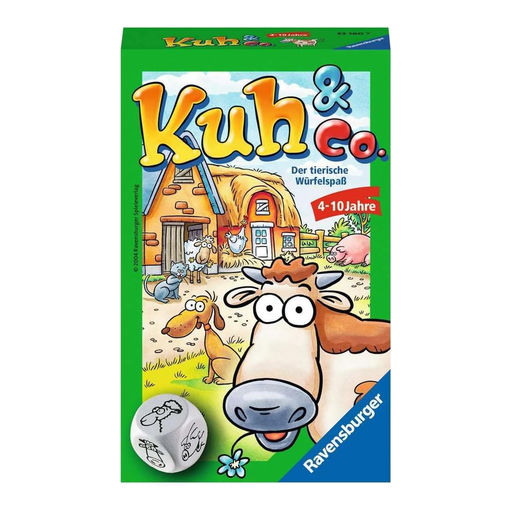
Why this product suits the profile: This dice game is designed for 2 to 6 players aged 4 and over and is described as a take-along format. It is therefore suitable for day trips, holidays and game nights with changing numbers of players.
The player range of 2–6 and manual gameplay avoid limiting the game to a narrow situation or incurring additional battery costs.
2–6 players, matching animals using dice and cards, with no assembly and no batteries.
We have put together a complete, regularly updated list of products that fully meet these strict selection criteria and the safety regulations applicable in the EU.
For a birthday or Christmas present, you should consider not only the child’s age but also their interests. Dinosaur themes, animals, movement, numbers and fast reactions appeal to different types of players. For travelling, travel games for children with compact packaging and just a few separate pieces are practical. If you are buying a gift for several siblings, the number of players should match the size of the family.
Language is another consideration: for card games involving tasks, categories or puzzles, check the desired language version in the product details. This is particularly important if the game is likely to be played regularly with grandparents or friends.
Games with short rules, large or clearly recognisable components and an official age recommendation of 3 and over are suitable. Small parts can still pose a safety risk, however. Always follow the manufacturer’s instructions; supervision by an adult is advisable for younger children.
The lifespan depends on the materials, storage and how the game is used. Card games should be stored in a dry place and, wherever possible, kept in their original packaging. With board games, it is advisable to check regularly whether playing pieces, cards or dice have been damaged. A game with several variants or difficulty levels can remain interesting for longer because the gameplay can be adapted to the children’s age.
Many traditional board, card and dice games require no batteries and incur no ongoing energy costs after purchase. App-supported games, on the other hand, may require a compatible smartphone and internet access. Before buying, check whether the digital extras are optional or necessary for the full gameplay experience.