
Lieferung heute & morgen

Qualitätsgarantie

Willkommens-Angebote freischalten: KOSTENLOSE Lieferung | Bis zu 80 % RABATT | Kostenlose 30-Tage-JoyPlus-Testphase
App herunterladen
Children’s games should be entertaining, suitable for their age and genuinely useful in everyday family life. However, choosing the right one is not always easy. Packaging often uses phrases such as “educationally valuable”, “for the whole family” or “quick to explain”, without making it immediately clear which children or playing situations the product is suitable for.
As a Joybuy Product Recommendation Officer, I therefore filter the most important details and organise them according to practical buying criteria. This makes it easier to compare family board games, children’s games, puzzles and travel games.
A game marked “from 3 years” may contain small playing pieces, dice or cards that are unsuitable for younger children. The age recommendation is therefore not just an educational guideline; it is also linked to safety information. For games with small parts, read the packaging and warnings, and do not give the game to children below the stated age limit.
For games from 3 years and games from 4 years, short, manageable turns are usually more suitable than extensive rulebooks. Details such as “10-minute playing time” or “simple rules” can help with your initial selection. Even so, check whether an adult will need to explain the first round.
Many children’s games help develop colour, shape, number and pattern recognition as part of play. However, this should not be confused with a medical or therapeutic effect. What matters is whether the objective of the game matches the child’s stage of development and whether the rules can be understood without constant correction.
Pay attention to the manufacturer’s age recommendation, the warnings and the size of the components. For puzzles, the number of pieces and the picture are particularly important. A set containing 3 × 24 pieces and recommended from 3 years may be more manageable for beginners than a puzzle with several hundred pieces.
As a general guide for puzzles for children:
These figures do not replace an individual assessment. Some children prefer quick successes, while others enjoy working their way towards more challenging pictures.
A game for two people is not automatically suitable for a family with three children. That is why you should check the stated number of players. For games for the whole family, flexible specifications such as 2–4 or 2–6 players are practical.
The length of the game also affects how often it is used:
For children’s games that are used frequently, sturdy game boards, clearly recognisable cards and practical storage are important. When travelling, all the components should fit in the original box or a sealable compartment. Games that do not require batteries also reduce the organisational effort. Electronic products such as Simon Classic, on the other hand, require batteries and should only be used within the stated age range.
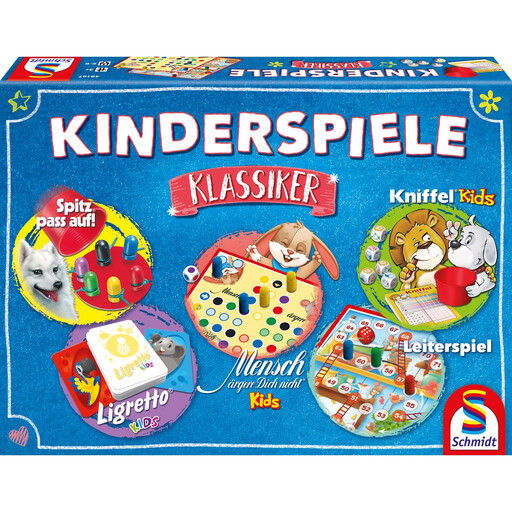
Why this product suits the profile: This collection brings together five well-known game ideas, making it suitable for families who want to cover a range of classic board games with a single purchase. According to the product details, it is recommended from 3 years.
The collection offers several short game variations instead of requiring players to learn just one set of rules. Before buying, however, you should still read the warnings about small parts and long cords.
Five game ideas, no batteries required, suitable for 2 to 4 players according to the product description.
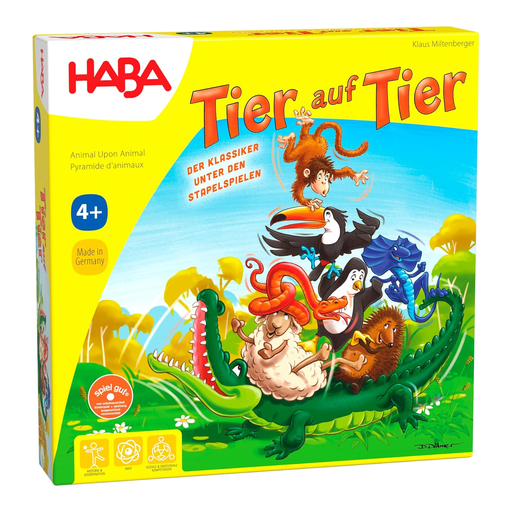
Why this product suits the profile: This wooden stacking game is designed for 2–4 players from 4 years and, according to the product description, can also be played alone. Its simple core idea is easy to explain without lengthy preparation.
The objective remains clear and no electronics are needed. Because it contains small animal figures, the age recommendation of 4 years and the suggested supervision should be observed.
Wooden figures, 2–4 players, also suitable for solo play, dimensions according to the supplier: 22,2 × 22,3 × 4,9 cm.
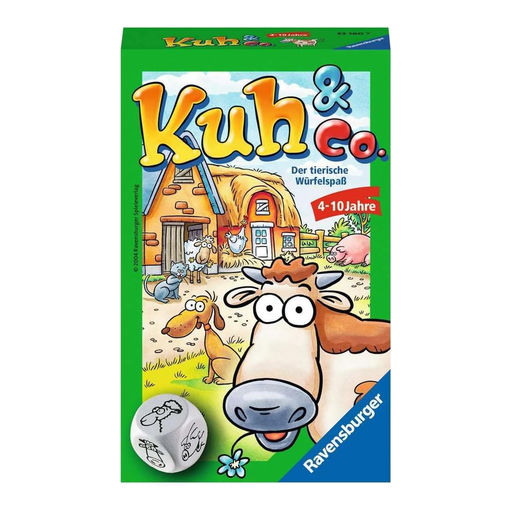
Why this product suits the profile: According to the product details, this dice game is suitable for 2–6 players from 4 years. Its compact design is ideal for day trips, visits and holidays when you need a flexible game.
The number of players is clearly stated and the game does not require batteries. The cards and dice should be stored in a dry place and kept away from younger children.
2–6 players, no batteries, animal pictures and dice-based gameplay, suitable for children aged 4 to 10 according to the supplier.
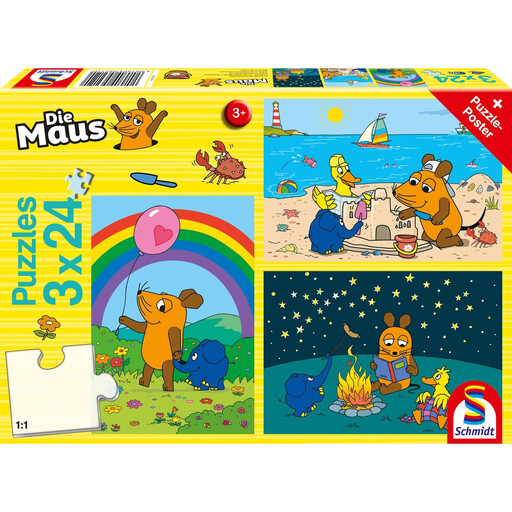
Why this product suits the profile: Three pictures with 24 pieces each provide a clear structure for children from 3 years. The set is suitable as a gift or as a quiet activity at home.
The number of pieces is clearly stated. Buyers do not have to choose between several difficulty levels within one picture; instead, they receive three equally sized 24-piece puzzles.
3 × 24 pieces, matt surface with linen texture according to the product description, no batteries required.
We have put together a complete, regularly updated list of products that fully meet these strict selection criteria and the safety regulations applicable in the EU.
Games with short rules, large or easy-to-grip components and a clear age recommendation are suitable. Examples from our selection include classic game collections, simple dice games, colour-based racing games and puzzles with 24 pieces. Small parts must be kept away from children below the stated age limit.
Their lifespan depends on the materials, storage and frequency of use. Cardboard and cards last longer when stored in a dry place and not bent. Wooden and plastic components should be checked regularly for damage. If parts are missing or damaged, the game should no longer be used if this creates a safety risk.
Compact games with only a few components are a sensible choice for travelling. Travel chess, portable versions of classic board games, card games and small dice games can usually be packed more easily in your luggage. Before buying, check the dimensions, storage solution and recommended number of players.