
Lieferung heute & morgen

Qualitätsgarantie

Willkommens-Angebote freischalten: KOSTENLOSE Lieferung | Bis zu 80 % RABATT | Kostenlose 30-Tage-JoyPlus-Testphase
App herunterladen
Children’s games should be enjoyable, suit their age and actually be used in everyday life. When choosing, it is therefore not just colourful designs or familiar brands that matter. The key factors are the game mechanics, safety information, playing time, number of players and whether the game suits your family or the intended setting.
‘From age 4’ does not automatically mean that every four-year-old will understand the rules independently. Some board games for children require language skills, patience or support from an adult. With games for ages 6 and up and strategy games for children, it is also important to consider whether the child already has experience with rules, sequences and simple decisions.
The recommended age is therefore a safety and guidance indication, but not a complete assessment of suitability.
Lights, sounds and lots of accessories may seem varied at first glance. However, they can mean batteries, extra noise or more complicated storage. An electronic game such as Simon Classic is suitable for a child who wants to complete short memory tasks independently. For a shared game session with several people, a traditional board or card game is often more suitable.
Puzzles and board games often contain playing pieces, cards, dice or construction components. For children under three, small parts can pose a choking hazard. Particular care is required with magnetic building blocks: strong magnets must not be swallowed. Before buying, you should therefore check the warning notices, material information, manufacturer details and recommended age range.
For games for ages 3 and up, simple sorting, connecting and puzzle activities with manageable rules are suitable. A 15-piece children’s puzzle may be a more sensible introduction than a game with lots of separate components. From age 4, short family games, frame puzzles and simple action games can also be considered.
From the age of six, children can often try their first educational games for children, logic tasks and simplified strategy games. From age eight, more complex rules, deduction and longer periods of concentration are possible. Even so, check whether the game is intended to be played alone, by two people or with an adult’s support.
A one-player game is practical for quiet activities, homework breaks or travel. For families, products with a clearly stated number of players are a better choice. Lotti Karotti, for example, is designed for 2 to 4 players and takes around 20 minutes according to the product description. This is often easier for younger children to plan around than an open-ended playing time.
For larger groups or educational settings, the rules should be quick to explain and waiting times between turns should remain limited.
Cardboard board games require a flat playing surface and dry storage. A travel game should be compact, have secure storage and ideally work without batteries. SmartGames IQ-Puzzler PRO is designed as a solo game and has a compact format. With puzzle sets, however, the number of pieces, piece size and a suitable sorting solution are important.
For electronic children’s games, you should also check the battery type and what is included in the box. Simon Classic requires 3 × 1.5-V AAA alkaline batteries according to the product details; test batteries are included.
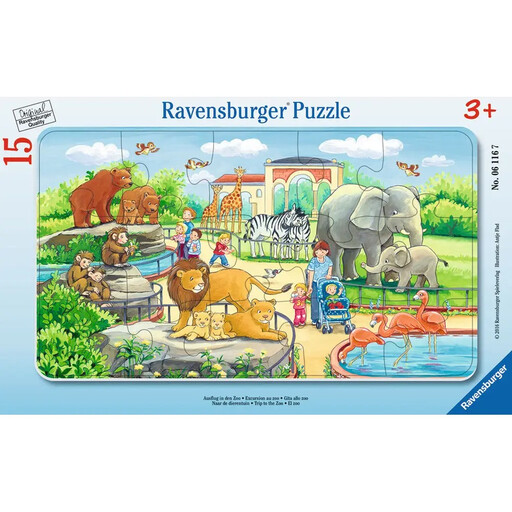
Why this product suits the profile: This frame puzzle is intended for children aged 3 and over and, with 15 pieces, offers a manageable introduction to puzzling.
The outlines on the base provide guidance without the need for additional electronics or batteries.
15 puzzle pieces, a frame with helpful guidance and a zoo design; suitable for solo or shared play.

Why this product suits the profile: This junior version is designed for 2 to 4 players aged 6 and over, combining collecting, trading and building with simplified rules.
The number of players and age range are clearly stated, while the child-friendly rules lower the barrier to getting started.
For family games with 2–4 players; no batteries required; playing materials made from cardboard and plastic.
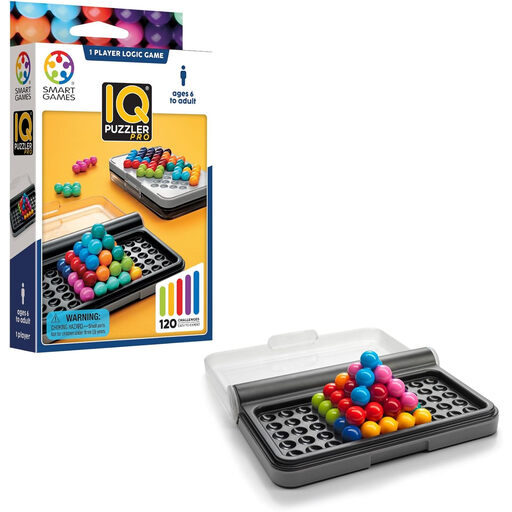
Why this product suits the profile: This compact solo game for ages 6 and up is ideal for train journeys, waiting times and quiet play at home.
The travel game needs no batteries and offers 120 challenges in three game modes rather than just a short activity.
120 challenges, 2D and 3D tasks and compact dimensions; designed for one person.
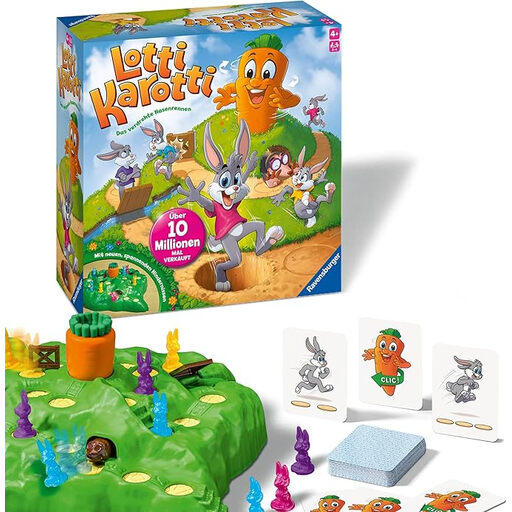
Why this product suits the profile: This board game for children aged 4 and over is designed for 2 to 4 players and has a stated playing time of around 20 minutes.
The rules are designed for short rounds; no batteries or electronic components are needed to play.
2–4 players, around 20 minutes’ playing time and a simple turn sequence involving cards and obstacles.
We have put together a complete, regularly updated list of products that fully meet these strict selection criteria and the safety regulations applicable in the EU.
For use on the go, compact games with few separate pieces and no batteries are practical. IQ-Puzzler PRO is designed for one person and offers several challenges. For two people, compact versions of guessing games may be worth considering. Before setting off, make sure the packaging, pieces and playing surface are suitable for the space available.
For younger beginners, 15 to 24 large or easy-to-handle pieces may be a sensible choice. As experience grows, the number of pieces can increase. A frame, a design with clear shapes and a template make it easier to get started. The age recommendation and warning notice for the specific product remain decisive.
Gift ideas for children include games whose age range, number of players and theme suit the child. For shared family time, Lotti Karotti or Catan Junior could be suitable options. For solo play, consider a children’s puzzle or a compact logic game. What matters is not the number of features, but a realistic match with the child’s habits.