
Lieferung heute & morgen

Qualitätsgarantie

Willkommens-Angebote freischalten: KOSTENLOSE Lieferung | Bis zu 80 % RABATT | Kostenlose 30-Tage-JoyPlus-Testphase
App herunterladen
Children’s games should provide entertainment without ending up unused on the shelf after a short time. However, when it comes to board games for children, educational games and jigsaws, unclear age recommendations, missing safety information or an unsuitable level of difficulty often lead to disappointing purchases. A game may look versatile on the packaging, but be too complicated, too short-lived or unsuitable for the child because of small parts.
“From 3 years”, “from 4 years” or “from 6 years” is not merely a rough guide. The classification generally takes into account the size of the game pieces, the complexity of the rules and the fine motor skills required. A dexterity game with small figures may interest a four-year-old, but could require adult supervision.
Electronic educational games for children often advertise numerous cards, tasks or audio features. What matters, however, is whether the controls are easy to understand, whether batteries or a rechargeable battery are required and whether the child can use the game independently. When buying, parents should check exactly what is included and how the game should be cleaned.
Cardboard pieces can quickly become damaged around the edges with frequent use, while wooden figures need to be stored in a dry place. For children’s travel games, compact dimensions, a secure fastening and well-organised storage for the pieces are also important. Without these features, individual components can easily go missing and the game can no longer be used in full.
For games from 3 years, short rules, large components and simple matching or dice-based mechanisms are a sensible choice. The HABA game “Small Orchard”, for example, is designed for 1 to 4 children from the age of 3 and states a playing time of around 5 to 10 minutes. For games from 4 years, first jigsaws with a manageable number of pieces or simple stacking games are suitable options. Older children from 6 or 7 can generally manage several stages of play and increasing levels of difficulty.
Before buying, look out for:
Warnings are particularly important for children’s games. Products with small parts must not be used by children under 3, where this is stated in the product information. This applies, for example, to the HABA stacking game “Animal upon Animal” and to Rubik’s Race. According to the product information, the latter is CE marked and EN71 compliant; it also warns of the risk of small parts being swallowed.
The marking does not replace an age-appropriate choice. Parents should remove damaged pieces from use and keep the packaging information. Direct supervision is recommended for younger children.
Material details help you assess how suitable a game is for everyday use:
Size also matters: a game with a footprint of around 18 to 20 centimetres may be suitable for travel, while larger family games require more table space.
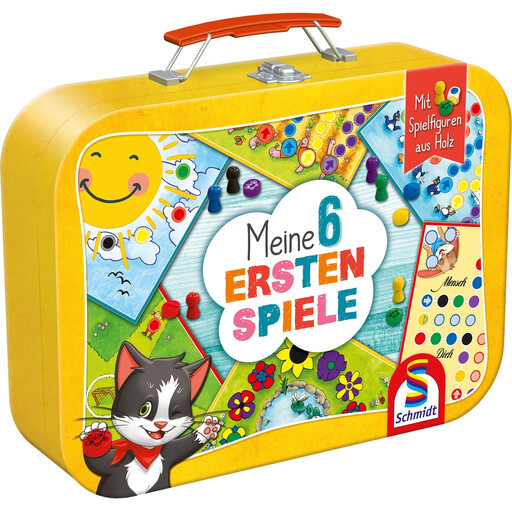
Why this product suits the profile: This collection is aimed at children from the age of 3, offers six game variations and is designed for 2 to 4 players. This makes it a good introduction to playing family games together.
The age recommendation, number of players and number of games included are clearly stated. One set therefore avoids the need to buy several unsuitable individual games.
Six colour-dice and dexterity games, simple rules and no batteries required.
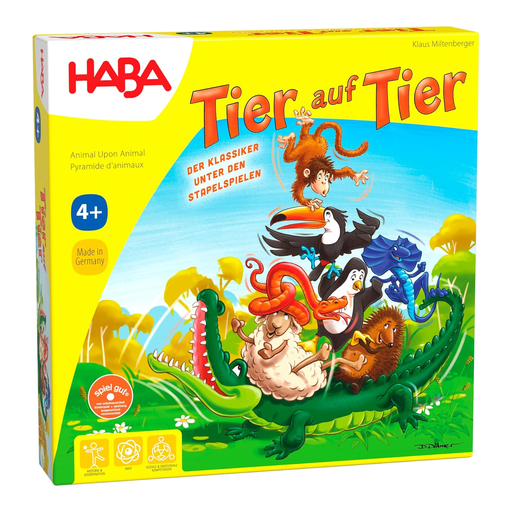
Why this product suits the profile: This stacking game uses wooden figures, is intended for 2 to 4 players from the age of 4 and, according to the product description, can also be played alone.
The material, age limit and cleaning instructions are stated. The warning about small parts should still be taken into account when making your choice.
Wooden components, 2 to 4 players, a surface that can be wiped clean with a dry cloth and a possible solo mode.
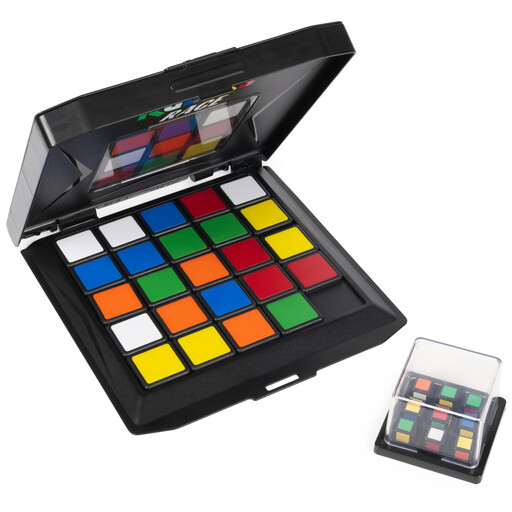
Why this product suits the profile: This game is designed for two players from the age of 7 and has a foldable game board measuring 17,5 × 19 × 2,1 cm. This makes it suitable for travel and quick games.
The format, number of players and age recommendation are clearly stated. The pieces should be checked after each game and cleaned with a dry cloth.
48 coloured playing pieces, manual play without batteries, a foldable board and two parallel moves.
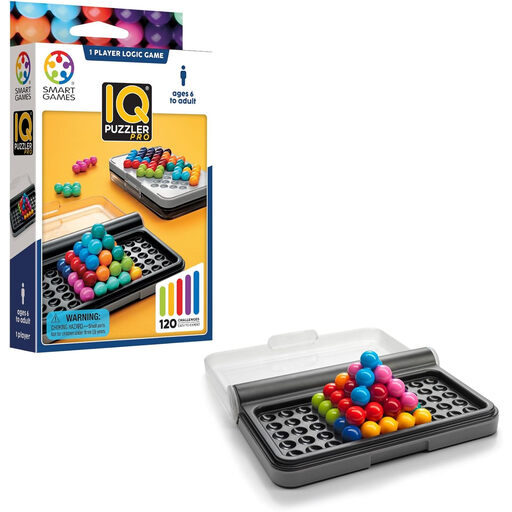
Why this product suits the profile: This solo game is intended for children from the age of 6 and includes 120 challenges in two- and three-dimensional game modes. Its compact format makes it suitable for home and on the go.
The number of challenges and the age range are clearly stated. Buyers can check the solo-play format against their intended use as a family game in advance.
120 challenges, 13 pieces, no batteries and a compact format for one person.
We have put together a complete, regularly updated list of products that fully meet these strict selection criteria and the safety regulations applicable in the EU.
Games with short sequences, few rules and easy-to-grasp pieces are suitable. Matching colours and shapes, simple dice games or cooperative tasks are often easier to follow at the start than games with numerous special rules. The relevant manufacturer’s age recommendation and warnings should remain the key considerations.
Game boards and jigsaws should be stored somewhere dry and, where possible, flat. Small figures and cards belong in resealable bags or the original packaging. A dry cloth is usually sufficient for wooden games; electronic educational games should be protected from moisture and charged according to the manufacturer’s instructions.
Versatile sets, age-appropriate jigsaws, travel games or cooperative family games can all make good gift ideas for children. The child’s age, preferred number of players and available space are the key factors. A game with a clear age recommendation and an easy-to-understand list of contents reduces the risk of it not being right for the family once it has been unpacked.