
Lieferung heute & morgen

Qualitätsgarantie

Willkommens-Angebote freischalten: KOSTENLOSE Lieferung | Bis zu 80 % RABATT | Kostenlose 30-Tage-JoyPlus-Testphase
App herunterladen
Children’s games and puzzles should suit the child’s age, attention span and family routine. In practice, however, not every brightly designed game turns out to be a successful purchase. Products are often chosen based on the theme or a promotional learning claim, while important details such as piece size, number of players and storage are barely considered.
This buying guide explains what parents, grandparents and other family members in the UK should look out for. The selection ranges from puzzles for children aged 3 and over and educational games for children to board games for children and compact travel games for children.
An age recommendation is no guarantee that every child will immediately manage the game. A three-year-old may find a 15-piece frame puzzle a good introduction, while a complex board game for ages 6 and over may initially require an adult’s support.
Several details are therefore important:
Small parts generally pose a choking risk. Products with the relevant warning notices must not be given to children below the stated minimum age.
Terms such as “educational games”, concentration games or logic games for children initially describe only a possible focus. What matters is the action the child actually performs: matching shapes, following rules, solving spatial arrangements, asking questions or making decisions together.
Examples of features that can be assessed objectively include:
Improved concentration or a specific developmental effect should not be promised as a blanket claim. These games can provide suitable opportunities for practice, but they do not replace individual support or professional advice.
Children’s puzzles made from thin card can bend more quickly with frequent use. With board games, loose small parts can go missing if there is no suitable storage solution. For everyday use, sturdy cardboard pieces, a well-organised box and easy cleaning are therefore practical selection criteria.
None of the products featured here requires batteries. This reduces ongoing effort and makes them easier to use when travelling. Even so, you should check the packaging and safety information before playing for the first time.
For an introduction from age 3, 15-piece frame puzzles with outline guides can be a sensible choice. Children aged 4 and over can often manage 24 pieces along with additional search activities. For board games for ages 6 and over, clear rules, manageable turns and a reasonable playing time are helpful.
The number of pieces alone says little about the difficulty. A puzzle with many areas in the same colour can be more challenging than one with fewer pieces and clearly defined outlines.
If you are looking for a game for shared afternoons, pay attention to the actual number of players:
Cooperative family games are particularly suitable when the focus is on finding a solution together rather than on individual children winning.
Look for the CE marking, the age recommendation and warnings about small parts that could be swallowed. The CE marking is a manufacturer’s declaration that the relevant EU requirements have been met; it does not replace checks by adults.
Parents should also check the following for puzzles and board games:
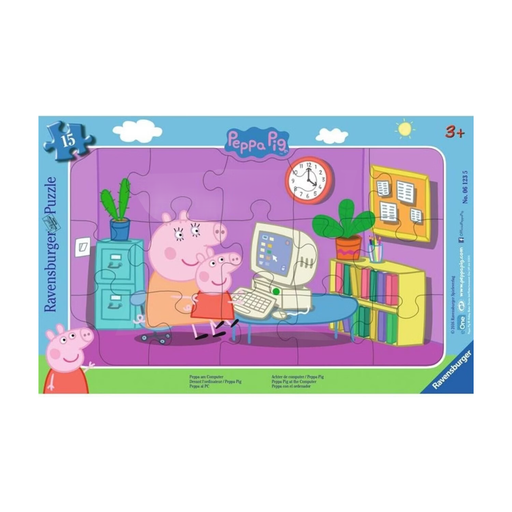
Why this product suits the profile: This 15-piece frame puzzle is intended for children aged 3 and over and features the familiar Peppa Pig theme. The outlines in the frame make it easier to match the pieces.
The number of pieces and the frame make the difficulty easier to assess than a simple description of the theme. The material is described as extra thick, although small pieces remain a safety consideration.
15 pieces, a frame with outline guides, paper material and no batteries required.
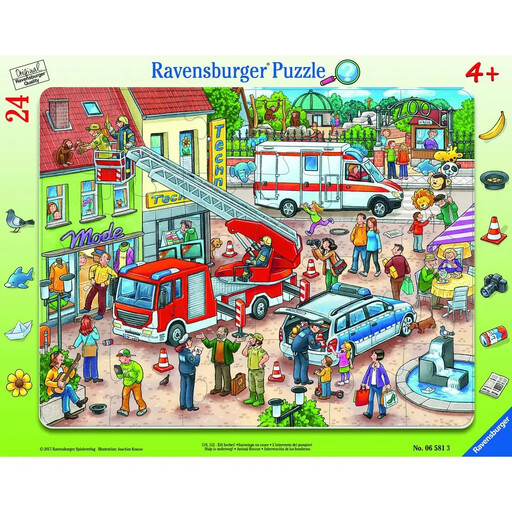
Why this product suits the profile: This frame puzzle is designed for children aged 4 and over and combines 24 pieces with an additional search activity. It suits children who enjoy looking closely after completing the puzzle.
The frame and age-appropriate number of pieces help to avoid a difficulty level that is too high. The search activity is described as a specific additional feature.
24 pieces, a practical base, a search activity and extra-thick cardboard material.
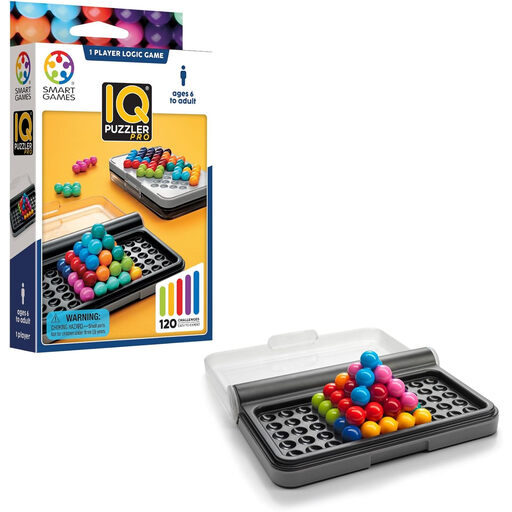
Why this product suits the profile: This compact solo game is intended for children aged 6 and over and is suitable as a travel game for children. It contains 120 challenges in 2D and 3D formats.
The number of challenges and the three game modes are clearly specified. This makes the expected scope easier to assess than general claims about “brain training”.
One player, 120 challenges, compact dimensions and no batteries required.

Why this product suits the profile: This board game for 2 to 4 players is aimed at children aged 6 and over and is designed for playing together. Simplified trading rules make it easier to get started with family games.
The number of players and age range are clearly stated. The simplified rules lower the barrier to entry compared with a more complex adult version.
2 to 4 players, age recommendation from 6 years, simplified trading rules and game components that require no batteries.
We have put together a complete, regularly updated list of products that fully meet these strict selection criteria and the safety regulations applicable in the EU.
Frame puzzles with around 15 pieces and easy-to-grip, sturdy cardboard pieces may be suitable. The specific age recommendation, warning about small parts and the child’s abilities remain decisive. An adult should accompany younger children the first time they play.
Their lifespan depends on the material thickness, use and storage. Dry storage, carefully sorting all pieces back into the box and wiping them gently can extend their usable life. Damaged pieces should no longer be used, particularly if they develop sharp edges or loose small parts.
The puzzles and board games mentioned do not require batteries. Ongoing costs therefore do not normally arise from energy consumption. Before buying, however, you should check whether additional apps, replacement materials or consumable parts are required.