
Lieferung heute & morgen

Qualitätsgarantie

Willkommens-Angebote freischalten: KOSTENLOSE Lieferung | Bis zu 80 % RABATT | Kostenlose 30-Tage-JoyPlus-Testphase
App herunterladen
Children's games and puzzles should suit the child's age, attention span and family routine. In practice, however, unclear age recommendations, missing details about piece size or overly complicated rules often mean that the toy is left unused after a short time.
Three common buying pitfalls are particularly important:
The manufacturer's age recommendation is an important starting point. A children's puzzle from age 2 should consist of a few easy-to-grip pieces and feature a clear image. For a children's puzzle from age 3, simple tray puzzles with visual guidance are suitable. A children's puzzle from age 4 can already contain more pieces or additional searching tasks.
With educational games for children and logic games for children, the minimum age is not the only factor that matters. Also check:
Puzzles are often made from printed card, while children's board games may also include plastic figures, counters or dice. The key factors are sturdy, well-finished pieces that can be placed without excessive bending. With wooden puzzles, parents should regularly check whether knobs are coming loose or edges have been damaged.
Products with small parts that could be swallowed are generally unsuitable for children under three if the manufacturer's information includes the relevant warnings. Supervision remains advisable for products aimed at children aged three and over, particularly in playgroups, educational settings or with children who still frequently put pieces in their mouths.
Children's board games and family games should suit the actual group size. For a family with several children, games for two to four players are often more practical than games designed solely for one player. Children's card games take up little space and are easy to take with you. Children's travel games should have compact packaging and durable components.
Also consider:
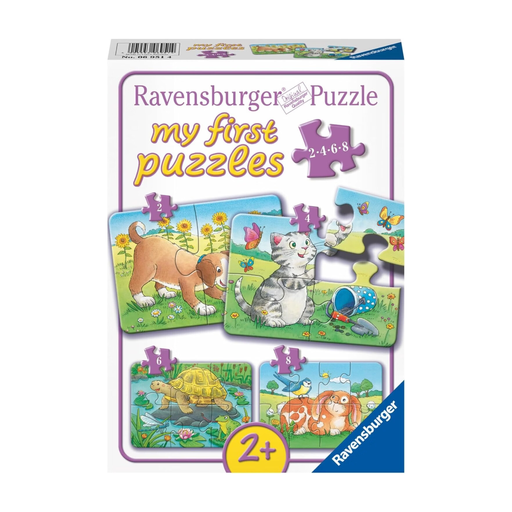
Why this product suits this profile: This set is designed for children aged 2 and over and contains four puzzles with increasing levels of difficulty. The animal pictures and sturdy card pieces are ideal for first puzzle experiences at home or as a children's game gift.
The number of pieces and age recommendation are geared towards beginners. This reduces the risk of a single puzzle being too challenging.
Four pictures with increasing levels of challenge; material: paper or card; no batteries required.
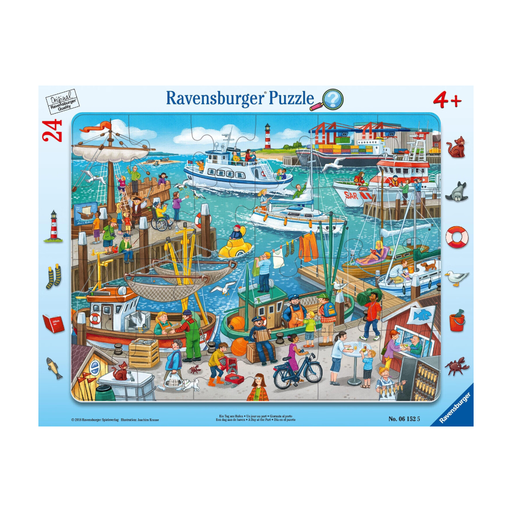
Why this product suits this profile: This 24-piece tray puzzle for children aged 4 and over combines a maritime picture with an additional search activity. The frame helps with orientation and provides a clearly defined playing area.
The fixed frame structure helps prevent individual pieces from moving around. The additional search activity provides another way to use the puzzle after it has been assembled.
24 pieces; extra-thick card according to the product description; ten picture elements to find; no batteries required.
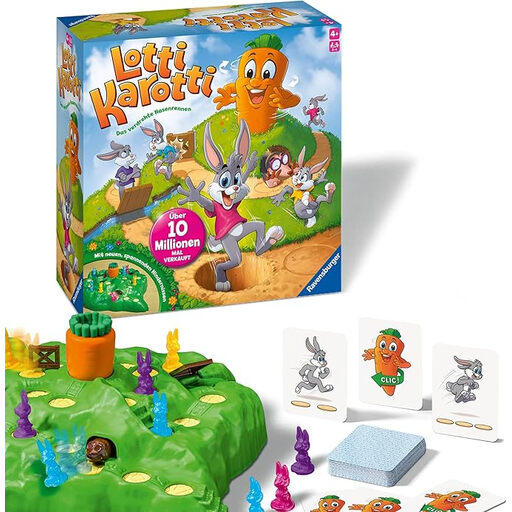
Why this product suits this profile: This children's board game is designed for ages 4 and over, is suitable for 2 to 4 players and takes around 20 minutes according to the product description. That makes it a good fit for short family games and relaxed afternoons of play.
The stated number of players and short playing time make it easier to assess the game's suitability for families than with games that do not provide a clear time estimate.
2 to 4 players; simple card-based movement; no batteries; game materials made from card and plastic.
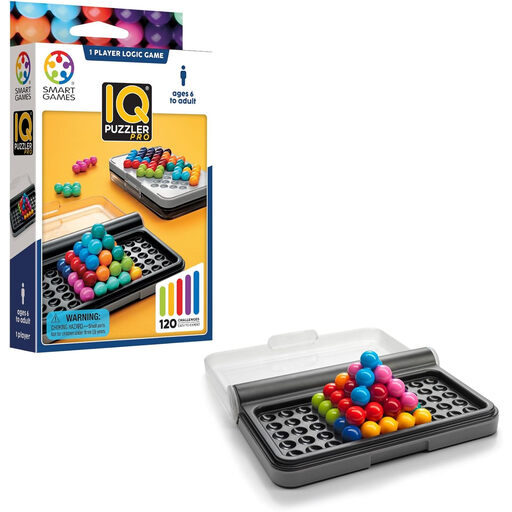
Why this product suits this profile: This compact logic game for children aged 6 and over is designed for one player and contains 120 challenges in 2D and 3D formats. Its size makes it suitable for travelling, waiting times or focused solo play.
The challenges are arranged in a booklet and can be completed step by step. This reduces reliance on other players and provides repeatable entertainment.
120 challenges; three game modes; for one player; compact format; no batteries required.
We have put together a complete, regularly updated list of products that fully meet these strict selection criteria and the safety regulations applicable in the EU.
For a birthday or Christmas present, a clearly recognisable theme can be helpful. Animal, vehicle or farm themes are often suitable for younger children. From around the age of 6, cooperative children's games, more challenging family games or simple strategy games may be worth considering. However, always check the age recommendation, number of players and warnings for the specific product before choosing.
For educational settings, it is advisable to keep an additional inventory list covering the number of pieces, cleaning options, storage box and suitability for small groups. A game that is easy to explain and quick to pack away is generally more practical for group settings.
This depends on the child's experience and the puzzle's design. Tray puzzles with visual guidance and a manageable number of pieces make it easier to get started. The number of pieces is not the only factor that matters: size, contrast in the picture and the option to begin the puzzle together with an adult are also important.
Not every game marketed as educational is suitable for every child. Check exactly which activity is being practised: matching, recognising shapes, counting, planning, speaking or making decisions together. The benefits come mainly from an appropriate level of difficulty and regular, voluntary play.
For families, games that can be played by at least two to four people, with simple rules and a manageable playing time, are practical. Lotti Karotti, simple children's card games or cooperative children's games may be more suitable than a puzzle designed solely for one player. Before buying, compare the age recommendation with the desired group size.