
Lieferung heute & morgen

Qualitätsgarantie

Willkommens-Angebote freischalten: KOSTENLOSE Lieferung | Bis zu 80 % RABATT | Kostenlose 30-Tage-JoyPlus-Testphase
App herunterladen
Children’s games should suit their age, attention span and the group you want to play with. In practice, unclear age recommendations, missing information about the number of players or very small parts can quickly lead to unsuitable purchases. A game may be beautifully designed, but if the rules are too demanding or the game ends after just a few minutes, it will often remain unused.
“From 4 years” is a guideline provided by the manufacturer, but it does not replace considering the individual child. Some children understand simple rules early, while others need more time or support. For board games from age 4, short sequences, manageable rules and clearly visible objectives are generally easier to follow than complex strategies.
A game for two to four people is not automatically suitable for a family of five. Before buying, check:
Especially with family games and games for the whole family, the actual group size determines how useful the game will be in practice.
Board games, puzzles and card games often contain small playing pieces, cards or tokens. The warnings on the packaging are therefore important. A label stating “not suitable for children under 36 months” often indicates the presence of small parts that could be swallowed. Particular care is required with magnetic toys: swallowed magnets can cause serious injuries. Damaged parts should be removed immediately.
Younger children often benefit from short rounds with only a few possible actions. With educational games for children, you should also check whether the learning objective is clearly described, such as matching shapes, recognising numbers or solving simple tasks. General claims such as “develops intelligence” are less meaningful if no specific game mechanics are provided.
The playing time should fit into your daily routine. Around 15 to 30 minutes is easier for many families to plan than a game lasting 60 minutes or more. For travelling, compact travel games for children with only a few easy-to-store parts are practical.
Cardboard, paper, plastic and wood are commonly used in children’s games. The following points are important:
For children’s puzzles, a frame or board can make it easier to get started. Also check the number of pieces: a 15- or 24-piece puzzle should be assessed differently from one containing several hundred pieces.
Competitive games are suitable for children who can cope with winning and losing. Co-operative children’s games, on the other hand, focus on achieving a shared objective. This can be particularly appealing for families where a strong competitive streak makes playing together more difficult. Strategy games for children should be explainable step by step in line with the child’s age and should not create excessively long waits between turns.
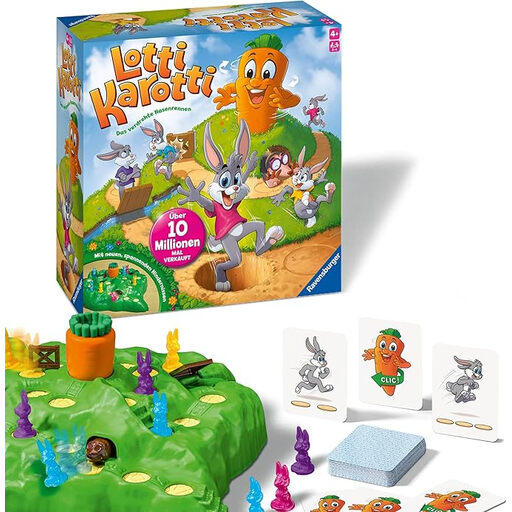
Why this product suits this profile: According to the product description, this board game is designed for 2 to 4 players aged 4 and over, with a playing time of approximately 20 minutes. The rules involve turning over cards and moving the rabbits.
The number of players, minimum age and approximate playing time are clearly stated. This makes it easier to judge before buying whether the game is suitable for a quick family round.
Cardboard components and plastic figures; no batteries required; warning for children under 36 months included.
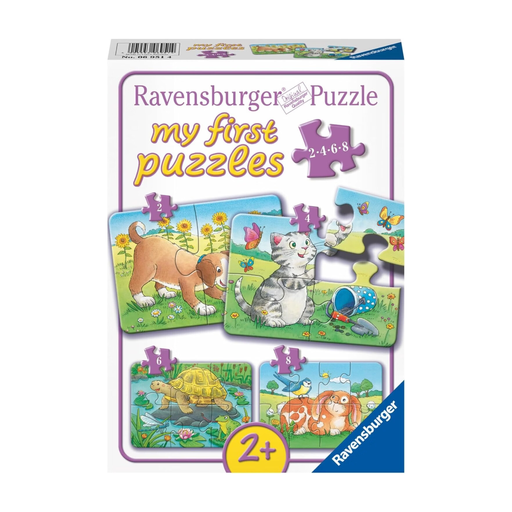
Why this product suits this profile: According to the product information, this set is intended for children aged 2 and over and contains four puzzles with increasing levels of difficulty. The pictures feature pets.
The number of pieces and recommended starting age are stated. The graduated selection reduces the risk of every task being too difficult at the same time.
Sturdy cardboard pieces; four pictures with different levels of difficulty; no batteries required.
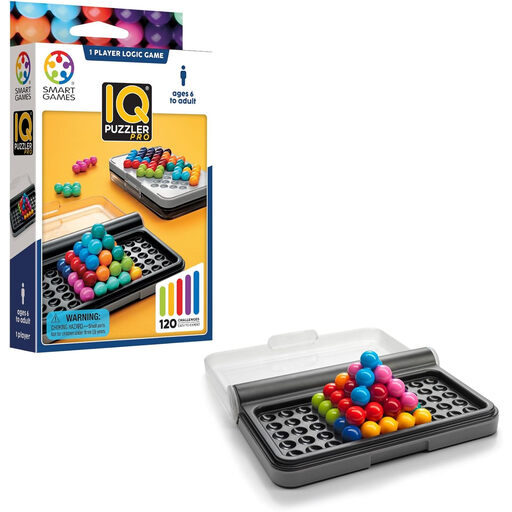
Why this product suits this profile: According to the product description, this compact solo game is designed for children aged 6 and over and offers 120 challenges in two- and three-dimensional game modes.
The number of challenges and solo format are clearly specified. This makes the game ideal for waiting times, train journeys or quiet periods without a set group of players.
Compact format; 120 challenges; no batteries required; designed for one person.

Why this product suits this profile: According to the product information, this co-operative board game is designed for 1 to 4 players aged 6 and over. The group works towards a shared objective and uses a rotating game board.
The shared objective prevents one child from being permanently eliminated. The age recommendation, number of players and required components are clearly described.
Co-operative gameplay; 1 to 4 players; game board with spinning mechanism; no batteries required.
We have put together a complete, regularly updated list of products that fully meet these strict selection criteria and the safety regulations applicable in the EU.
Pay attention to the age recommendation, warnings and manufacturer information. The CE marking is a legally required declaration of conformity from the manufacturer for certain product groups, but it is not an independent quality seal. For games containing magnets, read the safety information particularly carefully.
For a children’s party gift, clear age recommendations, straightforward set-up and a suitable number of players are practical selection criteria. When shopping online, you should also check the contents, the language of the instructions and the available colour options. Some products are dispatched in a random colour, so your preference may not be taken into account.
Games with short rounds, few rules and clearly recognisable playing materials are generally suitable. According to the product information, Lotti Karotti is designed for children aged 4 and over and for two to four players. 24-piece frame puzzles can also be a suitable option for this age group, provided the warnings are observed.
Compact solo puzzles or small card games take up little space and are easier to transport than large board games. A securely closable container, a manageable number of parts and a playing time suited to the journey are key considerations.
Their lifespan depends on the materials, storage and how they are used. Cardboard should be stored in a dry place and protected from liquids. Return all parts to the box after playing and replace damaged components, particularly if they create sharp edges or expose accessible magnets.