
Lieferung heute & morgen

Qualitätsgarantie

Willkommens-Angebote freischalten: KOSTENLOSE Lieferung | Bis zu 80 % RABATT | Kostenlose 30-Tage-JoyPlus-Testphase
App herunterladen
Children's toys for indoors and outdoors should be versatile, encourage movement and suit your child's age. In practice, unclear age guidance, missing space requirements and materials that are difficult to clean can often lead to unsuitable purchases. This buying guide explains which criteria matter when choosing toys for children from babies to around eight years old, and which types of products suit different everyday situations.
A product may be designed for use indoors and in the garden, but that does not mean it is suitable for every surface. Slides, play mats and throwing games need a flat, stable surface. Outdoors, you also need to consider damp conditions, direct sunlight and uneven ground.
A bouncy castle with a water slide also needs enough clearance from fences, trees and buildings. It will also need a suitable blower if one is not included.
A toy may look appealing to toddlers, even though rings, rattles or other components contain small parts that could be swallowed. Always read the age guidance and safety warnings in full before buying. Products with small parts are generally not suitable for children under three.
“Plastic” or “foam” alone tells you little about how practical a product is to use. Important factors include the type of material, how it can be cleaned, the finish of the edges, stability and the space available. With a children's play mat, you should also check that the individual pieces fit together securely and can be stored dry after play.
Babies need different products from pre-school children. A baby play gym mainly encourages reaching, looking and tummy-time play. For a child aged three or over, active toys, throwing games or a children's slide may be more appealing.
The level of supervision needed depends on the product. Even with toys labelled for a particular age group, parents and carers should regularly check the assembly, use and condition.
When choosing toys, look for clear information about applicable standards and safety warnings. For example, the 2-in-1 bowling and ring toss game lists EN71 and ASTM F963 as the safety standards it is based on. This information comes from the product description and should not be treated as a substitute for an individual safety assessment.
An EVA foam play mat for children is lightweight, easy to wipe clean and simple to lay out. However, you should still check the edges, joins and any signs of damage regularly. With electronic developmental toys or a baby play gym, pay particular attention to the battery compartment, cables, hanging toys and removable parts.
Measure the available space before you buy. A large slide or an indoor play area needs more than just room for the product itself: you will also need clear space in front of and behind it. For a children's play mat, the number and size of the pieces matter. A set with 18 square pieces measuring 12 × 12 inches each covers a larger area than a set with six pieces.
For outdoor products, consider these questions before you buy:
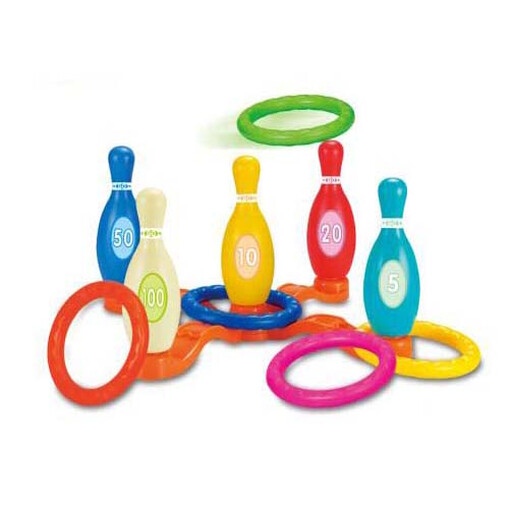
Why it suits this profile: This manual game combines bowling and ring toss, and can be played on flat surfaces at home, in the garden or in a nursery.
The product description gives an age recommendation of three and over, includes a clear supervision warning and flags the risk from small parts.
The set includes ten pins and five rings. It does not need batteries and weighs around 530 g, according to the product information.
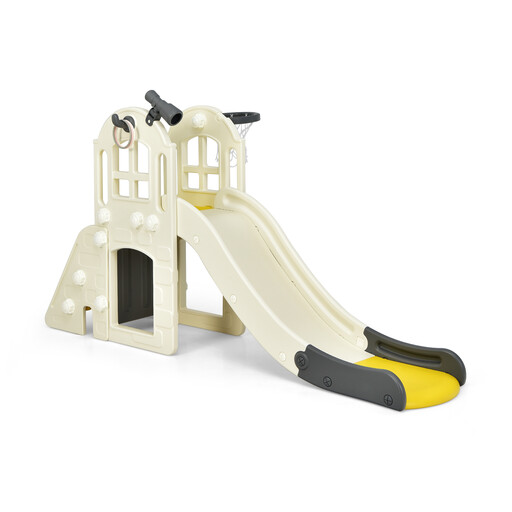
Why it suits this profile: This play set combines a slide, climbing wall, tunnel, basketball hoop, ring toss and telescope, making it a good fit for families with enough indoor or outdoor space.
The product information gives a minimum age of three, mentions a wide base and specifies a maximum platform load of 60 kg.
According to the product description, the play set is made from HDPE and designed for indoor and outdoor use. Assembly is carried out using the accessories supplied.
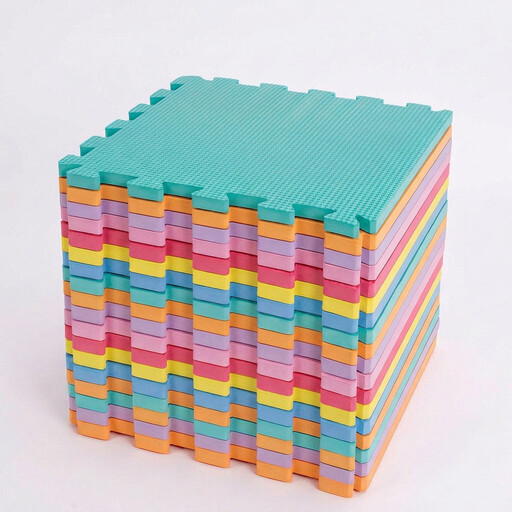
Why it suits this profile: The interlocking EVA pieces are suitable for playrooms, classrooms, fitness areas or flexible play zones.
The interlocking design lets you adjust the size of the play area. The mats can be separated for cleaning and stored dry.
The set contains 18 square pieces, each measuring 12 × 12 inches, along with edge pieces. The material is listed as EVA foam.
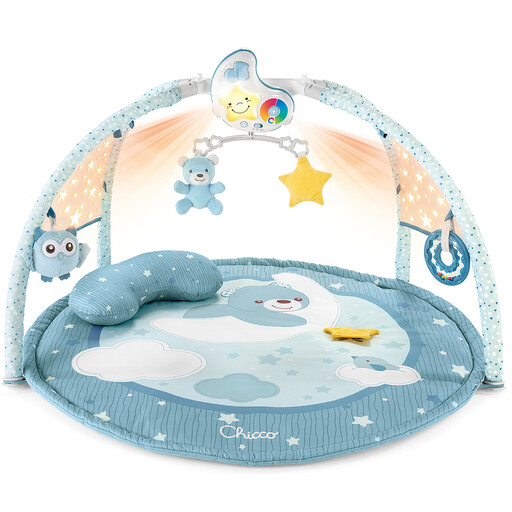
Why it suits this profile: This 3-in-1 play system combines an 83 cm play mat, accessories and a removable projector for play at home.
The safety warnings require supervision, a stable surface and checks of all components. Small parts must be kept out of reach unless an adult is present.
According to the product information, the play mat and cushion are machine washable at 30 °C. The projector is removable and battery-powered.
We’ve put together a complete, regularly updated list of products that meet these strict selection criteria and fully comply with the safety regulations in force in the EU.
Products designed by the manufacturer for both settings and suitable for use on flat surfaces are good options. These include ring toss games, certain slides and durable foam mats. Before taking a toy outside, check the material, weather resistance and cleaning instructions.
Lifespan depends on the material, how heavily the toy is used, how it is stored and how well it is cared for. Clean plastic toys after use and protect them from prolonged exposure to direct sunlight. Store EVA mats dry and replace them if they develop cracks or loose joins. Moving or inflatable products also need regular visual checks.
Manual developmental toys, such as bowling or ring toss sets, do not need batteries and have no ongoing energy costs during use. Electronic products need batteries. A bouncy castle with a water slide may use electricity for the blower and water, and may also require cleaning and storage. The exact costs depend on how long you use it, the equipment included and local conditions.