
Lieferung heute & morgen

Qualitätsgarantie

Willkommens-Angebote freischalten: KOSTENLOSE Lieferung | Bis zu 80 % RABATT | Kostenlose 30-Tage-JoyPlus-Testphase
App herunterladen
A night light in a child's room should provide a sense of safety and comfort. It helps children overcome their fear of the dark and offers parents a soft guiding light for night-time feedings or check-ins. However, the selection is vast, and not every product delivers on its promises. If chosen poorly, a night light can even disrupt sleep or pose safety risks.
As a Joybuy Product Recommendation Officer, I see every day which features truly matter. In this guide, I'll show you the three common pitfalls to watch out for and how to find a night light that meets your family's needs.
Many night lights look good at first glance but reveal their weaknesses only with daily use. Pay attention to these points to avoid disappointment.
The Brightness Trap: Too Harsh for Restful Sleep A common problem is brightness that is too high or cannot be adjusted. Light with a high blue-light content, in particular, can inhibit the production of the sleep hormone melatonin, disrupting the sleep-wake cycle of babies and toddlers. A good baby night light should emit a warm, gentle light and ideally be dimmable.
The Power Source Trap: The Wrong Choice for Your Needs A plug-in night light is convenient as it has a constant power supply. However, models with a bulky design can block adjacent outlets. A rechargeable night light offers maximum flexibility, but low battery capacity makes it unreliable if it dies in the middle of the night.
The Safety Trap: Poor Materials and Lack of Automation In a child's room, safety is the top priority. Products made from non-flame-retardant materials or with bulbs that overheat easily pose a risk. Furthermore, lights that burn unnecessarily all night consume power and can disturb sleep. A night light with a dusk-to-dawn sensor or a night light with a motion sensor offers a safe and efficient solution here.
To avoid these traps, you should check three core features before buying. These define the quality and practicality of a night light.
The most important characteristic is the light quality. Look for the following specifications:
Modern night lights offer smart features that make daily life easier:
The choice of power source depends on where you'll use it:
Based on these criteria, we have identified several models that provide a suitable solution for different needs and households.

Why This Fits Their Persona: Ideal for families looking for a straightforward and cost-effective solution for multiple rooms, such as the nursery and hallway. The set provides solid essential features without unnecessary extras.
Thanks to its three brightness levels, it avoids the trap of being too harsh. The ultra-slim design prevents it from blocking adjacent outlets.
Integrated dusk-to-dawn sensor for automatic operation; very low power consumption of 0.5 W; warm white light (2700K).
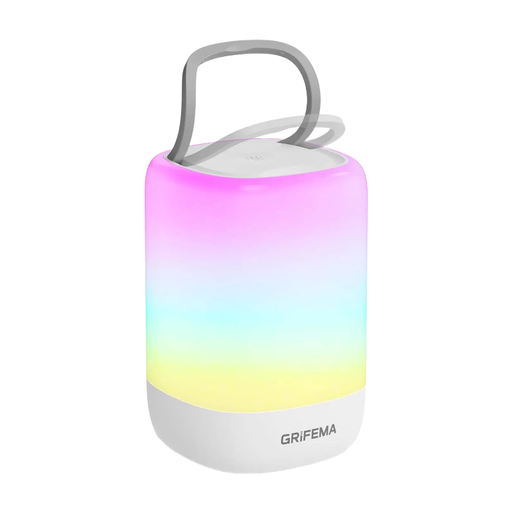
Why This Fits Their Persona: Perfect for parents who need a portable nursing light that is easy to carry. Also great for older children who need a light for night-time trips to the bathroom or for sleepovers.
The long battery life of up to 15 hours (according to the manufacturer) prevents the light from dying in the middle of the night. The continuous dimming function always ensures the right level of brightness.
Portable and wireless; USB-C charging port; touch controls, timer function, and RGB colour-changing mode.

Why This Fits Their Persona: For anyone looking for a "set-it-and-forget-it" solution for hallways, stairs, or the bathroom. The light provides brightness only when it's truly needed, maximising safety and energy efficiency.
This model avoids the safety and efficiency trap because its dual sensors activate it only when it's dark and motion is detected simultaneously. It never shines unnecessarily.
Combination of motion and dusk-to-dawn sensors; five brightness levels for precise adjustment; automatically turns off after 60 seconds of no movement.
We have compiled a complete, up-to-date list of products that fully meet these strict selection criteria and all relevant safety standards.
For a baby night light, the lowest possible brightness is ideal. The light should be just enough to make out shapes in the room without disturbing sleep. Models that are dimmable offer the most flexibility. A warm white light colour (approx. 2700K) is preferable to bluish variants, as it is considered more sleep-friendly.
The electricity costs are negligible. A modern LED night light with a power rating of 0.5 watts, running for 12 hours a day, consumes about 2.19 kilowatt-hours (kWh) per year. With an electricity price of around 30p per kWh, this results in annual costs of less than one pound.
A night light with a dusk-to-dawn sensor reacts to ambient light. It turns on automatically when it gets dark and off again when it's light. A night light with a motion sensor also reacts to movement. It only activates when it detects motion in the dark and turns off after a set period of inactivity. This is particularly energy-efficient for high-traffic areas.