
Lieferung heute & morgen

Qualitätsgarantie

Willkommens-Angebote freischalten: KOSTENLOSE Lieferung | Bis zu 80 % RABATT | Kostenlose 30-Tage-JoyPlus-Testphase
App herunterladen
A good children's night light provides a gentle glow, eases fear of the dark, and makes nighttime trips to the bathroom or nursing sessions easier. But the market is vast, and not every product delivers on its promise. Many parents only realise after purchase that their chosen model is more disruptive than helpful. This guide will show you the critical features to look for to make the right choice.
Before we dive into the important features, let's look at three common problems that often lead to a bad buy:
To avoid these pitfalls, you should check three core aspects before buying. These determine whether a soothing light truly fulfils its function as a gentle sleep aid for children.
A crucial factor for restful sleep is the quality of the light. Look for a dimmable night light whose brightness can be adjusted continuously or in multiple steps. This allows you to adapt the luminosity to any situation—a bit brighter as an orientation light in the hallway, very gentle as a night light for the baby right by the bed.
The light colour should be in the warm white range (around 2700 Kelvin). This warm, yellowish light is perceived as more pleasant and is less disruptive to the natural sleep rhythm than cold, bluish light.
The choice between a battery-powered and a plug-in model depends on where you plan to use it:
Safety comes first. For night lights placed within a child's reach, materials like BPA-free silicone or durable ABS plastic are a good choice. Silicone models are often soft, washable, and have no sharp edges. For decorative lights made of ceramic or wood, ensure they stand securely and cannot be easily knocked over.
Here are some recommendations tailored to the different requirements of families.

Why This Fits Their Persona: Ideal for families looking for a straightforward and affordable solution for multiple areas. The two-pack offers excellent value for money, allowing you to equip the child's room and the hallway at the same time.
Thanks to the three brightness levels, the light can be adjusted to avoid being too bright. The ultra-slim design prevents it from blocking adjacent outlets—a common annoyance with plug-in lights.
Automatic dusk-to-dawn sensor for on-demand operation; very low power consumption of just 0.5W.
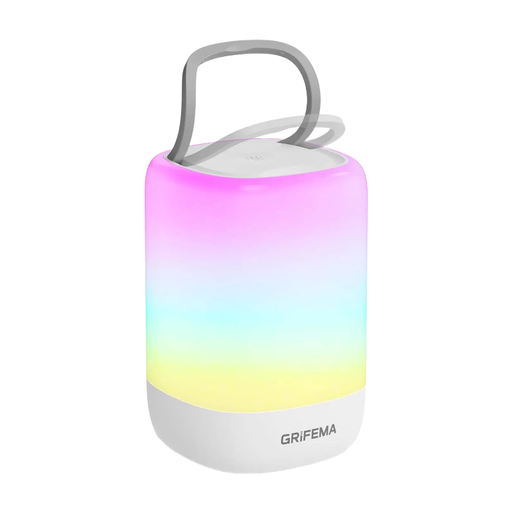
Why This Fits Their Persona: Perfect for parents who need flexibility. As a portable nursing light, a soothing sleep light with a timer, or even as mood lighting for camping—this model covers many scenarios.
The 1500mAh battery offers long-lasting use, solving the problem of short-lived batteries. The stepless dimming and timer functions ensure the light won't disturb sleep.
Intuitive touch controls for easy operation in the dark; RGB colour-changing mode for playful variety.

Why This Fits Their Persona: For children and parents who want a night light that is not only functional but also a cute decorative piece. The unicorn design playfully blends into any child's room decor.
The material is soft, food-grade, BPA-free silicone. It's completely safe, even if young children touch it or put it in their mouths. The brightness is dimmable in 3 steps.
Soft, squishy material with no sharp edges; simple touch controls that can even be operated by children.
We have compiled a complete, up-to-date list of products that fully meet these strict selection criteria and comply with stringent safety standards.
The ideal brightness is just enough to provide gentle orientation in the room without disturbing sleep. A value below 30 lumens is often sufficient. Models with adjustable brightness have a clear advantage here, as they can be adapted to individual needs and room size.
That depends on its intended use. A battery-powered night light is mobile and ideal for nursing or when a child gets up at night. A plug-in night light offers a reliable, permanent solution for hallways or as a constant soothing light in the child's room, without you having to worry about recharging.
A night light for babies is useful from birth, especially for the parents. It provides enough light for nighttime nappy changes or feeds without having to turn on the bright overhead light, which could fully wake the baby. For the child themselves, a night light often becomes relevant only when they start to develop a fear of the dark, which typically happens in the toddler years, between ages two and three.