
Lieferung heute & morgen

Qualitätsgarantie

Willkommens-Angebote freischalten: KOSTENLOSE Lieferung | Bis zu 80 % RABATT | Kostenlose 30-Tage-JoyPlus-Testphase
App herunterladen
A children’s night light should provide orientation at night without unnecessarily brightening the room. In practice, however, models vary considerably in terms of power supply, brightness control, sensors and materials. If you choose solely based on colour or a cute design, you may overlook important features.
A decorative children’s lamp can complement the look of a child’s bedroom, but it is not automatically suitable for every use. Ceramic models, for example, look decorative, but are heavier and can be damaged if dropped. Some lamps also do not include a light bulb. Before buying, check the material, weight, stability and what is included in the delivery.
Marketing terms such as “calming light” or “gentle glow” are no substitute for technical specifications. Relevant factors include light colour, lumens, dimming levels and the position of the light source. A warm white night light of around 2700 to 3000 Kelvin is often perceived as less cool than cool white light. However, higher brightness may be needed for navigating at night or briefly checking on a baby in the nursery.
A battery-powered night light requires regular battery changes. With a rechargeable night light, on the other hand, you need to monitor the charge level. A plug-in model with a sensor is convenient in everyday use, but remains tied to a suitable indoor socket. Also check that the socket, cable and light are out of the child’s reach.
For a night light for babies or a child’s bedroom, specific information is more helpful than purely design-focused promises:
A lamp with RGB colours can serve a decorative purpose. For finding your way around at night, however, it is crucial that the colour and brightness can be adjusted easily.
A night light with a sensor switches on depending on movement or the ambient light level. Buyers should distinguish between two functions:
According to the product specifications, the GRIFEMA model with motion sensor detects movement up to 3 metres away within an angle of 120 degrees and switches off after 60 seconds without movement. With plug-in models, the sensor should not be covered by furniture or textiles. A timer can prevent rechargeable or touch lamps from remaining on throughout the night.
For a baby night light, rounded housings and positioning that can be easily controlled are practical features. Electronic products should nevertheless not be treated as toys. Instructions regarding minimum age, moisture protection and cleaning must be followed.
Pay attention to:
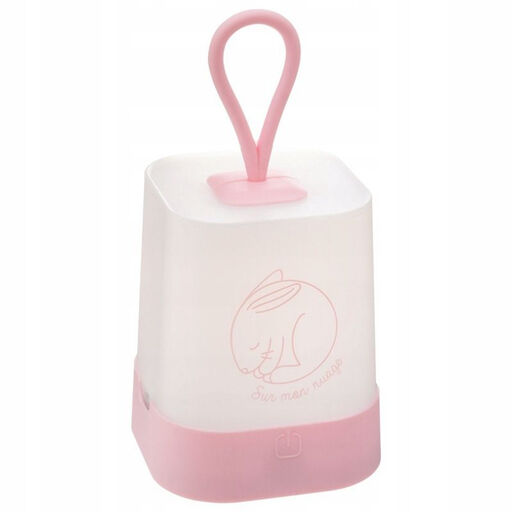
Why this product suits this profile: This compact model measures 8 × 8 × 9,8 cm, weighs 0,21 kg and can be charged via a USB cable using its integrated lithium battery. This means it can be positioned flexibly in a child’s bedroom or taken with you when travelling.
The power supply is clearly specified as a rechargeable battery with a USB cable. This reduces reliance on disposable batteries.
Compact design, low weight and cordless use after charging.

Why this product suits this profile: This plug-in light combines motion and dusk sensors with five brightness levels from 20 to 100 per cent. At 2700 Kelvin, it produces a warm white light colour.
The brightness is not limited to a single fixed level. The specifications also state that the device switches off after 60 seconds without movement.
Five brightness levels, 0,5 W power consumption and a detection range of up to 3 metres.
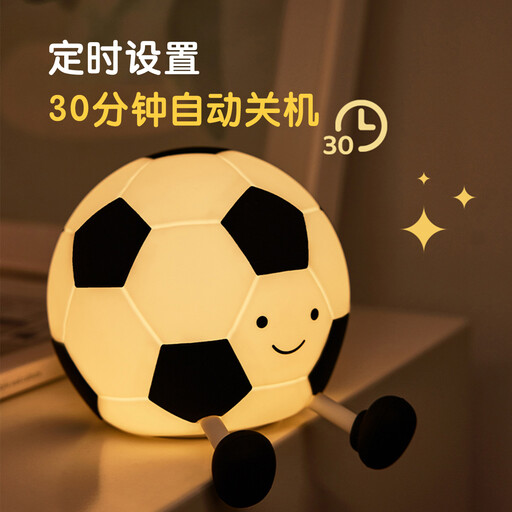
Why this product suits this profile: The football shape is ideal for children’s bedrooms with a sporty theme. The integrated 1200-mAh battery and Type-C connection allow it to be used on the go.
The three brightness levels avoid a fixed light output that cannot be adjusted. The stated runtime is up to 6 hours at maximum brightness.
Type-C charging port, 2 W power and soft silicone housing according to the product specifications.
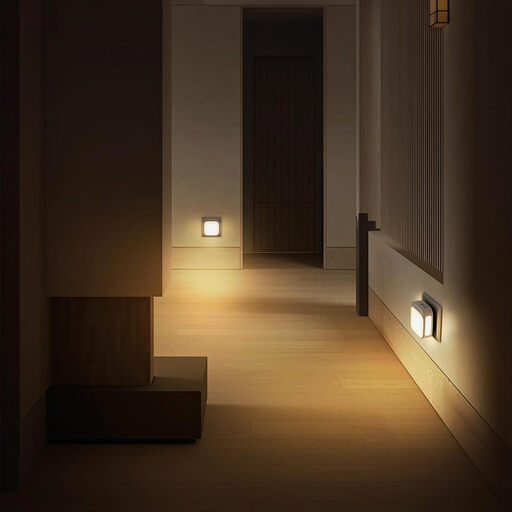
Why this product suits this profile: The two-pack can be used in the nursery and hallway, for example. The light sensor switches the lamps on in the dark and off in daylight.
The brightness can be adjusted steplessly from 10 to 100 per cent. With power consumption of 0,3 W, its stated power usage is low.
Two lights, 2800–3000 Kelvin, 20 lumens and automatic switching on and off.
We have put together a complete, regularly updated list of products that fully meet these strict selection criteria and the safety regulations applicable in the EU.
That depends on how you intend to use it. A dimmable light is practical for brief care or nappy-changing tasks. Plug-in models with a dusk sensor may be suitable for routes through the room at night. Position the device so that cables, mains plugs and small parts are out of reach, and always follow the manufacturer’s age and safety instructions.
A technical service life is often specified for permanently installed LEDs. The Aigostar model, for example, is stated to last 25.000 hours. This figure describes the light source under defined conditions and is not automatically a guarantee of the service life of the entire device. The battery, switch, sensor and housing may show signs of wear sooner.
Running costs depend on power consumption, usage time and your electricity tariff. A 0,3 W model uses less energy during continuous operation than a 2 W light. Rechargeable and battery-powered models also involve charging cycles or replacement batteries. For a realistic comparison, multiply the power consumption stated on the product by the daily operating time.