
Lieferung heute & morgen

Qualitätsgarantie

Willkommens-Angebote freischalten: KOSTENLOSE Lieferung | Bis zu 80 % RABATT | Kostenlose 30-Tage-JoyPlus-Testphase
App herunterladen
A children’s night light should provide orientation without brightening the sleeping area unnecessarily. For parents, it’s not just about colour and shape: power supply, sensors, cleaning, stability and the actual intended use all determine whether a model remains practical in the nursery, hallway or bathroom.
A decorative children’s lamp in the shape of a cloud, animal or egg can complement a nursery visually. However, that doesn’t automatically mean it’s suitable for every situation. Ceramic models can be heavier and more delicate, whereas LED lights made from ABS or silicone are usually easier to move around. What’s more, with decorative models you should check whether they are explicitly intended as a lamp and not as a toy.
Terms like “eye comfort” or “gentle glow” are hard to assess without technical specifications. More meaningful values include lumens, colour temperature and dimming levels. Warm white light in the range of around 2,700 to 3,200 Kelvin is often chosen for sleeping areas. For the hallway or bathroom, a more neutral light colour can be more practical.
A night light with a motion sensor needs a clear view of the movement area. Furniture, curtains or awkward mounting positions can affect detection. A night light with a dusk sensor, on the other hand, reacts to ambient brightness and can stay on permanently once it gets dark. Before buying, you should check the detection range, switch-off time and lux threshold.
For a baby night light next to the cot, a low brightness level is often sufficient. For night-time trips along the hallway, a slightly higher light output may be needed. Models with several levels or stepless adjustment are practical. The 2-pack with motion sensor, for example, offers 30 lumens, three colour temperatures and five brightness levels.
With RGB lights, you should distinguish between decorative colour-changing and functional lighting. A warm white setting is better for quick orientation than vivid colour light modes.
A plug-in LED night light for the nursery doesn’t need battery charging, but it does block a socket. A rechargeable night light can be placed more flexibly on a bedside table or shelf. However, you do need to keep an eye on the charge level.
Look out for specific details:
A model using 0.3 watts can be interesting for continuous use. With battery-operated lights, batteries should be removed during longer periods of non-use in line with the manufacturer’s instructions.
The size affects stability and the amount of space needed. A ceramic night light around 25 cm wide requires noticeably more surface area than a compact plug-in light. Surfaces made from ABS, PC, silicone or ceramic should be cleaned with a soft cloth. Electrical products must not be immersed in water; before cleaning, a plug-in model should be disconnected from the mains.
For products intended for babies and toddlers, the respective manufacturer’s age recommendations apply. The Jolywell egg night light, for example, is stated as not suitable for children under three years old, even though the shape is rounded. A light should also not be covered, taken apart or used in damp areas unless it is specifically stated as suitable.

Why this product fits the profile: The 2-pack offers a solution for several areas, such as the nursery and hallway. The dusk sensor switches the light on automatically when it gets dark.
The three brightness levels make the light output more understandable than a mere marketing claim. The automatic sensor reduces manual switching on and off.
Two lights, 2700 Kelvin warm white, three dimming levels and a power consumption of 0.5 watts according to the product specifications.
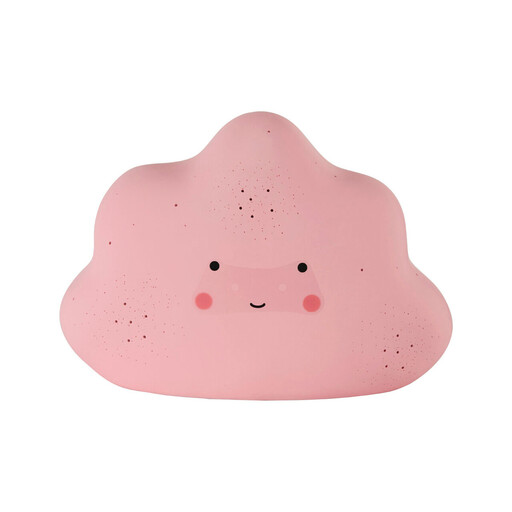
Why this product fits the profile: The smooth porcelain surface and cloud shape appeal to buyers looking for a decorative children’s night lamp with clear material specifications.
The product details state the material, dimensions and battery type. This means you can check before buying whether the surface area and care requirements suit the room.
Porcelain, perforated surface for diffuse light distribution, 25 × 15 × 18 cm and runs on three AA batteries.

Why this product fits the profile: For families looking for a cordless solution for night-time trips, the hallway or the baby’s room, this model combines a rechargeable battery, sensor and adjustable light colour.
The details on the 3–5 metre detection range, up to 10 hours of sensor operation and five dimming levels help with realistic planning.
Integrated 500 mAh rechargeable battery, USB charging, three colour temperatures and PIR motion sensor with activation in darkness up to 20 lux.
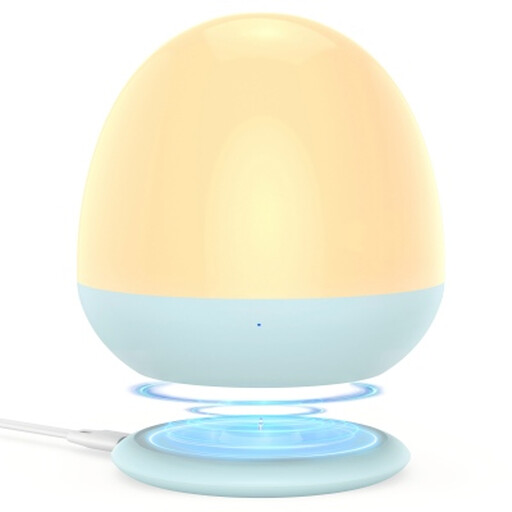
Why this product fits the profile: The rechargeable night light can be used on the bedside table, near the changing area or when travelling, and features touch control and a timer.
The timer function limits the operating time. What’s more, the charging methods are clearly stated; however, according to the notice, the model is not intended for children under three years old.
ABS and PC housing, USB and wireless charging via charging station, touch operation and timer setting.
We’ve put together a complete, regularly updated list of products that fully meet these strict selection criteria and the safety regulations in force in the EU.
That depends on where it’s being used. Next to the cot, a low dimming level is often enough. For the hallway, stairs or bathroom, a higher setting can make sense. Compare lumens, colour temperature and dimming function rather than just the description “soft”.
Neither system is fundamentally suitable for every room. A motion sensor only activates the light when movement is detected and it’s dark. A dusk sensor switches on depending on the ambient brightness. For short trips, a motion sensor can be more economical, whereas a dusk sensor provides constant orientation.
The useful life depends on the design, rechargeable battery, disposable batteries and operating mode. Plug-in models don’t need battery changes, whereas rechargeable models need to be charged regularly. With any children’s room lamp or night light model, you should take into account the manufacturer’s details on the battery, charging cycles, LED lifespan and cleaning.